Telecare Device Total Cost of Ownership: A B2B Cost Planning Guide

2026-11-02

Telecare devices have a high total cost of ownership (TCO). Telecare device TCO goes beyond the upfront cost of a device. PERS operators, telecare providers and senior safety brands should be aware of cellular subscription costs, software and firmware updates, and device replacements when creating their operating budgets.

Telecare Device Total Cost of Ownership (TCO) provides a mechanism to consider these costs across the lifecycle of the device.
Telecare TCO provides a framework for B2B purchasers of OEM telecare devices to evaluate costs associated with the purchase, deployment, operation, and replacement of connected safety devices.
What Is Telecare Device Total Cost of Ownership?
The Total Cost of Ownership of Telecare encompasses all costs associated with purchase, installation, operation, maintenance and replacement of connected safety devices.
It can be simplified as:
Total Cost of Ownership = Cost of Hardware + Cost of Development + Cost of Connectivity + Cost of Platform + Cost of Deployment + Cost of Maintenance + Cost of Replacement + Cost of End of Life
Certification and Market entry costs should also be included where applicable.
Accurate telecare hardware procurement is a result of a true evaluation of TCO over the expected service life of the device.
Key Cost Components
| Cost Category | Main Cost Drivers | Procurement Considerations |
| Hardware | Components, battery, sensors, LTE modules | Unit price, MOQ, specifications |
| Connectivity | SIM, Data, Voice, Roaming | Monthly subscription costs |
| Software | API, server integration, licensing | Cost of platform and integration |
| OEM/ODM Development | PCB, Firmware, tooling | NRE, customization |
| Certification | Testing, Documentation, Approval | Target market requirements |
| Deployment | SIM activation, provisioning | Integration |
| Maintenance | Firmware, Warranty, Technical support | Service agreements |
| Replacement | Battery, charger, device | Expected service life |
1. Hardware Costs and OEM Pricing
There are a few key factors which impact the cost of the telecare devices, including the volume manufactured, the level of hardware customization, and the specs of the hardware.
The key factors that determine pricing are:
•Cellular Modules: The higher the number of frequency bands supported and VoLTE, the higher the cost.
•Positioning: GPS, Wi-Fi and Cellular.
•Batteries: The higher the capacity and the more intelligent the management, the higher the cost.
•User Interface: The more buttons, the higher the cost.
•Manufacturing: Add-on Speakers and Sensors increase cost.
The more expensive hardware does not always equate to lower lifecycle costs. Validation data should be requested to compare similar specs prior to accepting claims about competitor's products.
2. Cellular IoT Subscription Cost and PERS Operating Expenses
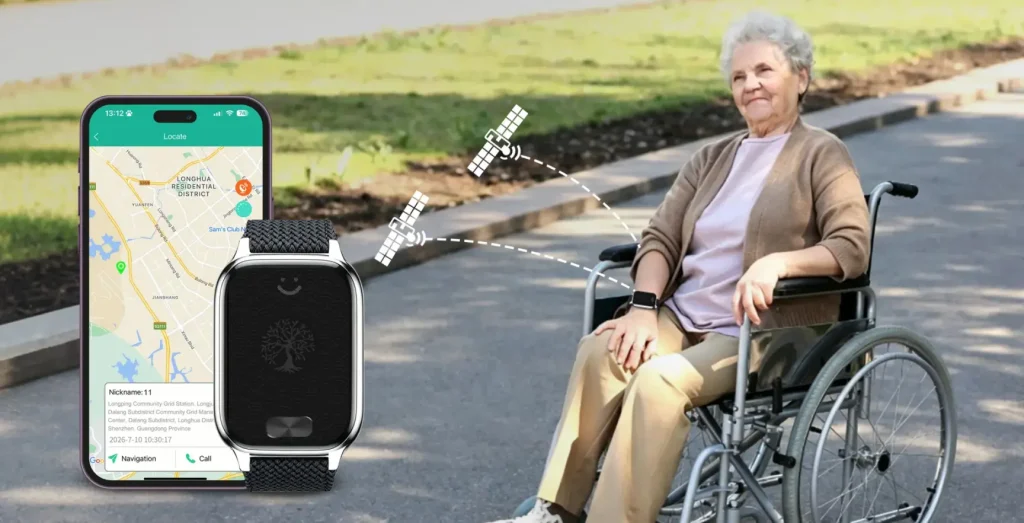
The main recurring cost for a standalone 4G telecare device is the cellular IoT subscription.
The main operating costs for a PERS device include:
•Data plan and SIM management.
•VoLTE calls and texts.
•International roaming.
•Firmware updates and GPS reports.
Cost example: An additional $1 per month subscription fee for each of 1,000 active devices results in $12,000 of additional costs annually.
Providers of telecare services should evaluate the data consumed, emergency communications and the local networks' capability before making a connectivity decision.
3. Software Integration and Platform Expenses
Telecare software integration influences the total cost of ownership, in particular, when hardware needs to be integrated with an existing monitoring platform.
Costs may include:
•API integration: For example, integrating device events with customer applications.
•Communication Protocols: Adaptation of SOS and GPS messages and status.
•Server Infrastructure: Public and Private server.
•Firmware: For changing the reporting interval.
•Software: For Security updates.
When evaluating a quotation, check to see if API integration, assistance and/or future firmware support is included.
4. OEM/ODM Development and Certification Costs
Telecare products require several stages of development and certification. Additional engineering investments for Telecare wearables may be necessary.
The costs associated with Telecare OEM may include:
•NRE costs: PCB and enclosure modifications, prototyping and product validation
•Recurring costs: Firmware updates
•Regulatory costs: Testing and Certification
There are differences in Certification and Regulatory requirements for different markets.
It is advisable to understand the buyer's requirements prior to development. Requirements may be change requests, maintenance support, ownership of Intellectual Property, Engineering Deliverables and others.
5. Deployment and Device Provisioning Costs
On a large scale, deployments of telecare systems require configuration before the devices reach end-users.
These include:
•Activation and testing of communications (SIM and network).
•Configuration of device identification to the server.
•Firmware loading and configuration.
•Registration, functional testing, and packaging.
Standardization of device provisioning may eliminate configuration errors, reduce repeated troubleshooting and lower the cost of non value adding efforts.
6. Telecare Maintenance Costs and Device Reliability
During a product's life cycle, a number of activities incur a maintenance cost, including firmware updates, connectivity troubleshooting, warranty and replacement management, etc.
When choosing a supplier, consider:
•Length and scope of warranty
•Process for firmware updates
•Availability of technical support
•Spare devices and accessories
•Replacement processes and costs
Potential cost savings are expected from the devices that require fewer service calls. Operational data is required to validate expected cost savings.
7. Battery Life and Wearable Device Lifecycle Cost
Battery performance impacts lifecycle cost of wearable devices.
Frequent charging of wearables increases the workload on caregivers. Degradation of the battery results in additional service requests, and damaged charging accessories increases support requests.
When procuring wearable devices, teams should evaluate:
•Aging of the battery after expected use (charging) cycles.
•Convenience and durability of charging accessories.
•The resistance of the enclosure to the environmental conditions to which it will be subjected during normal use.
•The expected replacement interval.
•How the device will be handled at end of its lifecycle.
These factors will help determine the realistic service life of a device. Teams should not rely on the initial service life specification of the device.
8. Telecare Device Total Cost of Ownership: Supplier Comparison
Consider a hypothetical three-year deployment involving 1,000 telecare devices.
| Cost Category | Supplier A | Supplier B |
| Hardware per device | $45 | $55 |
| Hardware investment | $45,000 | $55,000 |
| Integration and setup | $8,000 | $3,000 |
| 3-year connectivity | $36,000 | $36,000 |
| Maintenance and replacement | $15,000 | $8,000 |
| 3-year TCO | $104,000 | $102,000 |
| TCO per device | $104 | $102 |
Illustrative figures only; not JiAi quotations or verified supplier performance. Certification, additional platform fees, deployment labor, and end-of-life expenses are excluded from this simplified comparison.
Although Supplier B costs more on hardware, lower assumed integration and maintenance costs lead to a lower three-year TCO.
This demonstrates the need to look beyond unit costs when assessing telecare devices.

9. Minimize Telecare TCO
Minimizing total cost of ownership (TCO) focuses on decreasing the cost of ownership while keeping the emergency communications reliability.
Possible solutions:
•Meet Requirements: Decrease function and feature complexity.
•Optimize Cellular: Report less frequently. Do not increase the reporting interval. Increasing the reporting interval to the point where a critical alert is not reported in a timely manner would result in the alert being missed.
• Simplify firmware: Lessen the amount of configuration and troubleshooting.
•Simplify provisioning: Lessen the amount of manual steps required to deploy a device.
•Plan for Replacements: Lessen the cost of unexpected failures for batteries and other accessories.
Telecare Cost Planning with JiAi
JiAi is a manufacturer of 4G smartwatches and telecare devices.
Our hardware and firmware integration capability together with software development allows us to provide OEM/ODM services.
We can also evaluate your product specifications and required quantity and determine the extent of customization and after-sales service required.
Conclusion
Costs can only be set for specific projects after the functions required are defined, the level of certification required is determined, and the responsibilities for support and maintenance are clarified.
Telecare Device Total Cost of Ownership provides customers an opportunity to compare various suppliers and plan for the sustainable operation of telecare devices.
FAQs
Q1. What is included in JiAi's Telecare Device Total Cost of Ownership?
Telecare Device Total Cost of Ownership includes hardware purchasing, OEM/ODM development, cellular connectivity, software integration, deployment, maintenance, and replacement expenses. JiAi helps B2B buyers identify project-specific cost components before procurement.
Q2. How much do JiAi telecare devices cost?
JiAi's telecare device cost depends on device type, hardware specifications, order quantity, and customization requirements. Buyers can request project-specific quotations for 4G elderly smartwatches, SOS wristbands, and GPS trackers.
Q3. Does JiAi offer competitive OEM telecare device pricing?
JiAi provides OEM telecare device pricing based on hardware configuration, production volume, firmware requirements, and development scope. One-time customization expenses and unit pricing should be evaluated separately.
Q4. What affects the cellular IoT subscription cost of JiAi devices?
The cellular IoT subscription cost depends on SIM providers, data consumption, voice calling, SMS usage, and roaming requirements. JiAi customers should confirm network compatibility and subscription arrangements for their target markets.
Q5. Can JiAi integrate telecare devices with an existing monitoring platform?
Yes. JiAi supports communication protocol customization and customer-platform integration. API requirements, SOS event formats, server configuration, and integration costs should be confirmed during project evaluation.