Elderly GPS Tracker Geofencing: Alert Logic, Accuracy and API Integration

2026-11-02

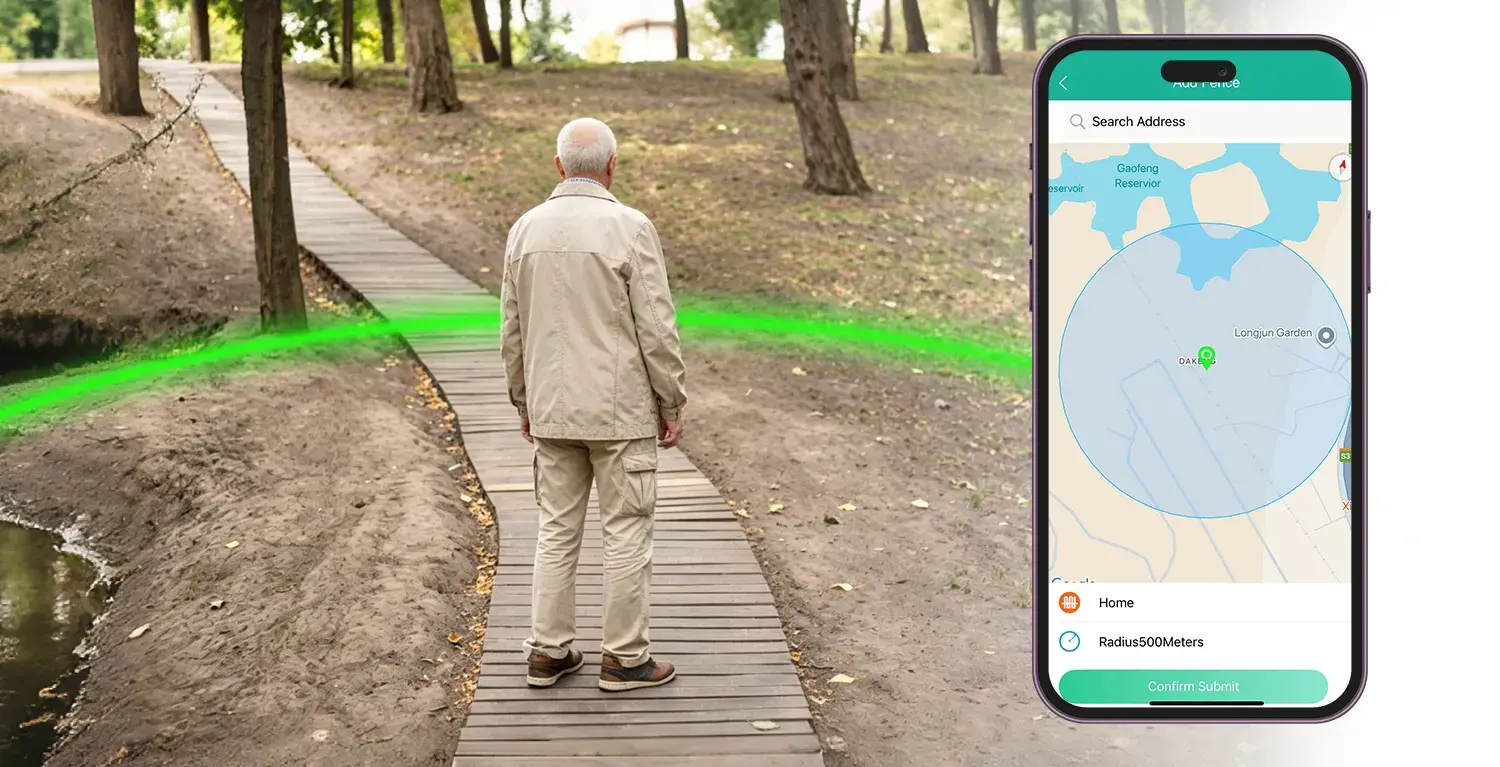
For telecare providers, knowing when an older adult leaves a safety zone may be more important than knowing where they are. Elderly GPS Tracker Geofencing provides alerts when a wearable device crosses a designated geographical boundary.

Accurate GPS tracker Geofencing, however, takes more than just GPS. Boundary configuration, firmware logic, cellular connectivity, reporting intervals and platform integration affect the accuracy of alerts.
For OEM/ODM buyers, here are the factors that will help decide if the senior GPS tracking geofence solution will help address real-world challenges in elderly safety and security monitoring.
What is Elderly GPS Tracker Geofencing?
Create a virtual boundary around a region (home, care facility, etc.) and have the system notify you if the user crosses that boundary.
The process is user reports location, geofencing evaluation, alert generation, notify caregiver.
Depending on what the caregiver selects geofencing to alert them to, it can create the following alerts:
•Exit Alert - Notify caregiver the user has left a region
•Entry Alert - Notify caregiver the user has entered a region
•Location-based Alert - Notify caregiver the user has crossed a boundary
•Platform Events - Notify the caregiver's app/dashboard of a geofence alert.
While geofencing can play a role in elderly safety and security tracking, it's important to note that it can't always detect all boundary crossings.
Device-Side vs. Server-Side GPS Tracker Geofencing
Where geofence processing happens alters the architectural and networking requirements and affects how customizable the solution is.
| Technical Factor | Device-Side Geofencing | Server-Side Geofencing |
| Alert evaluation | Within the tracker | In the cloud or on a private server |
| Boundary storage | On device memory | In the platform's database |
| Configuration | Firmware dependent | Centrally managed |
| Network dependency | Remote notification | Location upload |
| Primary consideration | Device and firmware resources | Data transfer and server resources |
With device-side processing, borders can be evaluated locally. Server-side processing allows for centralized management of several devices and geofences.
Customer requirements and capability of GPS tracker firmware will also be a determinant of the most appropriate architecture.
GPS Accuracy: Eliminating False Geofence Alerts
Uncertainty in positioning is the major challenge in geofencing for elderly GPS trackers.
GPS signals can be deflected by buildings and trees. Visibility of satellite signals can vary within urban environments. Near a boundary, minor fluctuations in position can cause the tracker to go in and out of the geofence hundreds of times.
Geofence Alert Logic Optimization
False alerts can be managed with the following configuration:
•Position Confirmation: Requiring multiple positioning updates to confirm location.
•Time Based Filtering: A configurable time period to confirm an alert.
•Boundary Hysteresis: Using different boundaries to enter and exit.
These can delay valid alerts. Geofence dimensions should be larger than the measured positioning uncertainty. Using smaller geofences will not improve reliability.
Reporting Frequency and Battery Life Trade-Off
There is a trade-off between monitoring responsiveness and power consumption with a senior GPS tracking geofence.
| Parameter | More Frequent Updates | Less Frequent Updates |
| Boundary detection | Potentially faster | Potentially delayed |
| Battery consumption | Generally higher | Generally lower |
| Cellular data usage | Generally higher | Generally lower |
| Location history | More detailed | Less detailed |
Monitoring movement within 1 minute will likely capture movement before monitoring within 15 minutes, if positioning and connectivity are available.
When specifying elderly GPS tracker geofencing, buyers should evaluate:
•Required alert latency
•Expected battery operating time
•Positioning accuracy
•Cellular coverage
•Location reporting intervals
No single configuration is appropriate for every elderly care application.
Handling Cellular Network Interruptions
A geofence alert system depends on available communication for remote notifications.
Locations updates may not be reported to the monitoring platform without cellular connectivity.
Important questions include:
•Event buffer: Is there storage that can save geofence events on the device?
•Delayed transmission: After cellular connectivity is reestablished, does the device send the saved events?
•Position consciousness: After position is communicated to the caregiver, can the caregiver tell the difference between the old and the new position?
What other behaviors does firmware implement to lessen position communications?
These factors may vary based on device capabilities and should be evaluated prior to use.
Geofencing API Integration for Telecare Platforms
For telecare operators utilizing proprietary monitoring software, geofencing API integration is essential to provide location events to the systems in use.
Depending on the architecture of the systems involved, integration may be via REST APIs, HTTP, TCP/IP or customized protocols.
Recommended Geofence Event Data
| Field Name | Integration Purpose |
| Device ID | Identify the tracker |
| Latitude / Longitude | Report geographic position |
| Location TimeStamp | Indicate event time |
| Positioning Method | Identify location source |
| Geofence ID | Identify monitored boundary |
| Event Type | Indicate event type (entry/exit) |
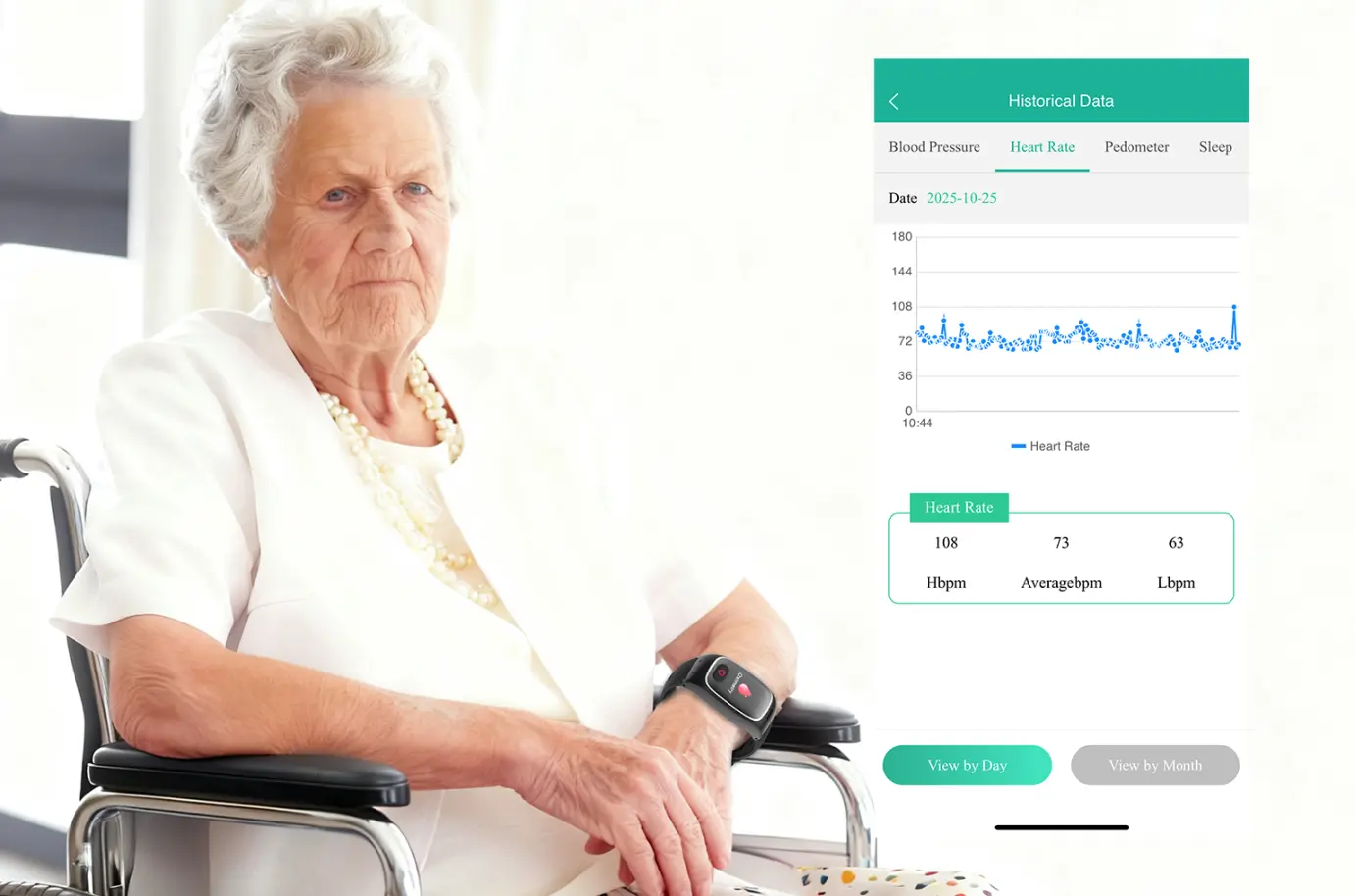
| Battery/ Network Status | Provide device state |
An API should adequately address event retransmission, duplicates and request timeouts.
Unique event identification and server-side duplicates can help prevent repeated alerts for elderly geofence events.
OEM/ODM GPS Tracker Firmware Customization
There are limitations with the use of standard GPS trackers for various telecare deployments.
At JiAi, GPS tracker firmware customization is performed according to the selected hardware platform and project requirements.
Potential customizations include:
•Flexible geofence limits and reporting intervals
•Customized alert conditions
•Private server communication
•Remote configuration of tracker parameters
•Event timestamps and device ID
•Support for offline events and network recovery
•Firmware over the air (FOTA) updates
The above capabilities may be trade-offs with other features in the firmware.
Testing Elderly GPS Tracker Geofencing Before Deployment
A successful demonstration does not guarantee reliable performance in different environments.
OEM/ODM buyers should subject elderly GPS tracker geofencing to realistic testing:
- Boundary crossing tests: Measure and record actual notifications with regard to crossing entries and exits.
- Stationary boundary tests: Determine if there are false alerts due to GPS drift.
- Weak-signal tests: Assess the positioning performance under obstructed conditions.
- Interruption tests of the network: verify recovery and delayed delivery of events
- API integration tests: verify consistency of data, timestamps and duplicates.
The acceptance criteria should differentiate missed alerts, false notifications, positioning and communication delays.
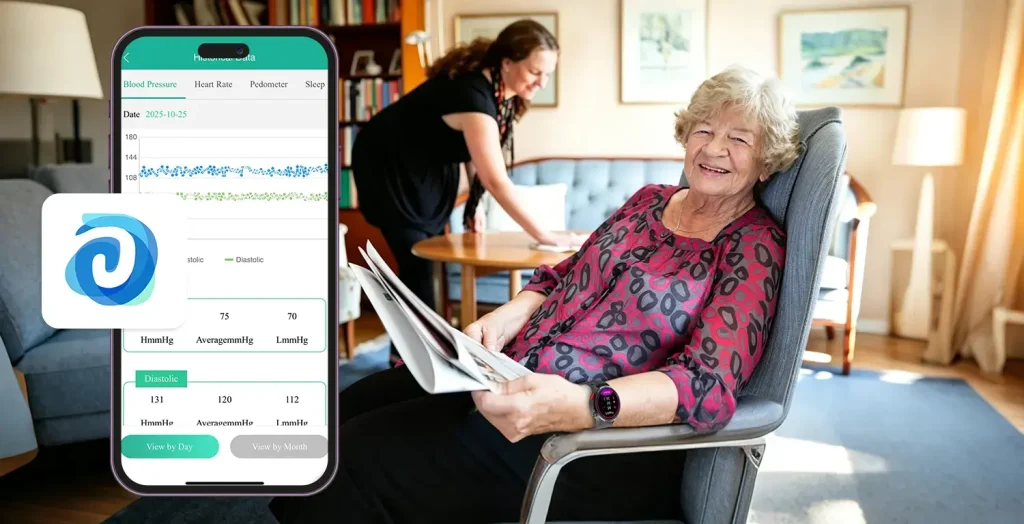
GPS Tracking Solutions and Geofencing by JiAi
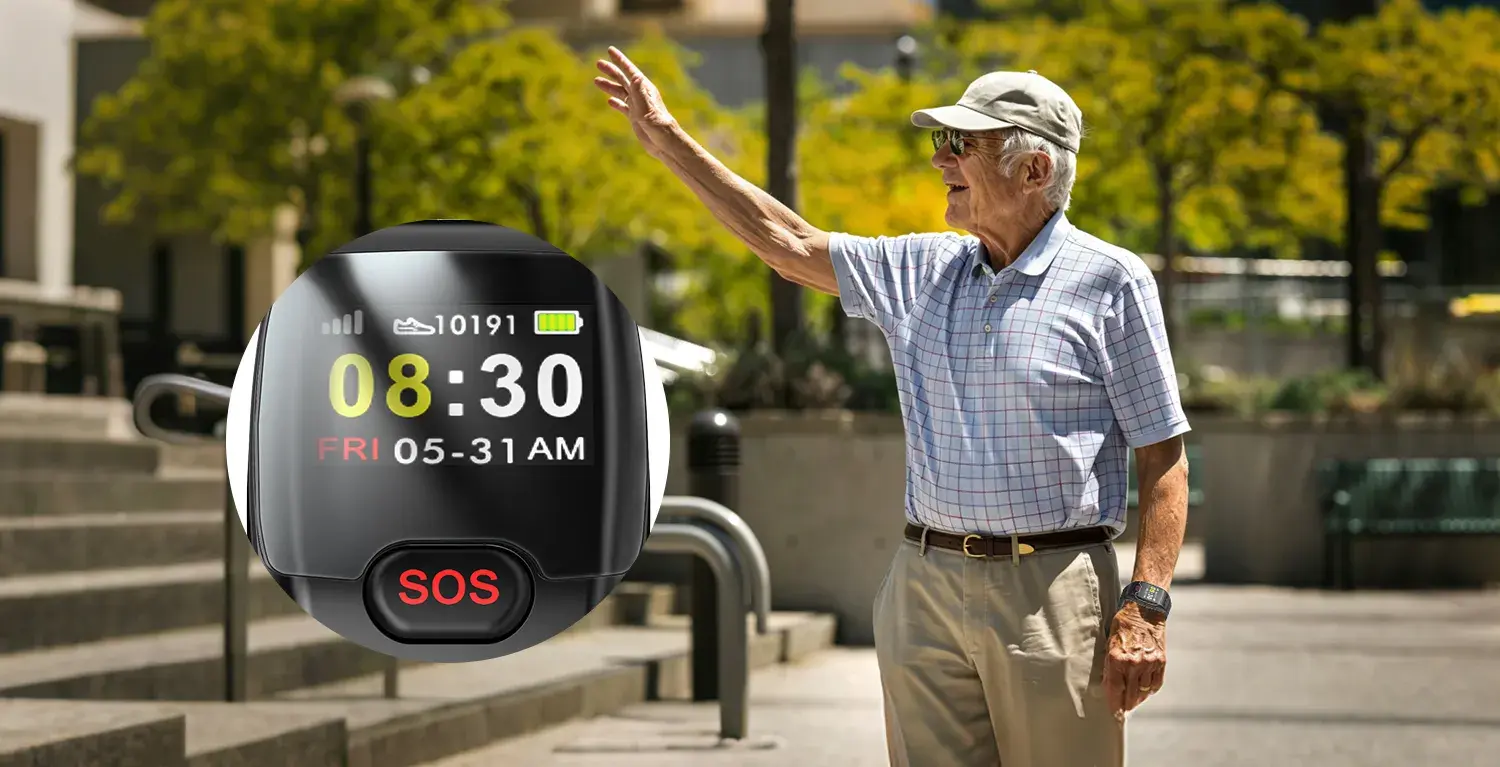
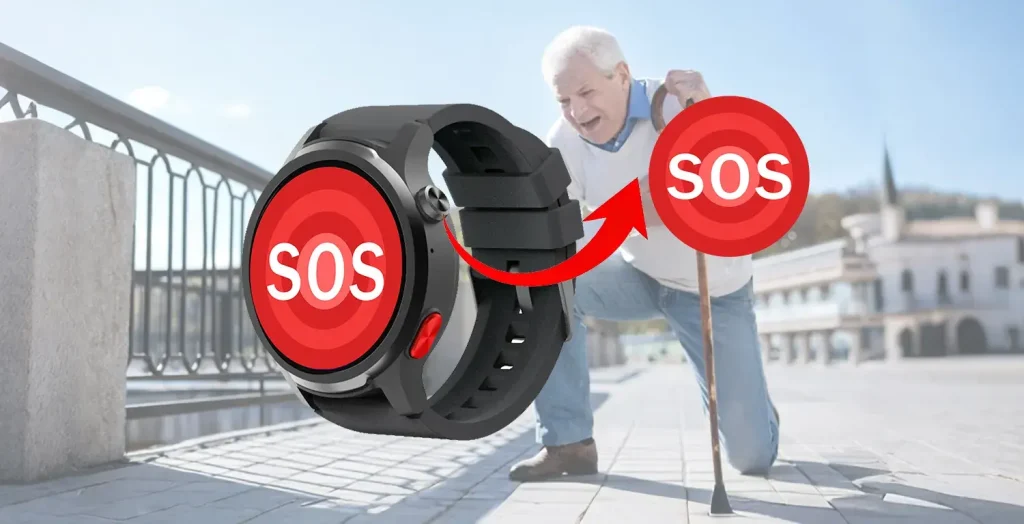
JiAi provides 4G elderly smart watches, SOS screenless wrist bands, and GPS trackers and other connected telecare wearables for B2B clients.
Our engineering team will evaluate any of the alerts and location reporting requirements in relation to the firmware and integration with the client's platform.
Buyers should provide their target markets, geofence rules, reporting intervals, API specifications and other requirements for positioning, and customizations for the models of interest.
Conclusion
Accurate positioning, proper configuration of alerts, reliable communication and compatibility with the selected platforms are vital for successful elderly GPS tracker geofencing solutions.
For reliable location-based elderly safety solutions and services, it is important that the telecare providers and the OEM/ODM buyers determine their requirements clearly and perform adequate verification and validation.
FAQs
Q1. Does JiAi offer elderly GPS trackers with geofencing?
JiAi manufactures 4G elderly smartwatches, GPS trackers, and SOS wristbands. Geofencing availability depends on the selected model and firmware configuration.
Q2. Can JiAi customize geofence alert settings?
Yes. JiAi can evaluate OEM/ODM customization requirements, including geofence boundaries, entry/exit alert logic, location reporting intervals, and notification rules.
Q3. Does JiAi support device-side or server-side geofencing?
JiAi can assess both architectures based on device hardware, firmware resources, and customer platform requirements. Implementation feasibility is model-dependent.
Q4. How accurate is JiAi's elderly GPS tracker geofencing?
Accuracy depends on the positioning technology, satellite visibility, surrounding buildings, and geofence size. JiAi recommends testing positioning performance in the intended deployment environment.
Q5. Can JiAi help reduce false geofence alerts?
JiAi can evaluate firmware customization involving position confirmation, alert delays, and boundary hysteresis to reduce unnecessary notifications. Actual effectiveness requires testing.