Senior Safety Wearable Design: Ergonomics, SOS Buttons and ODM Considerations

2026-11-02

A senior safety wearable may include GPS, cellular connectivity, and emergency calling, but it may still be unusable in the field if an older adult is unable to wear it comfortably or use it to summon help.
Telecare brands and OEM/ODM buyers must consider both wearable ergonomics and accessibility in design, and balance battery size and communication reliability.
At JiAi, we take a similar approach to design, looking at how different pieces of hardware, firmware, and enclosures impact user interaction.
1. User Requirements Come First When Considering User Scenarios
Different senior care environments have different needs for senior safety devices.
When designing a smartwatch or a SOS band or pendant, manufacturers should consider:
•Limitations: Hand-eye coordination, eyesight, hearing, mobility
•Wearing preferences: Skin comfort over long-term wear, how it is attached
•Emergencies: SOS activation, caregiver notification, two-way calling
•Charging: Independent charging at home vs centralized facility management
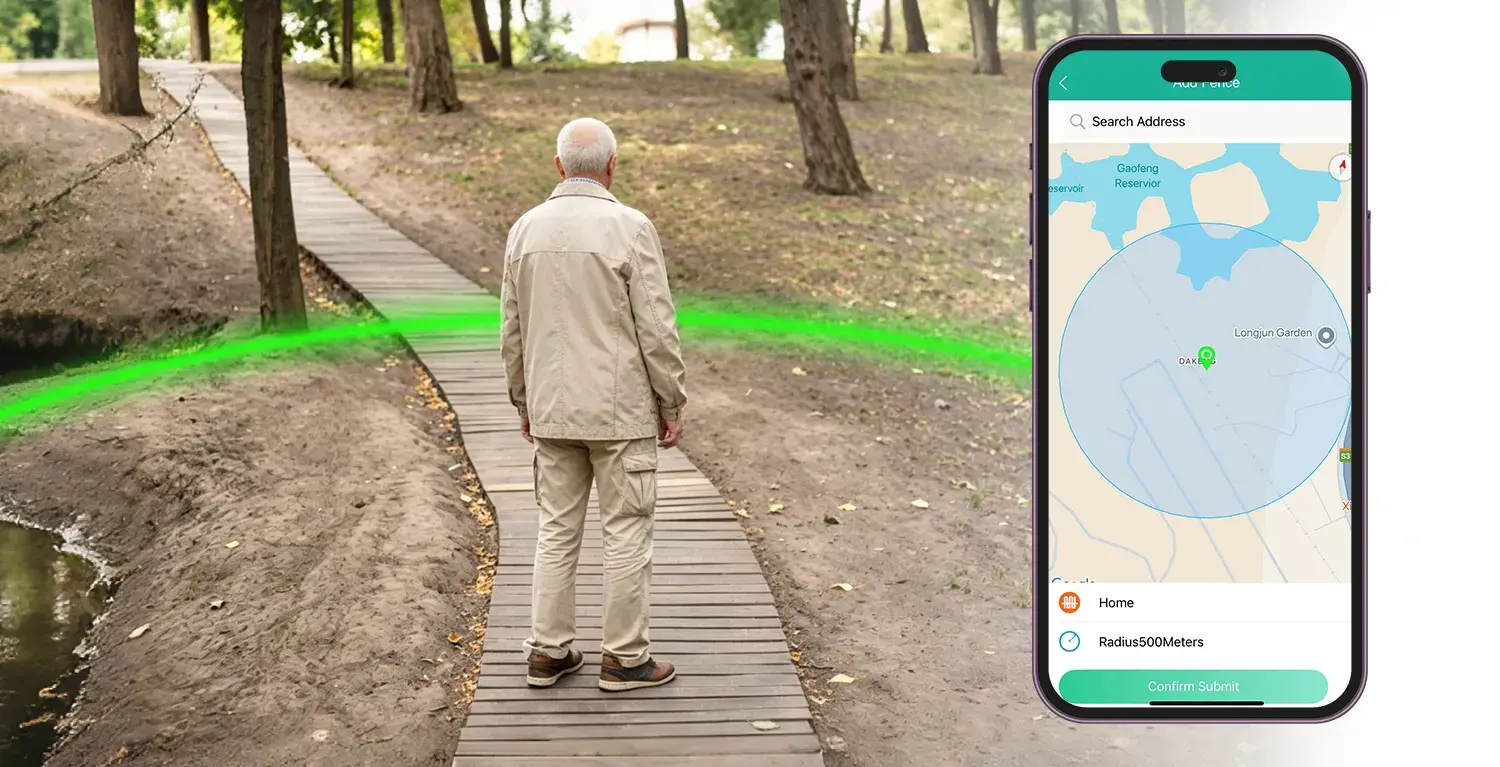
•LTE coverage: GPS, and integration with monitoring platforms
For assisted living residents, perhaps simplified controls to adjust the watch are warranted, while for independent living residents, cellular connectivity and the ability to be located outdoors may be required.
These needs may drive the initial design of the ODM wearables.
2. SOS Button Design: Accessibility vs. Accidental Activation
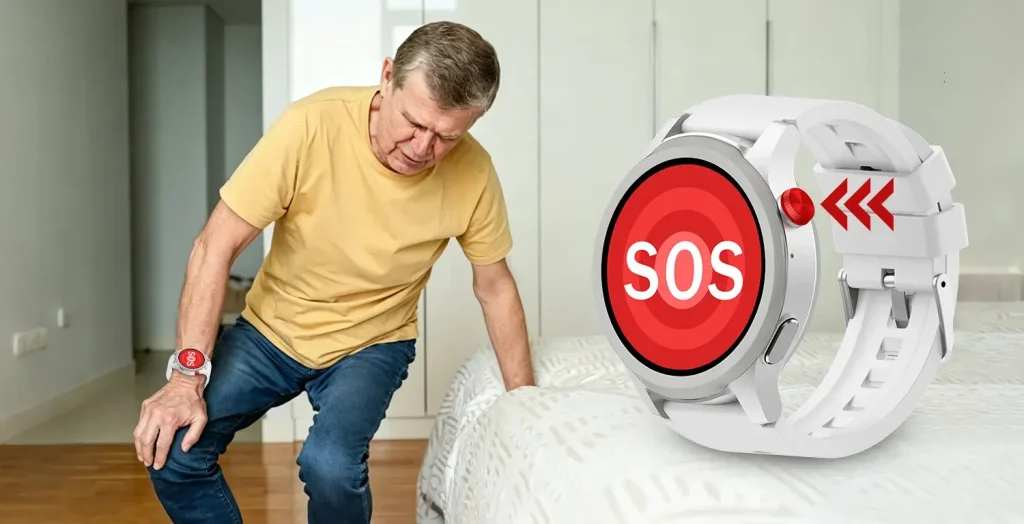
An important feature of senior safety wearables is the design of the emergency button. Design of an SOS button should consider the following:
•Size: The button should be large enough for the user to be able to press it with any finger without the need to use specific fingers to activate it.
•Force: The button should be activated with less strength than the user has.
•Position: The button should be placed as high as possible, in a way that it can be activated without the need to remove the wearable.
•Tactile feedback: The user should be given a click or vibration so that he knows that the button has been activated.
•Accidental activation: The button should be designed to be activated only by the intended user.
A raised SOS button improves recognition by touch, but increases the risk of unintended activation.
JiAi believes that button prototypes should be tested in an environment that resembles the conditions of their real-world use.
Emergency Feedback
The design of a senior safety wearable requires a clear means to inform the user of the process that happens after the SOS button is pushed. A user should be able to understand the following:
•Button Pushed: The wearable should provide the user with audible, tactile or visual feedback to let them know the button was pushed.
•Alert Sent: The telecare device sends the alert to the monitoring center.
•Alert Received: The monitoring center confirms receipt of the alert.
These states should not be confused. A successfully pushed button doesn't always mean the emergency alert reached the monitoring center.
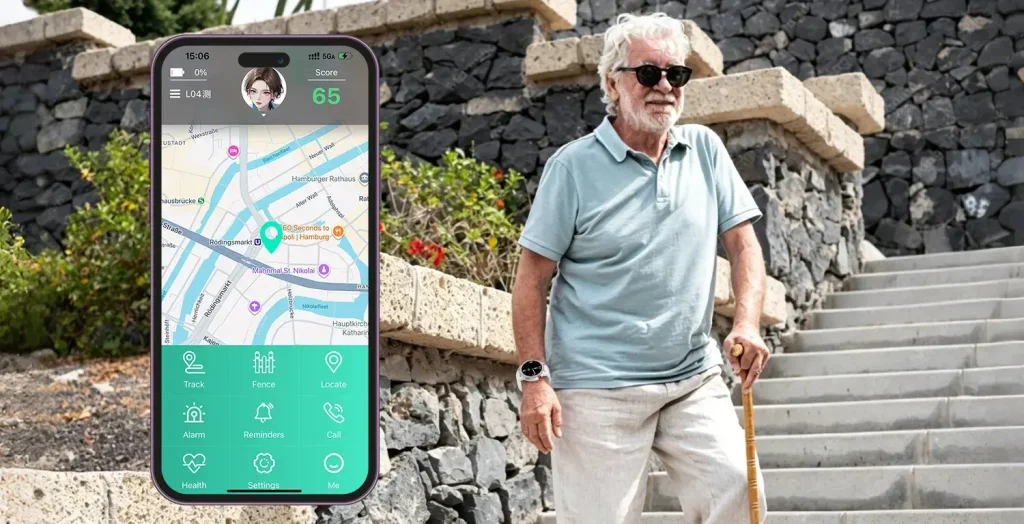
3. Design of Elderly Smartwatches: Choosing the Right Wearing Format
The comfort of a wearable device, in this case, an SOS device, impacts how long it can be worn.
| Design Factor | Elderly Smartwatch | Screenless SOS Wristband | SOS Pendant |
| Interface | Display and buttons | Simplified buttons | Dedicated SOS control |
| Main Advantage | Status info. | Less interaction | Alternative to wristwear |
| Ergonomics | Strap fit and screen visibility | Low-profile design | Attachment comfort |
| Main Challenge | Screen navigation | Limited feedback | Position-dependent audio |
| Suitable Application | Independent senior monitoring | Assisted living and simplified telecare | Personal emergency assistance |
Wearable Ergonomics for Seniors
Considerations for design of elderly smartwatches include:
•Using skin-friendly materials for the straps, and ensuring adjustability.
•Distributing the weight of the device evenly and thinning the enclosures.
•Using more manageable clasps.
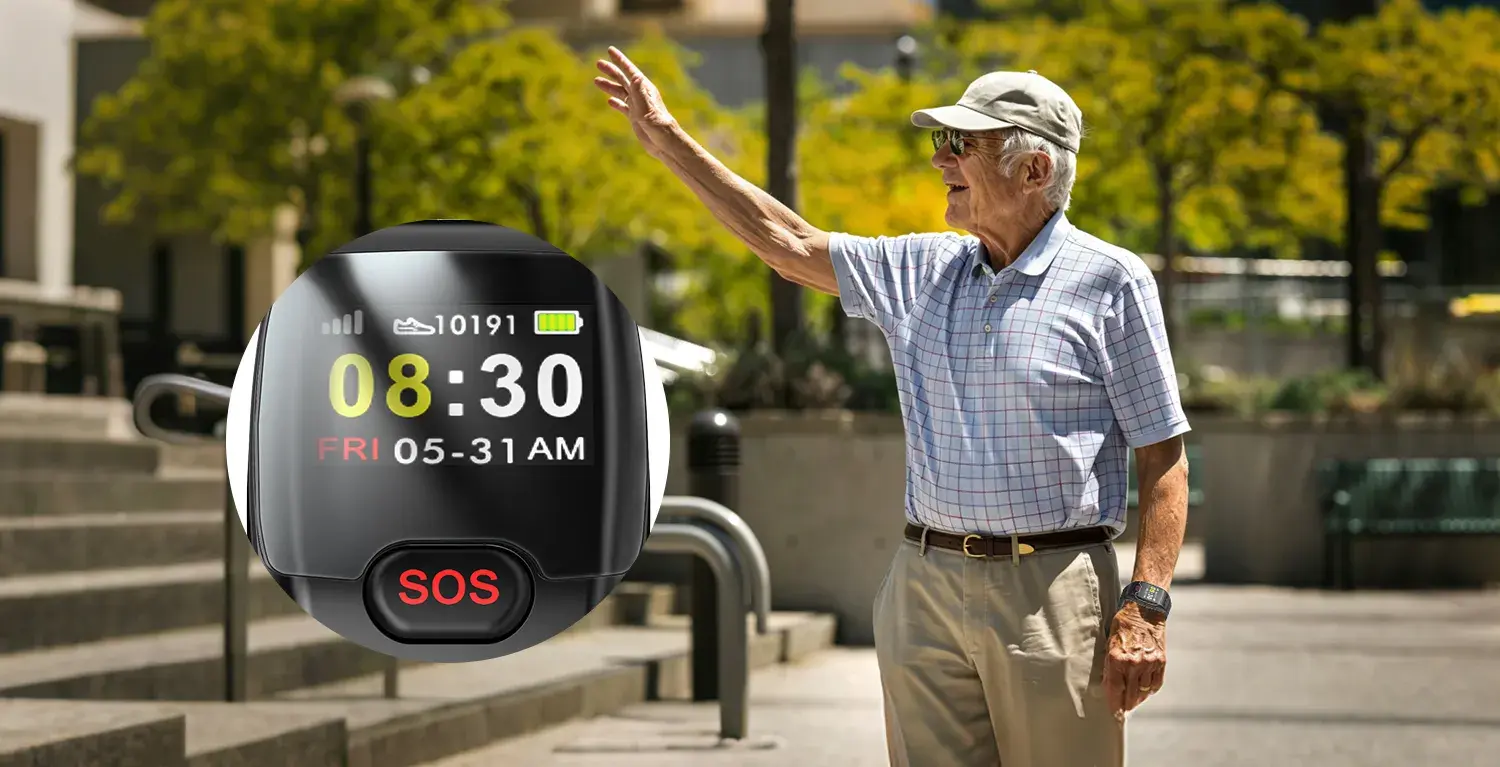
•Using high contrast displays and large text.
• Using a secure yet non-restrictive attachment.
Testing should cover the ability of the user to put on, adjust and remove the device by himself.
4. Audio Communication and Interfaces
For cellular safety wearables, the location of the speakers and microphones affects the quality of emergency communications.
Key considerations for the design of the safety wearables include:
•Positioning of the microphone: Ensure obstruction is minimized while the device is being worn.
•Positioning of the speaker: Ensuring the speech is intelligible in the surroundings.
•Vibration: Providing feedback via different combination of vibration, audio, or visual signals.
•Acoustic seal: Balancing the tradeoff between the sealing and sound transmission.
During the design of senior safety wearable devices, voice performance should be tested while the device is worn on the wrist or chest, and not just on a test bench.
5. Senior Wearable Charging Design & Battery Optimization
Bigger batteries improve the operational time of the device but can make the device bulky and heavy. Other factors that affect battery life and consumption include GNSS tracking, LTE usage, voice calls, and display usage.
Comparison of Charging Methods
| Charging Method | Advantages | Design Challenges |
| Magnetic Charging | Convenient to use | Contact alignment and corrosion |
| Charging Dock | Stable contact | Size and accessibility of dock |
| USB charging | Familiar to users | Connector and Sealing |
Effective senior wearable charging design should eliminate alignment and improve indicator design.
JiAi can evaluate charging mechanisms, battery optimization and power management for ODM projects.
6. Integration of Antennas, Sensors and Reliable Enclosures
The right integration of mechanics and electronics helps design compact senior safety wearables. Some of the key trade-offs are as follows:
•Antenna Integration: LTE and GNSS antennas need to be integrated close to the body.
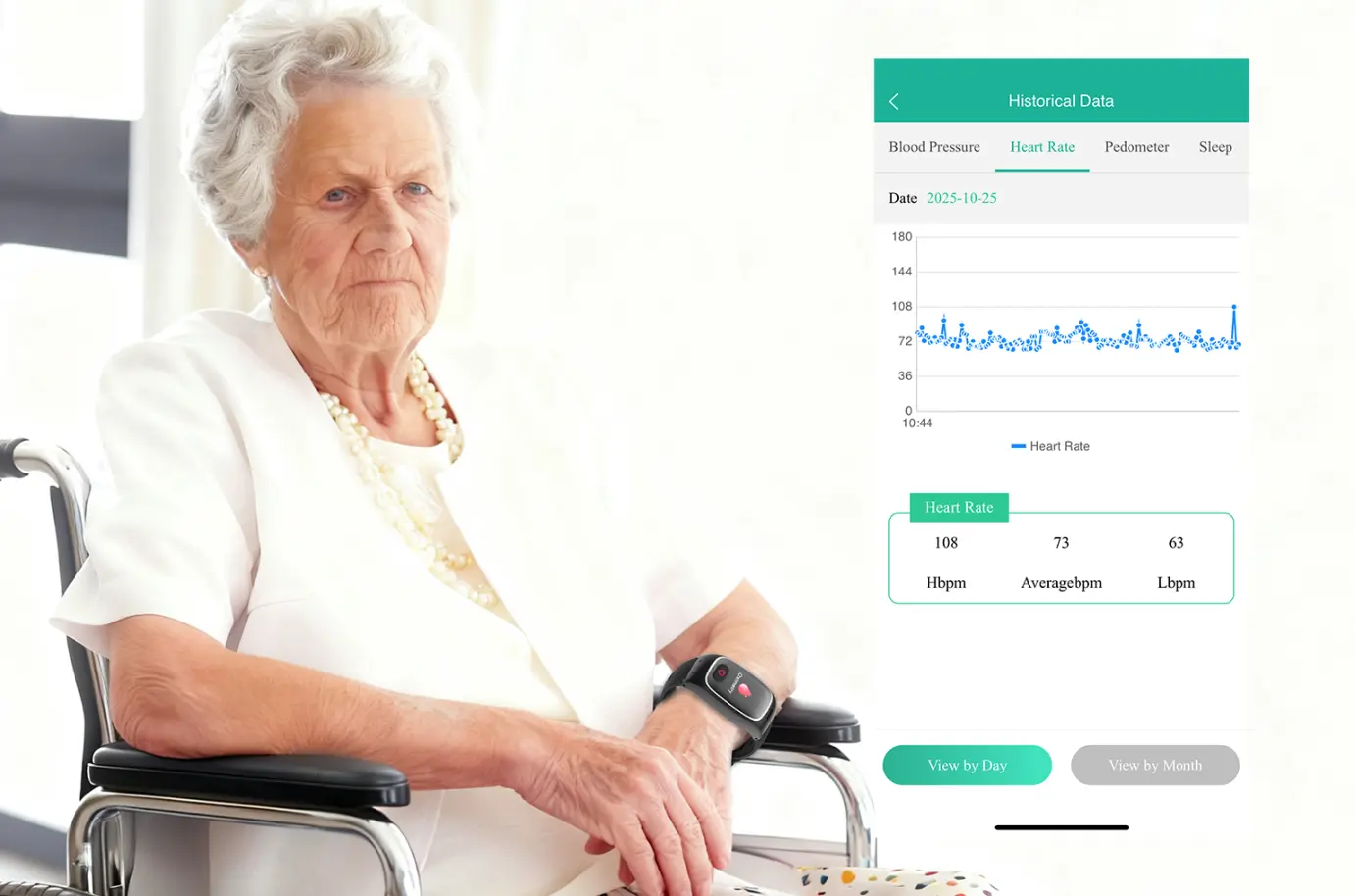
•Sensors Integration: Sensors need to be integrated to be stable for motion and fall detection.
•Enclosures: Achieve RF performance, contact with the body and durability.
•Water Resistance: Seals for button/mics and contact for charging.
• Reliability: Buttons, attachment points and strap.
The integration of radio frequency circuitry into electronics can alter performance even if the PCB remains the same.
Final product verification should be performed on completed device rather than the components.
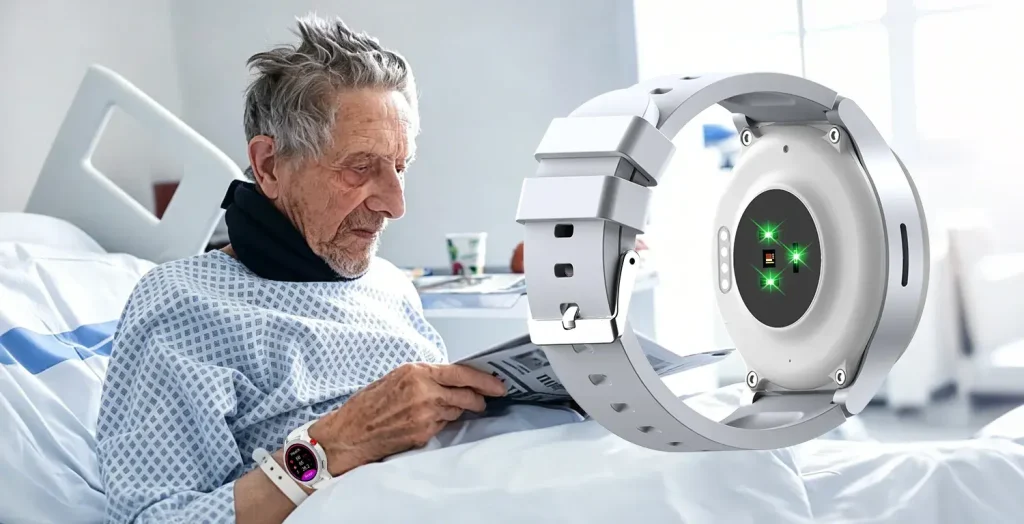
7. ODM Wearable Design: From Prototype to Mass Production
Manufacturing for OEM/ODM buyers should also be able to design with senior safety wearable in mind.
JiAi considers several development stages:
| Development Stage | Key Evaluation |
| Requirement Definition | Target users, SOS functions, connectivity |
| Industrial Design | Ergonomics, enclosure, controls |
| Engineering Design Integration | PCB, antenna, battery, audio |
| Prototype Verification | Functionality and user interaction |
| Reliability Testing | Charging, Buttons, Environmental durability |
| Preparation for Production | Tooling, Assembly, Inspection |
Senior Wearable Usability Validation
Prior to mass production, buyers should evaluate:
•SOS function activation success, and false-trigger behavior
•Charging alignment and connection reliability
•Comfort of the strap and enclosure durability
•Audio quality and intelligibility
•Connectivity to cellular network and emergency event delivery
Usability observations and Engineering test results should be documented.
8. JiAi OEM/ODM Senior Safety Wearable Design Support
JiAi designs smartwatches, SOS wristbands, GPS trackers and other connected telecare products for B2B clients.
Depending on the requirements of your project, our team will evaluate:
•Custom enclosure design and SOS button.
•Hardware and firmware integration.
•GPS and cellular connectivity.
•Charging and power management.
•Application and telecare platform integration.
Customization, tooling and certification requirements should be evaluated prior to production.
Conclusion
In our experience, wearable telecare products for the elderly should provide accessible emergency controls, comfortable ergonomics, reliable communication and practical manufacturing.
Effective ODM wearable design for telecare brands should account for the actual needs of the end-users and include engineering and usability validation.
JiAi's approach to design is aligned with this and we help our B2B clients evaluate senior safety wearables in their target markets.
FAQs
Q1. What senior safety wearable devices does JiAi manufacture?
JiAi develops elderly smartwatches, SOS wristbands, GPS trackers, and connected telecare wearables. Our OEM/ODM solutions support senior safety monitoring, emergency communication, and customized telecare applications.
Q2. Does JiAi provide custom senior safety wearable design services?
Yes. JiAi supports ODM wearable design, including enclosure customization, hardware configuration, firmware development, SOS button design, and telecare platform integration. Customization feasibility depends on project requirements.
Q3. How does JiAi optimize SOS button design for elderly users?
JiAi evaluates SOS button design based on button placement, activation force, tactile feedback, and accidental-press prevention. The goal is to make emergency activation accessible and reliable for elderly users.
Q4. What ergonomic factors are important in JiAi's elderly smartwatch design?
JiAi considers wearable ergonomics for seniors, including device weight, strap adjustability, enclosure thickness, skin-contact materials, and ease of operation. These factors help improve everyday wearing comfort and usability.
Q5. Can JiAi customize charging solutions for senior safety wearables?
Yes. Depending on the selected device, JiAi can evaluate magnetic charging contacts, charging docks, and power-management configurations. Senior wearable charging design focuses on easy alignment, reliable connections, and convenient daily use.