Telecare Device Reliability Testing: SOS, Battery and Network Failure Tests

2026-11-01

A telecare smartwatch can fail after just a few weeks of regular use, even if it passes a factory demonstration. There are many reasons this can occur. For example, cellular signals can be weak. If this is the case, the device might not be able to communicate an emergency. The battery can also affect the device's ability to communicate an emergency. It can also fail during an SOS call, or have firmware that is unstable.
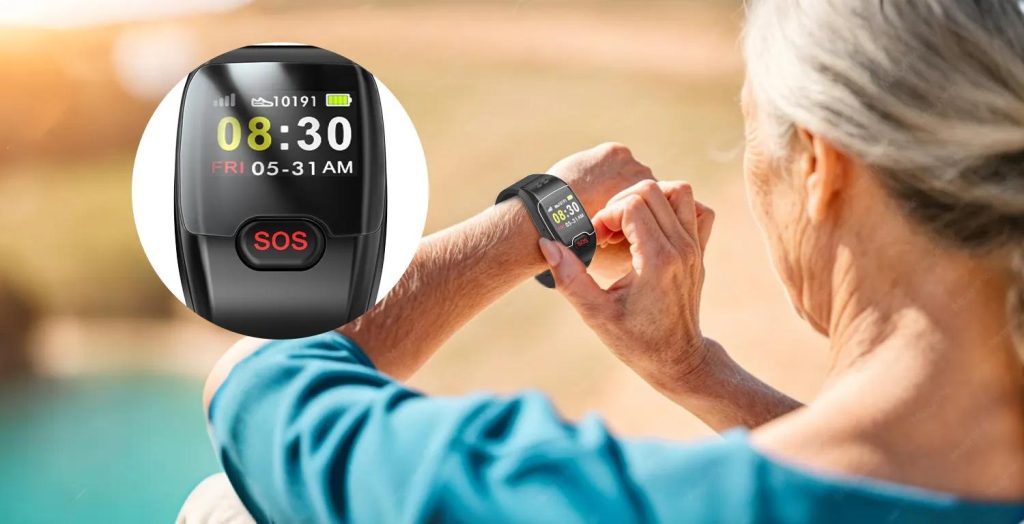
During the development of a telecare device, telecare operators and OEM/ODM buyers must assess the reliability of a device beyond just the basics. They must also test the device for repeated usage, environmental stress and unexpected failures.
JiAi understands reliability of a PERS device depends on the integration of hardware, firmware, cellular connectivity, and server communication. Here, we outline essential tests for customers' consideration before device commercialization.
1. The Importance of Telecare Device Reliability Testing
Ordinary consumer electronics can be used for many hours, but are often unused for the remainder of the time. A telecare device can also be used for many hours, but is often unused for long periods of time.
Tests should assess:
•Response to SOS (Including repeated activation and failures)
•Stability of Cellular Connection (Including registration and loss)
•Performance of Battery (Runtime, Power Consumption, and Low Battery Warnings)
•Mechanical Durability (Button Wear and Damage From Moisture and Impact)
•Communication with Servers (Transmission of Events and Acknowledgments, and Time-Outs)
•Firmware Recovery (Unexpected Resets, Communication Failures, and Interruptions during Over-the-Air updates)
A structured telecare wearable validation process assesses how different devices respond to failures (which are often purposely introduced) during testing. Because validation of a structured telecare wearable often requires mass deployment, mass deployment of the devices can also help discover issues.
2. Testing the Dependability of SOS Alarms: How Do People Respond to Stress?
In an SOS reliability test, a personal alarm's response to repeat activations is key.
Repeated SOS Activation and Call Failures
Emergency alert device testing should assess three critical situations:
•Button Durability: Assess the mechanical and firmware response to short and prolonged presses.
•Unanswered Emergency Calls: Assess the behavior of the device in the case of unreachable contacts, busy lines, and/or calls that are not answered.
•Concurrent Operations: Assess what happens when an SOS alert is activated during a configuration update, or GPS reporting.
Users should assess whether their devices are supported with automatic call retries, alternative emergency contacts, and/or server notifications.
Key Acceptance Criteria
•Valid SOS activations are correctly recognized.
•Emergency calls follow the configured dialing sequence.
•Competing tasks do not prevent the specified SOS response.
•Failed transmissions produce the defined recovery or reporting behavior.

3. Cellular Connectivity Testing: Weak Signals and Network Recovery
4G telecare wearables rely on cellular networks for emergency calls and monitoring platform communication.
Tests on cellular connectivity should focus on emulating real world scenarios rather than using strong signals in a laboratory environment.
| Test Scenario | Potentail Failure | Validation Focus |
| Weak LTE Signal | Missed calls, increased power consumption | Registration, call setup, battery drain |
| Temporary Signal Loss | Incomplete SOS transmission | Connection and event recovery |
| SIM/Network Switching | No registration | Supported roaming and operator transitions |
| Server Timeout | Unconfirmed alert | Retry logic and confirmation |
| Network Recovery | Continued offline state | Service recovery |
With international projects, it is important to evaluate the representative destination networks and LTE bands as well as the actual SIM card and service configurations.
Event buffering, retransmission and roaming are other functions which depend on the implementation and which require separate verification.
4. Battery Reliability Testing: Runtime and Emergency Power
Battery reliability testing is crucial for elderly safety devices that may remain in standby for lengthy periods.
Advertised standby time does not guarantee reliable performance during emergency operation.
Realistic Power Consumption Profiles
Testing should take into account:
•The power consumption of the cellular radio and how often the device searches for the cellular network.
•How frequently the device performs GPS positioning and location reporting.
•The duration of a voice call initiated by the user through SOS activation.
•The sensitivity of the ambient light sensor and the device's backlight brightness settings.
•Background data communication and the duration of the standby period.
Low-Battery Emergency Testing
It is important to test to ensure that the device can perform its emergency functions if the battery is low.
Additionally, test to ensure that the device:
•Displays a low-battery warning.
•Notifies the caregiver or server, and/or shuts down.
•Retains its configuration after the power loss.
Actual runtime should be reported with the testing profile, the battery condition and the firmware version.
5. Stress Testing of Wearable Devices: Mechanical Durability and Charging
Wearable telecare devices are exposed to impacts, moisture and temperature changes. Repeated charging cycles affect the battery lifespan.
Stress testing of mechanical and electrical connections is crucial in the assessment of wearable devices.
| Test Category | Test Method | Main Concern |
| Impact and Drop Tests | Controlled Stress Testing | Component Damage and Housing Failure |
| SOS Button | Stress Testing | Wear on Contact or Missed Inputs |
| Charging Contact | Multiple Connection Cycles | Misalignment and Unstable Contact |
| Temperature Extremes | Stress Testing | Electronic and Battery Performance |
| Water Ingress Tests | IP Testing | Moisture Barrier |
| Strap Attachment | Stress Testing | Failure of Attachment |
It is important to test how long the device can be charged and the stability of charge indication and device operation during charge.
Having an IP rating means that the device is protected from certain conditions; however, this does not mean that the device is resistant to all conditions.
6. Long-Term Stability and Recovery of Firmware
Firmware controls the management of power, communication and sensors.
Reliability testing of telecare devices should include the behavior of firmware during abnormal operating conditions.
Essential Firmware Tests
•Long Term Stability: Evaluate management of issues related to power, communication and memory.
•Unanticipated Reboot: Evaluate and test functional recovery as well as retention of configuration.
•Interruption of OTA Firmware Update: Assess and test support for system recovery during an update failure or interruption.
•Communication Faults: Assess and test support for system recovery during timeout in failed data exchange.
For tailored devices, firmware testing has to match the actual hardware and communication revision and the customer configuration.
7. Server Integration and End-to-End Alert Validation
Sometimes, cellular transmission may be successful, but it does not guarantee that an alert will be passed on to the monitoring operator. Telecare wearables should validate the entire communication path:
SOS Button Activation → Cellular Network → Server → Event Processing → Monitoring Platform
Tests should be performed for server unavailability, connection timeouts, message rejections, delay acknowledgments, and failure recovery procedures.
OEM/ODM customers utilizing private monitoring platforms should agree on the format of messages, set timeouts and acknowledge (or confirm) message receipt prior to integration testing.

8. Developing a Telecare Device Testing Plan
An acceptable validation plan should define each failure scenario with specific acceptance criteria.
Each test case should capture:
- Initial conditions: Device model, hardware revision, firmware, network settings.
- Test conditions: Operating conditions, failures injected, repeated.
- Expected response: Response of device, cellular modem or server.
- Acceptance criteria: Thresholds and response limits set in advance.
- Test results: Results actually observed, logs, deviations from normal, and open issues.
Limits set in advance should be used to define acceptance limits as opposed to defining them vaguely and then using industry assessments.
9. JiAi's Approach to OEM/ODM Telecare Reliability
We are a B2B manufacturer of elderly smartwatches, screenless SOS wristbands, GPS trackers and other connected telecare wearables.
Our OEM/ODM offer covers hardware and firmware development, communication protocols, applications and server integration.
Reliability Testing for Telecare Devices can be defined based on the deployment environment.
•For projects involving telecare devices for a monitoring center, the focus is on SOS/emergency calls and the ability of the server to process and route the calls.
•For projects involving GPS tracking devices, the focus is on the positioning interval, how quickly the device is able to re-establish communication with the cellular network, and battery consumption.
• For projects requiring deployment outside of the user's country, the behavior of the cellular network and the SIM used are evaluated.
Specific test procedures, equipment and available validation reports need to be defined during the project.
Conclusion
A successful factory demonstration does not guarantee the equipment is reliable for emergency use. Telecare Device Reliability Testing assesses emergency behavior under conditions of weak connectivity, low battery and firmware instability.
Testing requirements provide a basis for PERS operators and OEM/ODM buyers to evaluate manufacturers and take steps to prepare the equipment for long-term use on elderly clients.
FAQs
Q1. What is Telecare Device Reliability Testing?
Telecare Device Reliability Testing evaluates how elderly safety wearables perform under repeated use, network interruptions, low-battery conditions, and environmental stress. JiAi considers these reliability requirements during customized telecare device development.
Q2. How does JiAi evaluate SOS alarm reliability?
JiAi can discuss SOS alarm reliability testing requirements for OEM/ODM projects, including repeated button activation, emergency call handling, and firmware response. Specific test procedures and acceptance criteria are defined according to project specifications.
Q3. Does JiAi support cellular connectivity testing for 4G telecare devices?
JiAi develops cellular-connected telecare wearables. Cellular connectivity testing requirements may include LTE registration, weak-signal performance, network reconnection, and SIM compatibility. Testing conditions depend on the destination market and network configuration.
Q4. How is battery reliability testing performed for JiAi telecare wearables?
Battery reliability testing should evaluate standby consumption, GPS reporting, voice calls, low-battery warnings, and charging stability. JiAi can discuss battery performance requirements based on the selected hardware and firmware configuration.
Q5. What wearable device stress testing should OEM buyers request?
Recommended wearable device stress testing includes:
Drop and impact resistance
SOS button durability
Charging-contact wear
Temperature exposure
Water-ingress protection
JiAi customers should confirm applicable procedures and acceptance criteria for their specific device models.