Elderly Smartwatch Voice Communication: SOS Calling, VoLTE and Two-Way Audio

2026-10-31

An SOS alert tells a caregiver that something may be wrong. A voice connection helps determine what is happening and what assistance is needed. For telecare providers, this distinction makes elderly smartwatch voice communication an important part of emergency response system design.
A two-way voice smartwatch should have 4G connectivity, VoLTE, microphone and speaker, an SOS button, and a firmware logic to invoke telecare. An OEM/ODM buyer should test these features under an actual working condition. A demonstration call is not a satisfactory test.
Importance of Two-Way Voice Communication in Elderly Care
Unlike Bluetooth wearables that require the user to carry a smartphone, cellular-connected smartwatches support independent calling as long as the network and SIM conditions allow.
Some examples of elderly smartwatch calling applications are:
•SOS calling to reach predefined emergency contacts
•Call caregivers or family members
•Contact a telemonitoring center to evaluate an emergency
•Answer calls automatically from a predefined contact list
•For emergency situations, contact a telemonitoring center to communicate voice commands to confirm the caller is alright and provide location information.
For a telecare operator, an elderly smartwatch should be evaluated to provide voice communication as part of a complete response workflow, instead of reviewing voice calling in isolation.
How Does SOS Voice Calling Work?
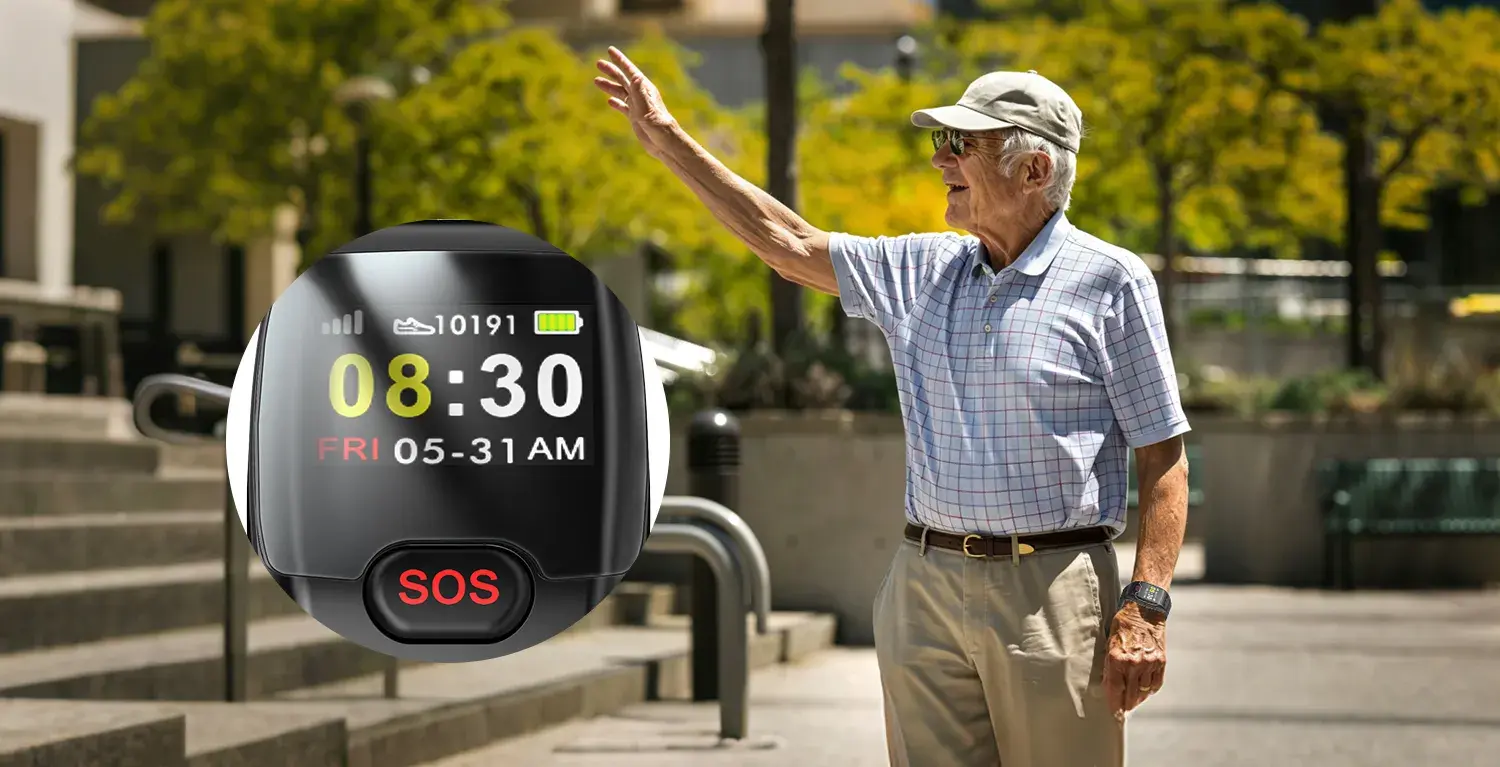
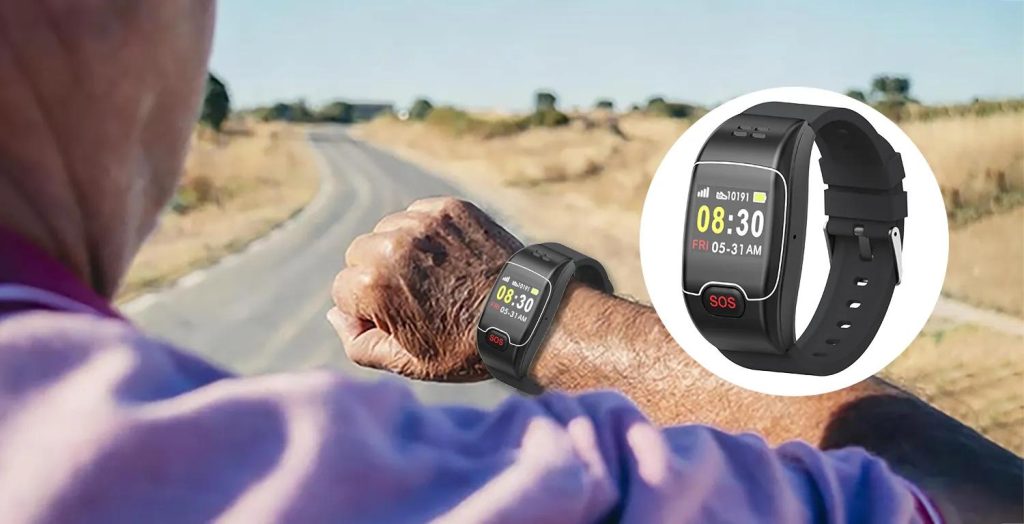
Communication is initiated on an emergency smartwatch by the user pressing the SOS button.
The sequence of events that follows may be as follows:
SOS Button → Processing by the firmware on the smartwatch → Reporting of an SOS event → Initiating a cellular call → Communicating with an emergency contact.
Customizable SOS Calling Functions
With firmware adjustment, OEMs/ODMs can define the following SOS calling functions on a smartwatch:
•The number of emergency contact numbers
•Dialing and retry sequences
•Call handling (busy, unanswered, failed)
•SOS confirmation and prompts
•Terminating and automatically redialing a call
•SOS status in relation to the telecare platform
It is important to evaluate whether the device continues its programmed calling sequence in the absence of answer/acknowledgment from the contact.
The Role of Network Testing in VoLTE Smartwatches
Voice calls over 4G rely on VoLTE to function. However, LTE data connectivity does not always guarantee VoLTE registration and calls.
| Technical Requirement | Engineering Consideration | Buyer Verification |
| LTE bands | Regional frequency compatibility | Check target operator bands |
| VoLTE support | Module and IMS configuration | Test actual voice registration |
| SIM compatibility | Voice service provisioning | Verify intended SIM profiles |
| Firmware | Calling stack and operator settings | Test approved firmware version |
| Network coverage | Signal quality and call stability | Test indoor and outdoor conditions |
| Operator acceptance | Device eligibility and restrictions | Confirm with local operators |
A VoLTE smartwatch should complete incoming, outgoing, and SOS calls on the intended network before volume production.
Where legacy voice fallback is unavailable, verified VoLTE functionality becomes especially important.
Automatic Call Answering and Privacy Controls
Automatic call answering can reduce interaction requirements for older adults who may struggle to operate a touchscreen during an emergency.
For example, an authorized monitoring center may call a smartwatch configured to answer after a specified interval.
There are concerns about unrestricted access automatic answering.
Key Firmware Functions
•Caller authorization: Restrict automatic answering to particular numbers.
•Answer delay: Choose between immediate connection and ringing before connection.
•Call management: Determine user behavior upon reception of an incoming call, i.e. rejection, or termination.
•Busy handling: Choose behavior for the case of a current call in progress.
•Privacy protection: Address user consent, notifications and unauthorized access.
For professional elderly care services, it is preferred that automatic answering is enabled selectively based on the service requirements rather than for every single incoming call.
Smartwatch Microphone and Speaker: Audio Engineering
A reliable two-way voice smartwatch requires more than cellular connectivity. Acoustic design directly affects speech intelligibility.
| Audio Component | Common Challenge | Recommended Validation |
| Speaker | Distortion or inadequate volume | Speech clarity at different volume levels |
| Microphone | Poor voice pickup | Wrist-position testing |
| Enclosure | Resonance and acoustic leakage | Final-housing audio evaluation |
| Noise processing | Background noise and echo | Indoor/outdoor call testing |
| Audio firmware | Inconsistent gain or volume | Firmware configuration testing |
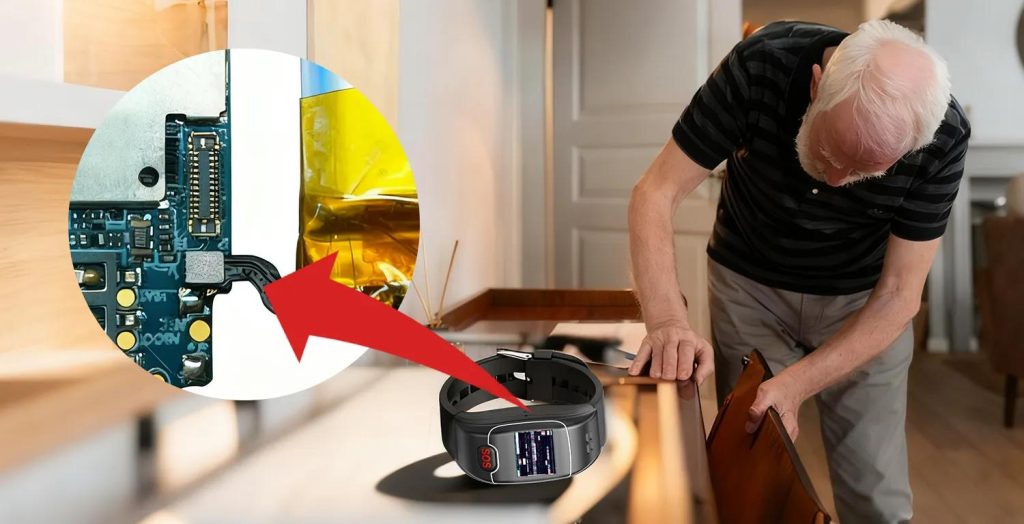
The smartwatch microphone and speaker should be assessed with the final enclosure assembled. Open-PCBA testing cannot fully reproduce acoustic behavior in a finished wearable.
Smartwatch Firmware Customization and Platform Integration
Different telecare providers use different emergency response procedures. Standard consumer calling functions may not satisfy professional monitoring requirements.
Depending on hardware capabilities, smartwatch firmware customization may support:
•SOS contact lists and dialing priorities
•Authorized incoming-call management
•Automatic answering configurations
•Call status and failure notifications
•Voice prompts and volume settings
•Device identification and SOS event reporting
•Custom button behavior and server communication
Integration with Telecare Platforms
An SOS voice call may operate over a data connection that sends information to the customer’s server.
Potentially available event data may be:
•Device ID and SOS event time stamp
•GPS location, if available
•Emergency status
•Various call-related events supported by the firmware
Voice and server functions must be tested independently and combined to validate the intended emergency response sequence.
Voice Communication Testing Before Mass Production
For mass market acceptance of senior citizen-targeted smartwatches, it is essential to validate voice communication features across varying operational conditions.
Test Recommendations For OEM/ODM
•SOS Calling: Tests to assess dials and retries behavior, as well as contact sequencing, should be performed.
•VoLTE Registration: Tests should be performed against the target Operators and their respective SIMs.
•Incoming Calls: Tests should be performed against authorized and unauthorized callers.
•Automatic Answering: Tests should be performed to assess restrictions to caller lists and time outs.
•Audio: Tests should be performed against background noise and echo.
•Network: Tests should be performed against call coverage and call service with a weak signal.
•Battery: Load tests should be performed to simulate extended calls.
•Platform Integration: Tests should be performed to assess SOS call related events.
•Firmware: Repeat tests after firmware upgrade.
Report tests against hardware revision and firmware version. The SIM and Operator should be reported as well.
JiAi OEM/ODM Elderly Smartwatch Voice Solutions
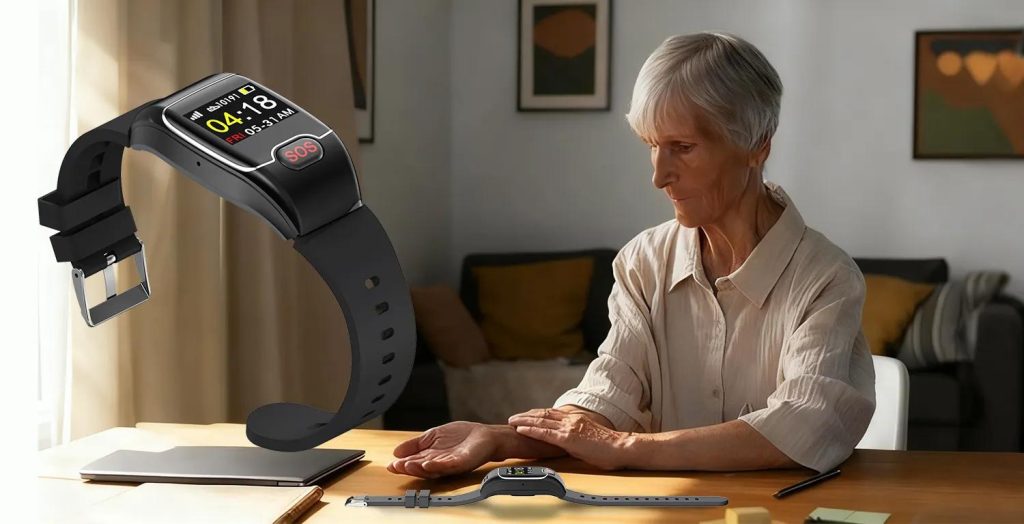
JiAi designs and manufactures 4G LTE elderly smartwatches, screenless wristbands, GPS trackers and other connected telecare devices for B2B clients.
Our development capabilities include hardware, firmware, software, communication protocols and server integration.
Depending on the chosen hardware platform, JiAi can evaluate project requirements related to:
•Voice calling and SOS dialing in 4G smartwatches
•Logic for automatic answering
•Audio configuration and firmware customization
•Emergency event reporting and telecare integration
•Testing of device compatibility with the network and VoLTE
Other functionalities and customization level for each device model and project must be assessed.
Conclusion
Elderly smartwatches must utilize a combination of various technologies including audio hardware, firmware, SOS calling logic, cellular network and VoLTE to achieve reliable voice communication.
Telecare brands and OEM/ODM buyers can reduce the risk of device failure during mass production by defining calling workflows and assessing network compatibility.
JiAi assesses various requirements for elderly smartwatch voice communication and aids B2B clients in tailoring their telecare offerings.
FAQs
Q1. Does JiAi offer elderly smartwatches with two-way voice communication?
Yes. JiAi develops 4G elderly smartwatches for telecare applications. Two-way voice smartwatch functionality depends on the selected model, cellular module, firmware, and network compatibility.
Q2. Can JiAi elderly smartwatches make SOS voice calls?
JiAi can evaluate SOS voice call functionality for compatible smartwatch models. Depending on firmware configuration, the device can call designated emergency contacts when the wearer presses the SOS button.
Q3. Do JiAi 4G smartwatches support VoLTE calling?
VoLTE support depends on the smartwatch model, cellular module, firmware, SIM card, and local operator. JiAi recommends verifying 4G smartwatch voice calling compatibility in the target market before mass production.
Q4. Can JiAi customize automatic call answering?
Yes, subject to hardware and firmware feasibility. JiAi can evaluate automatic call answering configurations, including authorized caller lists, answer delays, and incoming-call management rules.
Q5. Can JiAi customize SOS emergency contact numbers?
Yes. JiAi can evaluate smartwatch firmware customization for SOS contact management, including multiple emergency numbers, sequential dialing, retry intervals, and unanswered-call handling.