Senior Wearable Charging Solutions: Magnetic Chargers, Docks and ODM Design

2026-11-03
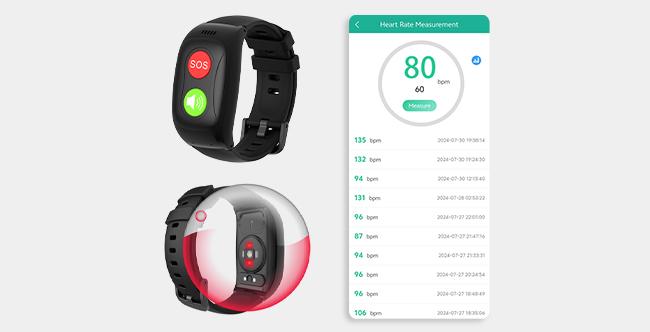
As indicated in the attached report, senior safety smartwatches can include several advanced features such as GPS tracking, SOS alerts, and two-way calling. However, the battery in these devices has a relatively short life. Moreover, the advanced features became unavailable when the battery died. For the population over age 65, charging devices can present greater challenges than simply replacing a spent battery. Small connectors, misalignment and poor indicators can impact the chargers' usability.

When designing senior wearable charging solutions, manufacturers face a trade-off between multiple challenges including ease of use, safety, cost, and reliability. These challenges are especially impactful on telecare providers and original equipment/original design manufacturers (OEM/ODMs).
This report outlines the trade-offs and customization options for charging solutions for elderly safety wearables.
1. Importance of Senior Wearable Charging Solutions
When using a small connector for charging, there are a number of trade-offs.
• Poor Alignment: Challenges in precisely positioning a connector in a charging receptacle.
Solution: Mechanical aids to assist alignment of the connector to its receptacle.
• Accidental Disconnection: Charging is broken by connections that are not sufficiently secure.
Solution: The connection must be secured.
• Insufficient Feedback: There is no means to indicate charging status.
Solution: An audible/visual signal to indicate status of charging.
For charging solutions for telecare applications, the design of the charger affects service requirements and maintenance.
2. Comparing Magnetic Charging, Docks, and USB Connectivity
Manufacturers have also integrated docks and magnetic chargers into senior safety wearables.
| Charging Method | Advantages | Engineering Considerations |
| Magnetic charging for wearables | Easy attachment; no exposed device-side USB port | Magnet strength; contact alignment; polarity protection |
| Smartwatch charging cradle | Guided positioning; stable resting location | Cradle dimensions; mechanical tolerancing; accessory cost |
| Direct USB charging | Simple accessory architecture | Connector wear; handling difficulty; sealing |
Magnetic Charging for Wearables
A magnetic senior smartwatch charger uses magnetic attraction to position electrical contacts.
Engineers should evaluate:
• Magnetic retention and release forces
• Contact alignment at various attachment angles
• Reverse-polarity protection and short circuit protection
• Stability of the magnetic attachment during minor movement
Contact geometry and enclosure tolerances should be assessed to determine if an electrical connection has been made.
Elderly Smartwatch Charging Dock
An elderly smartwatch charging dock provides a defined position for placing the wearable.
A well-designed cradle should offer:
• Stable, non-slip placement on bedside furniture
• Guided positioning without excessive force
• Accessible charging indicators
• Easy one-handed removal where feasible
A charging cradle also requires increased accessory and tooling size, and increases the cost of replacing the accessory.
3. Wearable Charging Contacts: Materials and Reliability
Long-term charging performance depends on wearable charging contacts. Contamination, corrosion, and unstable resistance may be caused by perspiration, skin oils, moisture, and repeated mechanical contact.
Important engineering factors include:
| Design Factor | Potential Failure | Validation Method |
| Contact plating | Corrosion and surface wear | Environmental and cycling tests |
| Spring-loaded pins | Insufficient contact pressure | Compression and endurance tests |
| Contact geometry | Intermittent electrical connection | Alignment tolerance tests |
| Surface contamination | Increased contact resistance | Cleaning and contamination tests |
| Enclosure sealing | Moisture ingress | Applicable ingress protection tests |
For ODM wearable charging solutions, contact position should be assessed with the final enclosure, strap and charger assembly.
4. Easy-to-Use Wearable Charging: Status Feedback
Older adults may recognize when charging starts.
Examples of feedback methods:
• LEDs: Indicate charge status and full.
• Vibration: Used to show charging status.
• Audio: Shows charging status.
• Screen: Used to show battery status and charging status.
A senior-focused wearable charging solution should differentiate charging from misplaced or interrupted power.
There should be multiple ways to test the indicator visibility, volume and ease of use and not solely on the engineers' assumptions.
5. Charging Safety and Battery Management
There are several considerations for the charging circuitry, firmware and battery management that must be designed in a coordinated fashion to safely manage charging.
Considerations include:
• Overcharge Protection: Control Unit limits charging current and charging voltage.
• Temperature: Charging should not be allowed in abnormal temperature conditions.
• Short Circuit Protection: Control Unit should be able to handle contact and accessory faults.
• Recovery Behavior: Charging unit should refresh its charging state.
• Power Interruption: Unit should determine whether the power management IC/Charger is working.
With respect to emergency wearables, the manufacturer should confirm SOS alerts and cellular and monitoring functions are operational during charging.
Safety requirements and certifications depend on the configuration of the product and the market of interest.
6. Battery Runtime and Charging Frequency
Continual improvements in battery technology should enable reductions in charging frequencies and increases in runtime.
Runtime is impacted by:
• 4G LTE signal conditions, SOS calls and 2-way voice communication
• GPS positioning, reporting intervals and signal conditions
• Brightness of the display and sensor activity
• Battery capacity and firmware management
In the interest of timing, OEM buyers should request runtime testing, based on a realistic operating scenario, rather than focusing on standby specs.
A less frequent charging interval may reduce disruptions for the senior user, and a charging dock may assist with organization for the staff in an assisted living facility.

7. Wearable Charging Design for Different Devices
The appropriate charger varies with the wearable format.
| Wearable Type | Suitable Charging Approach | Key Design Priority |
| Elderly smartwatch | Magnetic cable or cradle | Strap clearance and alignment |
| Screenless SOS wristband | Compact magnetic charger | Simple attachment and feedback |
| GPS safety pendant | Magnetic dock or cradle | Stable positioning and removal |
| Facility-managed wearable | Dedicated charging station | Device identification and compatibility |
When making a final decision, consider user capability, interchangeability of accessories, how easily it can be cleaned, and the device's geometry.
8. Testing Senior Wearable Charging Solutions Before Production
An ideal validation program includes electrical, mechanical, and usability tests.
Recommended Verification:
• Measure charging current, charging voltage and temperature.
• Test repeated attachments and removals of charger.
• Check for contact resistance and wear.
• Measure the fit to realistic simulated usage.
• Check charging status recovery after interruption of power.
• Test charging behavior with senior users.
• Check communications and SOS behavior during charging.
The acceptance criteria should be agreed to prior to tooling approval and mass production.
9. ODM Wearable Charging Solutions with JiAi
JiAi is a research, development, and manufacturing company of senior safety wearables.
For ODM of senior wearables, charging solutions, we can adjust the following based on your project requirements.
• Charging cradle design and magnetic charger design.
• Housing design of wearable and charging contact.
• Charging indicators and firmware behavior.
• Electrical and chemical compatibility.
• Prototype and production validation.
Each model is required to provide custom tooling and performance specs.
Conclusion
A good senior safety wearable charging solution should be easy to use, provide stable electrical connections, provide clear feedback on charging status, and have adequate battery protection.
When considering senior safety wearables, OEM/ODM buyers should look at user needs and engineering constraints, and base decisions on verified performance.
FAQs
Q1. What senior wearable charging solutions does JiAi offer?
JiAi provides elderly smartwatches, SOS wristbands, and GPS safety wearables with model-dependent charging configurations, including magnetic charging solutions and charging accessories. Specific options require model confirmation.
Q2. Can JiAi customize an elderly smartwatch charging dock?
Yes, JiAi can evaluate customized elderly smartwatch charging dock designs based on device dimensions, contact positioning, magnetic alignment, and OEM/ODM project requirements.
Q3. Does JiAi support magnetic charging for wearables?
JiAi can discuss magnetic charging for wearables, including magnetic connector positioning, charging contact design, and accessory compatibility. Availability depends on the selected wearable model.
Q4. How does JiAi improve wearable charging contacts reliability?
JiAi can evaluate wearable charging contacts through contact material selection, alignment checks, charging stability tests, and repeated connection-cycle validation, according to project specifications.
Q5. Can JiAi develop an easy-to-use senior smartwatch charger?
Yes, JiAi can assess easy-to-use wearable charging designs featuring guided alignment, accessible charger placement, and clear charging indicators to improve daily usability for older adults.