
Private Server Deployment for Elderly Smartwatches: When B2B Buyers Need It

2026-07-27

For many elderly smartwatch projects, initial evaluations focus on hardware specifications such as screen size, battery life, GPS accuracy, fall detection, SOS calling, health monitoring, and cellular network compatibility. These parameters are essential, but they do not fully determine whether a device can support a long-term telecare service.
For B2B buyers, one question often becomes more important as the project scales:
Where will the smartwatch data be stored, processed, and controlled?
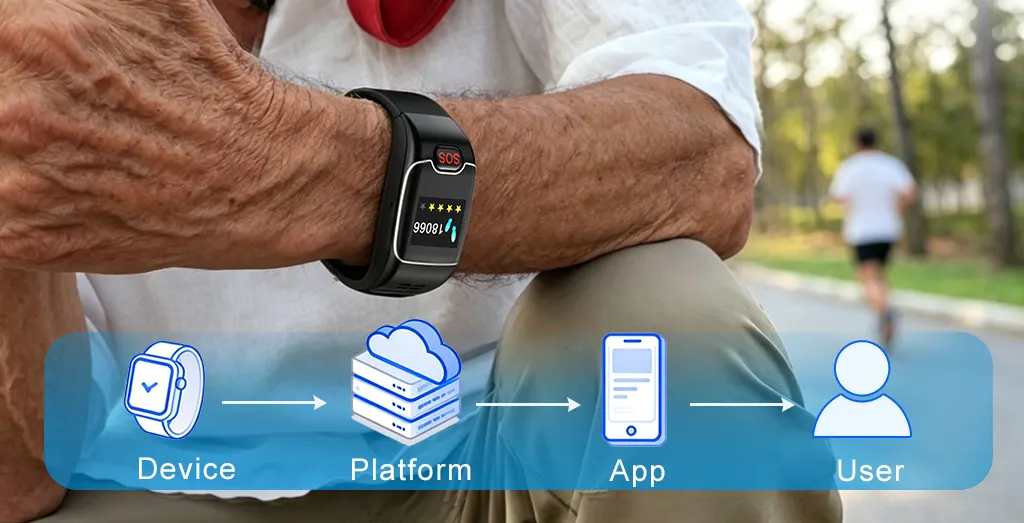
A Private Server Elderly Smartwatch solution allows device data, alerts, user accounts, and service workflows to connect with a buyer-controlled server or dedicated cloud environment. This model is particularly relevant for:
•Telecare and remote-care operators
•Healthcare software platforms
•Nursing-home and assisted-living groups
•Government elderly-care projects
•Insurance and emergency-response providers
•OEM and ODM elderly smartwatch brands
An elderly smartwatch private server is not required for every project. A manufacturer's standard cloud platform may be sufficient for sample evaluation, small pilots, or projects with limited customization. However, when data ownership, regional hosting, system integration, or long-term platform independence becomes important, private deployment should be discussed before firmware and application architecture are finalized.
What Does Private Server Deployment Mean?
Private server deployment means that data generated by the elderly smartwatch is not limited to the manufacturer's shared cloud platform. Depending on the project architecture, the device may transmit information to:
•The buyer's on-premises server
•A private cloud account
•A dedicated regional cloud instance
•A third-party telecare platform
•A custom monitoring-center system
Typical transmitted data may include:
•SOS alerts and emergency-call records
•GPS positioning and location history
•Geofence entry or exit events
•Fall-detection notifications
•Heart rate, blood oxygen, temperature, or activity data
•Battery level and charging status
•Device online or offline status
•SIM, network, and firmware information
•Remote configuration and OTA update records
Communication may be implemented through REST API, HTTPS, TCP/IP, MQTT, WebSocket, or a customized device protocol.
A telecare device private server is therefore more than a hosting arrangement. It influences data access, user management, application architecture, security policies, platform maintenance, technical support, and long-term operational responsibility.
When Do B2B Buyers Need a Private Server?
A private server becomes more valuable when the smartwatch forms part of a wider care-service ecosystem rather than operating as a standalone consumer device.
Telecare Operators
Telecare providers commonly operate centralized monitoring platforms, caregiver dashboards, or emergency call centers. They may need elderly smartwatches, GPS trackers, SOS pendants, and home-care sensors to feed information into the same operational workflow.
An elderly smartwatch private server can help unify:
•User and caregiver profiles
•Device registration and binding
•Alarm prioritization
•Escalation procedures
•Call-center response records
•Incident reporting
•Multi-device monitoring
This reduces the need for care staff to switch between separate manufacturer applications.
Healthcare and Elderly-Care Platforms
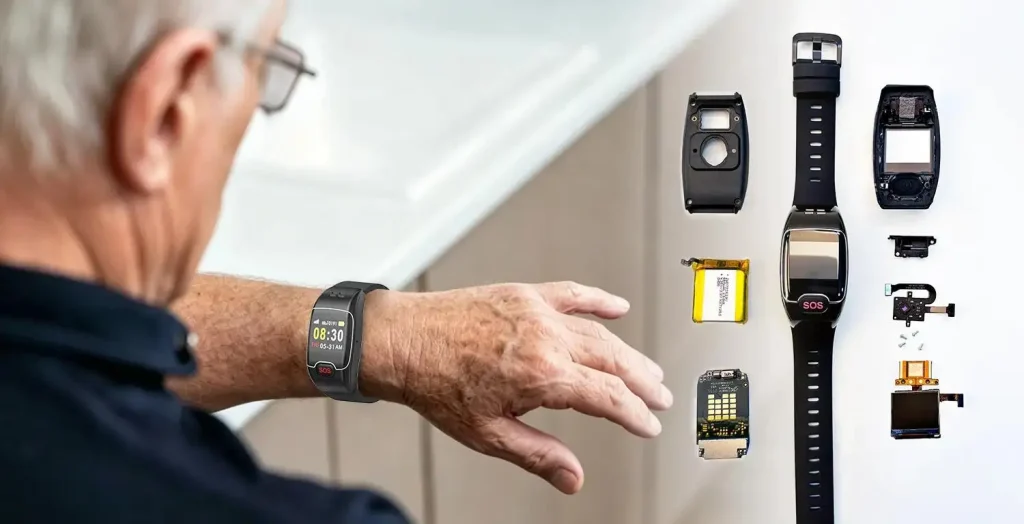
Healthcare software providers may need wearable information to appear directly inside their existing platform. Through smartwatch API integration, SOS alerts, battery status, positioning data, and basic health indicators can be connected with caregiver portals, electronic care records, or operational reporting systems.
Private deployment gives the platform operator more control over how data is:
•Displayed
•Stored
•Shared
•Analyzed
•Exported
•Retained or deleted
Enterprise, Government, and OEM/ODM Projects
Large organizations may have strict requirements concerning regional data hosting, administrator permissions, identity management, auditing, and vendor continuity.
OEM and ODM brands may also prefer a custom smartwatch cloud platform rather than placing all users on a supplier-controlled application. This approach can support branded services, regional distribution models, subscription programs, and independent customer management.
Key Benefits of Private Server Deployment
Stronger Elderly Smartwatch Data Ownership
For many buyers, elderly smartwatch data ownership is the primary reason for choosing a private server model.
A properly defined deployment can clarify who controls:
•User accounts
•Device identifiers
•Family and caregiver permissions
•GPS history
•Health-monitoring records
•SOS and incident data
•Platform-generated reports
This is especially important when several parties are involved, such as manufacturers, distributors, care institutions, service providers, and end users.
More Practical Smartwatch API Integration
A private deployment can make smartwatch API integration easier to align with existing business systems. Instead of requiring caregivers to use an isolated manufacturer dashboard, device events can be transmitted directly to the buyer's software.
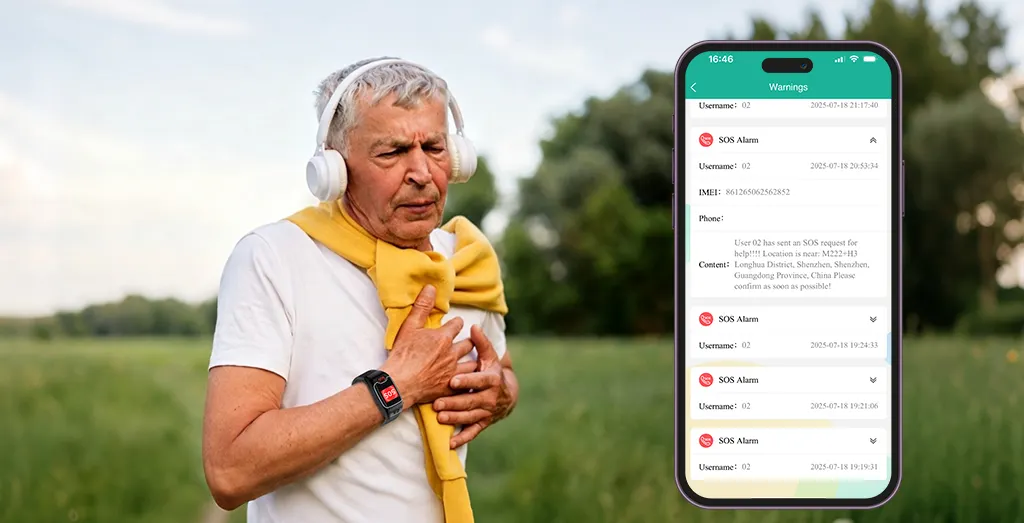
Possible integrations include:
•Monitoring-center alarm queues
•Caregiver mobile applications
•CRM and customer-service platforms
•Emergency escalation systems
•Device management portals
•Health and activity reports
•SMS, email, or push-notification services
Greater Platform Customization
A custom smartwatch cloud platform can be designed around the project's service model rather than the limitations of a standard consumer application.
Customization may include:
•Brand-specific interfaces
•Custom account roles
•Multiple institution hierarchies
•Regional language support
•Special alert messages
•Custom geofence logic
•Project-specific data fields
•Local emergency numbers
•Distributor or nursing-home dashboards
Improved Long-Term Service Continuity
Care organizations may use connected devices for several years. They should therefore consider what happens if a distributor changes, a cloud service is discontinued, or a supplier relationship ends.
A Private Server Elderly Smartwatch strategy can reduce dependence on a single shared cloud account and provide a clearer migration, backup, and continuity plan.
What Buyers Should Verify Before Selecting This Model
| Evaluation Aspect | Questions B2B Buyers Should Consider |
| Device Communication | What APIs and communication protocols does the system support? |
| Data Coverage | Are GPS, SOS, fall, battery, health, and device-status data relayable? |
| Downlink Commands | Can the server change the reporting interval, contacts, APN, and other device settings? |
| Firmware | Does the target server require specific firmware? |
| Security | What is the process of device authentication and API request authorization? |
| Scope of Platform | Are the mobile application, dashboard, and call-center interface included? |
| Maintenance | Who is responsible for hosting, backups, monitoring, updates, and fault recovery? |
| Compliance | Who is responsible for the privacy, consent, data retention, and regional laws? |
Communication from Device to Server
Determine whether the device has any of the following implementations: REST API, HTTPS, TCP/IP, MQTT, or any custom-designed protocol. Also identify the nature of communication, i.e. one-way or two-way.
Bidirectional communication may be required for:
•Updating SOS contacts
•Changing GPS reporting intervals
•Configuring geofences
•Adjusting health-monitoring schedules
•Modifying APN or network settings
•Triggering remote restart or OTA updates
Firmware and Protocol Adaptation
Some elderly smartwatch private server projects require customized firmware. The customer may use a specific data packet, encryption method, authentication token, APN, or command format.
These requirements should be documented early because they affect development time, testing scope, sample quantity, and engineering cost.
Application and Platform Responsibility
Private deployment does not automatically include a complete mobile app, web dashboard, monitoring center, or analytics system.
The project scope should clearly define responsibility for:
•Device firmware
•Communication protocol
•Server environment
•Database
•Mobile application
•Web administration portal
•Notification services
•Technical maintenance
Wearable Data Security and Pilot Testing
Wearable data security should be incorporated into the system architecture rather than added after deployment.

Buyers should review:
•API authentication
•Data encryption in transit
•Administrator permissions
•Account-role separation
•Access logs
•Backup and recovery
•Server monitoring
•Incident response
•Data retention and deletion rules
Before mass production, the solution should be tested using real devices, production SIM cards, target cellular networks, and representative user scenarios.
A pilot should verify:
•Alert transmission time
•GPS location quality
•Fall-detection workflow
•Battery consumption
•Offline data handling
•Platform display accuracy
•Caregiver notification logic
•Server stability under multiple devices
Private Server vs. Standard Cloud: How to Decide
| Project Requirement | Standard Manufacturer Cloud | Private Server Deployment |
| Fast sample testing | Recommended | Usually unnecessary |
| Small deployment | Cost-effective | May add complexity |
| Limited customization | Suitable | Optional |
| Existing care platform | Limited integration | Better integration potential |
| Regional data hosting | May be restricted | Buyer-controlled |
| Custom workflows | Usually limited | Highly configurable |
| Brand independence | Lower | Higher |
| Long-term data ownership | Supplier-dependent | More clearly controlled |
Many projects begin with a standard platform for product evaluation and later move to smartwatch API integration or a telecare device private server after the commercial and technical requirements are validated.
How JiAi Supports Private Server Projects
JiAi Intelligent Technology develops elderly smartwatches, health-monitoring wristbands, GPS trackers, SOS pendants, and other connected telecare devices for B2B OEM and ODM projects.
Depending on project requirements, support may include:
•Hardware customization
•Firmware adaptation
•App branding
•Smartwatch API integration
•Communication protocol evaluation
•Private server discussions
•Custom smartwatch cloud platform planning
•Device and platform pilot testing
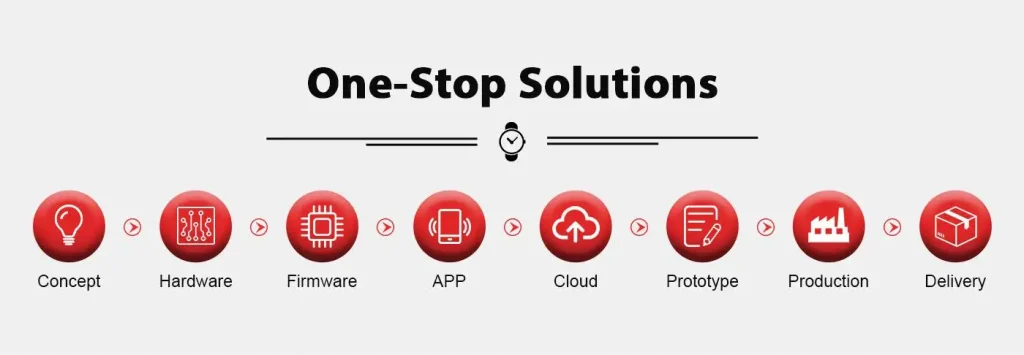
For complex projects involving hardware, firmware, applications, APIs, and cloud architecture, requirements should be reviewed as one complete system rather than as separate purchasing items.
Final Takeaway
Private server deployment for elderly smartwatches is not simply an additional technical feature. It is a strategic decision involving elderly smartwatch data ownership, wearable data security, platform integration, operational continuity, and long-term service control.
The key question is not only whether a smartwatch can connect to a private server. Buyers must confirm whether the device, firmware, communication protocol, API, application, cloud environment, and maintenance responsibilities are properly aligned.
When these elements are planned early, a Private Server Elderly Smartwatch solution can provide telecare operators, healthcare platforms, care institutions, and OEM/ODM brands with a more scalable and controllable foundation for connected elderly care services.
FAQs
Q1. What Products Does JiAi Intelligent Technology Manufacture?
JiAi Intelligent Technology manufactures a variety of smart technologies for elderly care. These products include smartwatches, wristbands, GPS trackers, and telecare systems. These technologies support remote elderly care, real-time health monitoring, and other telecare services.
Q2. Does JiAi Offer OEM and ODM Services for Elderly Smartwatches?
JiAi Intelligent Technology offers both OEM and ODM services and is flexible with hardware, software, and application customizations. How much customization is available is determined by the product model and order quantity.
Q3. Can JiAi Elderly Smartwatches Access a Private Server?
JiAi Intelligent Technology can explore Private Server Elderly Smartwatch Projects with the proper understanding and framing of the buyer's server and communication specifications. The technology can be set up to send data such as GPS, SOS, health monitoring, battery and device status, and falls detection to a server managed by the buyer.
Q4. Does JiAi Support Smartwatch API Integration?
JiAi Intelligent Technology is open to discussing Smartwatch API Integration for telecare service providers, healthcare services, OEM brands, and elderly care service providers.
Q5. What Kind of Data Can JiAi Elderly Smartwatches Transmit?
Depending on the selected model and configuration, JiAi Elderly Smartwatches may transmit information such as:
•SOS notification
•GPS location
•Geofence
•Fall detection
•Battery status
•Device status
•Heart rate and health data
•Emergency contact details
•Device configuration settings
Buyers are encouraged to confirm which data fields they require prior to the beginning of the firmware development process.