
No Screen Smartwatch for Elderly: Why Simple Wearables Matter in Senior Care

2026-07-28

More options and more complex technology do not necessarily lead to better products in elderly care. Tech with a touch screen, health menus, app notifications, and more settings may be appropriate for some seniors. However, for the very elderly, memory care patients, and those with a fear of technology, a far simpler product is appropriate.
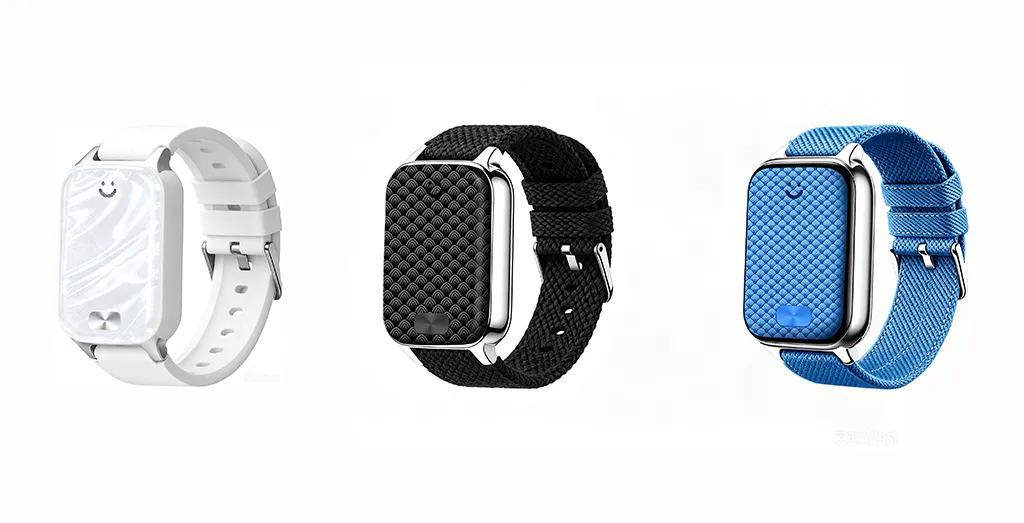
Our No-Screen Smartwatch for Elderly Care simplifies interactions and retains important safety functions. This design approach centers around the following key actions:
• Consistent wear
• SOS button press for emergencies
• Automated alert and location data delivery to caregivers
• Assisting caregivers to manage alerts
• Reporting status of the device and connectivity and battery
The versatility makes our screen less device for elderly care especially valuable to the nursing home, home care, telecare, monitoring, and OEM/ODM service provider markets.
Why a No Screen Design Can Be Useful
Many elderly-care devices are designed like consumer smartwatches, with colorful displays, touch gestures, icons, watch faces, and health dashboards. Although these features may look attractive in a product presentation, they can create unnecessary barriers for some users.
A No Screen Smartwatch for Elderly users reduces the number of decisions the wearer must make. There is:
• No small text to read
• No menu to remember
• No touch gesture to learn
• No screen to unlock
• No complicated interface to operate
The primary interaction is usually a physical SOS button, supported by vibration, LED indicators, voice prompts, caregiver notifications, or monitoring-platform alerts.
A simple wearable for seniors may be especially suitable for:
• High-age users
• People with reduced eyesight
• Users with limited hand coordination
• Residents with memory decline
• Seniors who regularly remove conventional smartwatches
• Programs focused mainly on safety and emergency response
What a Screenless Elderly Wearable Can Still Do
Removing the display does not mean removing connected functions. A screenless wearable for elderly care can still support location tracking, emergency communication, device management, and telecare integration.
SOS Alerts
The SOS button is normally the core function of a screenless SOS bracelet for elderly users. It should be:
• Easy to locate by touch
• Large enough for users with reduced dexterity
• Comfortable to press
• Protected against accidental activation
• Supported by clear vibration, LED, or voice feedback
B2B buyers should test the complete SOS workflow rather than evaluating only the button itself:
Button press → event confirmation → network transmission → caregiver notification → acknowledgement → escalation → incident record
Testing should include users with weak eyesight, limited hand strength, slower reaction times, or cognitive impairment.
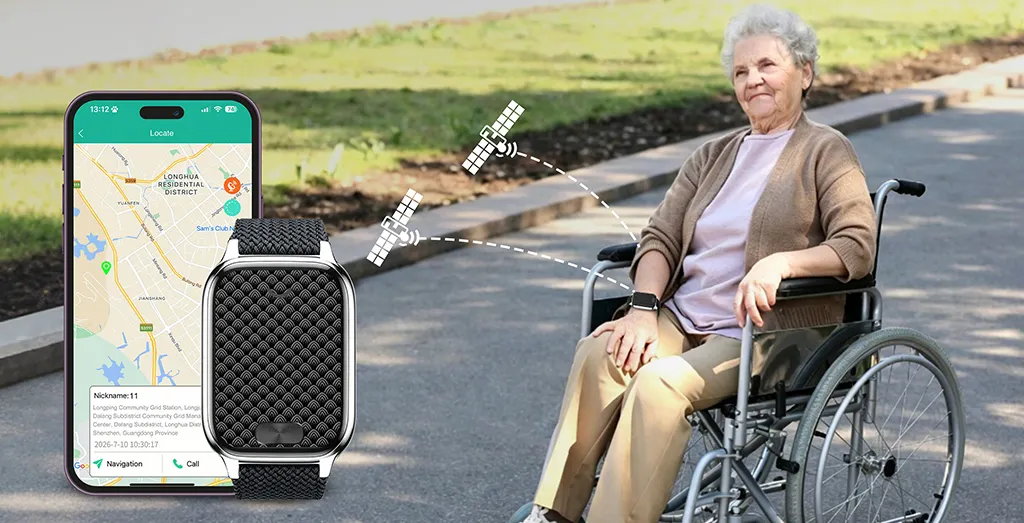
GPS Location Support
A senior SOS GPS bracelet can send location data to a caregiver application, cloud service, proprietary server, or a third-party monitoring solution. The location information can assist with the following:
• Emergency management
• Geofence notification
• Wandering control
• Activity monitoring
• Caregiver management
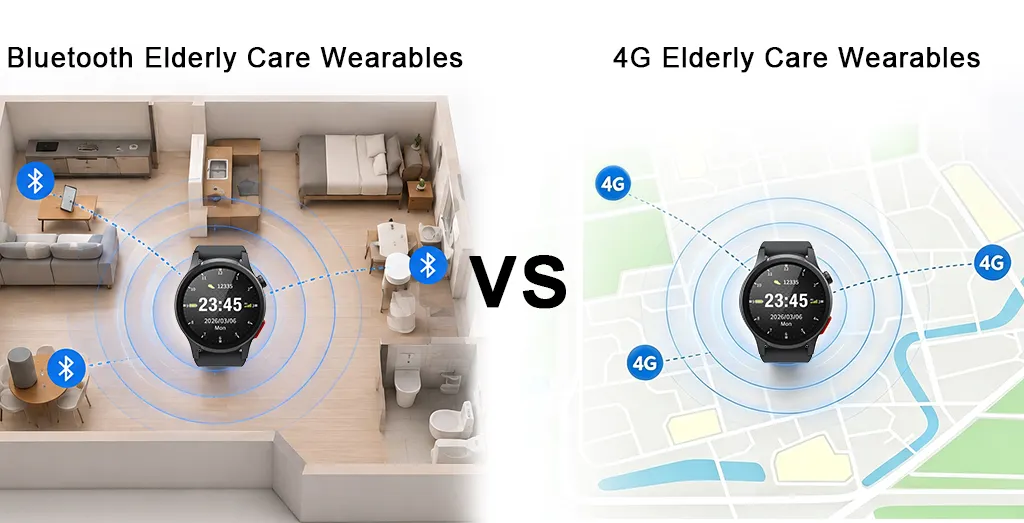
It is essential to relay information concerning the performance of GPS technology. It can help to be more aware of the location of an individual, but the positioning accuracy can be impacted indoors, in areas with tall buildings, or with low signal strength. Several initiatives combine GPS, Wi-Fi, LBS, Bluetooth, and indoor positioning technologies.
Fall and Motion-Related Events
Depending on the sensor configuration and firmware, a No Screen Smartwatch for Elderly care may support fall detection, inactivity alerts, or unusual-motion events.
Before deployment, buyers should evaluate:
• False-positive frequency
• Missed-event risk
• Detection delay
• User cancellation logic
• Sensor sensitivity
• Escalation rules
Fall detection should be treated as a support function rather than a guaranteed replacement for caregiver supervision.
Device Status and Low-Battery Alerts
Effectively managing a fleet of devices is integral to the operation of a nursing home or large-scale telecare program. The following device management functions are valuable:
• Low-battery alert
• Offline device reminders
• Charging status
• SIM and network status
• Firmware version
• Device health
These functions assist staff to prevent an issue before it becomes a critical problem.
No Screen Smartwatch vs. SOS Pendant vs. Standard Smartwatch
| Device Type | Main Advantages | Typical Limitations | Suitable Users |
| Standard elderly smartwatch | Display, calling, reminders, health information | More complex interface and higher power consumption | Active seniors comfortable with technology |
| SOS pendant | Very simple operation and easy emergency activation | May be removed, forgotten, or uncomfortable around the neck | Users who prefer pendant-style devices |
| No Screen Smartwatch for Elderly | Wrist-worn, discreet, simple, connected | Limited direct visual information | Seniors needing safety support without screen interaction |
A discreet safety bracelet for elderly users sits between a basic pendant and a full-featured smartwatch. It retains the familiar wrist-worn form while reducing visual and operational complexity.
An elderly alert bracelet with no screen design may also achieve better wearing compliance because it looks less like a medical alarm and more like a simple wristband.
What B2B Buyers Should Evaluate Before Deployment
A simple interface does not mean the product requires less professional evaluation. Before selecting a No Screen Smartwatch for Elderly project, buyers should examine the following factors.
Wearing Comfort
Daily wearing compliance depends on:
• Product weight and thickness
• Strap softness and breathability
• Buckle security
• Wrist-size adjustment
• Skin-contact materials
• Resistance to accidental removal
A device that performs well technically may still fail if the wearer removes it after several hours.
Charging Method
Charging should be designed to be convenient for elderly users and care staff. Examples include magnetic cables, charging docks, contact pins, and charging bases that can be closed.
Purchasers should assess:
• Charging alignment
• Visibility of indicators
• Durability of contact pins
• Time to achieve a full charge
• Time to be alerted of low battery
• Methods for charging multiple devices
Waterproof Design
Elderly users may need to wear a screenless SOS bracelet for elderly care while engaging in certain activities. Purchasers should check:
• IP rating
• Sealing structure
• Waterproof buttons
• Protection for charging contacts
• Showering
• Cleaning and disinfection
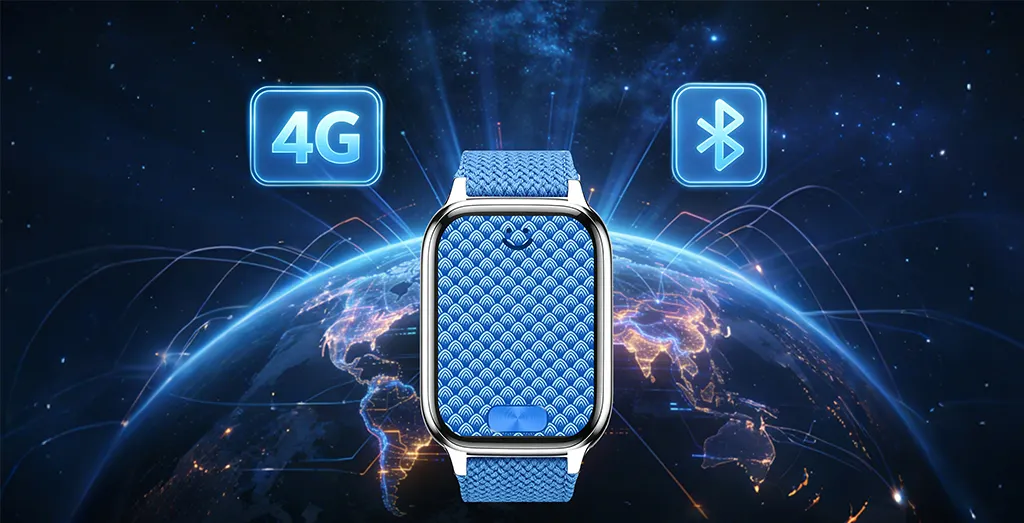
Compatibility of Networks
Check for:
• 4G LTE bands
• SIM-card type
• APN setup
• Operator compatibility
• VoLTE
• Regional certification
• Roaming and data-plan terms
Different hardware will be required for Europe, North America, Australia, and other regions.
Alert Workflow
The device must match the care model. Family-led care, nursing-home management, home-care services, and professional monitoring centers may require different notification and escalation procedures.
Platform and API Support
For connected telecare projects, buyers should confirm the availability of:
• Caregiver apps
• Web management platforms
• Device-management dashboards
• API documentation
• Custom communication protocols
• Private-server deployment
• Third-party platform integration
• Data ownership and access control
OEM/ODM Opportunities for Screenless Elderly Wearables
A No Screen Smartwatch for Elderly is well suited to OEM and ODM development because product value depends on the complete system rather than the display.
Customization may include:
• Logo, color, packaging, and strap design
• SOS button behavior
• LED, vibration, and voice feedback
• Firmware and alert rules
• App and platform branding
• API integration
• Private-server deployment
• Geofence and escalation settings
Deeper ODM projects may involve PCB design, antenna optimization, battery selection, sensor configuration, waterproof engineering, tooling, certification preparation, and pilot testing.
JiAi Intelligent Technology develops elderly smartwatches, wristbands, GPS trackers, SOS pendants, and telecare devices for B2B customers. Its services include standard device supply, firmware customization, app and platform options, API communication, private-server discussions, and custom hardware development.
Final Takeaway
A No Screen Smartwatch for Elderly Care simplifies the user experience by eliminating the complexities of designs and interfaces for technology. The experience is built to smooth user interactions and sustain critical functions of safety and connectivity.
For B2B buyers, ease of use for a simple wearable for seniors translates to a high degree of comfort, an easy SOS function, effective GPS, long battery life, being waterproof, appropriate networking, device management, alert workflow, and platform integration.
When properly designed, an elderly alert bracelet no-screen solution can provide a practical, discreet, and scalable foundation for modern senior care and telecare services.
FAQs
Q1. What elderly-care wearables are offered by JiAi Intelligent Technology?
JiAi Intelligent Technology specializes in eldercare smartwatches, wristbands, GPS trackers, SOS neck pendants, and engaging telecare devices. JiAi offers flexible telecare product solutions to meet the needs of senior-care, nursing-home, home-care, and emergency-response services.
Q2. Does JiAi provide No Screen Smartwatch options for the Elderly?
JiAi specializes in No Screen Smartwatch for the Elderly. These designs accommodate easy operation with a physical SOS button, status indicators, location, and caregiver alert support. No Screen Smartwatches are ideal for elderly users who have difficulty operating touch screens.
Q3. Can JiAi develop a screenless SOS bracelet for elderly-care brands?
JiAi Intelligent Technology can support the development of screenless SOS bracelets for elderly users with OEM customization options that include product color, logo, and strap, packaging, SOS button, LED, vibration, and voice prompt with an option to customize the firmware.
Q4. Does JiAi offer OEM and ODM services?
JiAi offers support for both OEM and ODM services. For OEM projects, JiAi may apply customization to an existing product platform. In contrast, JiAi may offer extensive support for customization in ODM projects.
Q5. Are JiAi devices compatible with telecare offered by the customer?
JiAi can discuss projects based on customer telecare systems for JiAi devices. JiAi may support project development by designing the telecare system and offering support for caregiver apps, monitoring dashboards, and telecare system integration.