
Elderly GPS Tracker Battery Life: What Buyers Should Know Before Deployment

2026-07-30
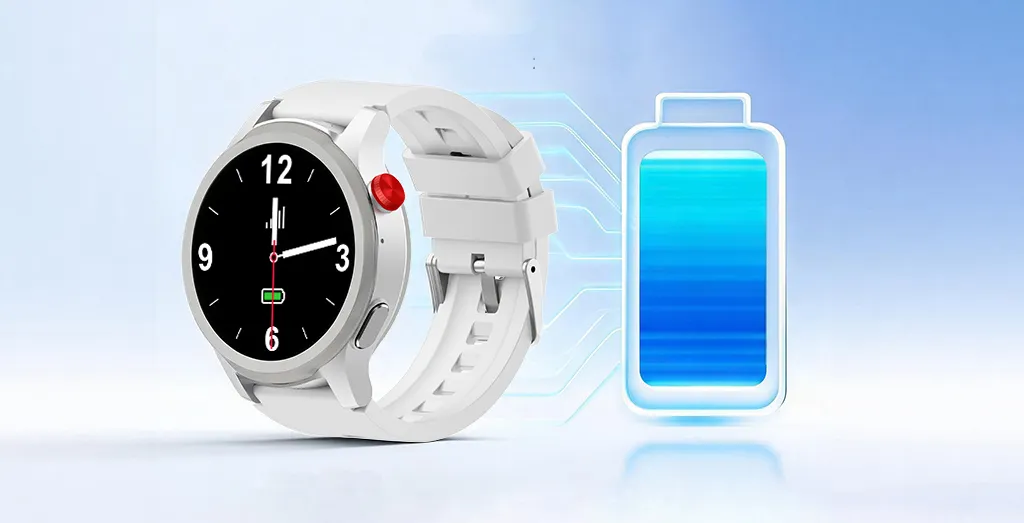
Battery performance is a critical consideration in any elderly location-tracking project. For telecare providers, nursing homes, care platforms, distributors, and OEM/ODM brands, a device can only support elderly safety when it remains powered throughout the required care cycle.
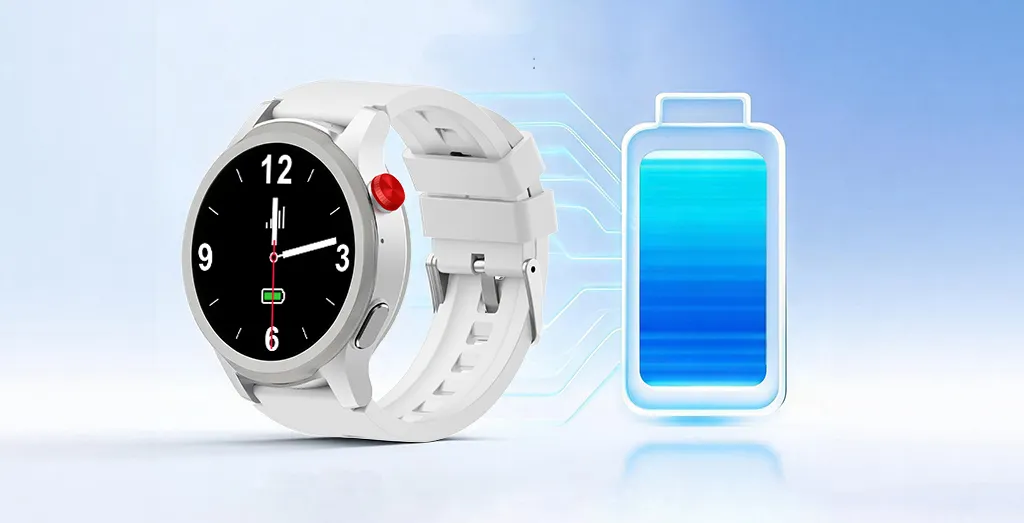
However, Elderly GPS Tracker Battery Life is frequently misunderstood. A specification may state "up to several days," but actual operating time depends on:
•GPS reporting interval
•4G signal strength
•Outdoor and indoor positioning frequency
•Screen and sensor activity
•SOS calls and voice communication
•Geofence monitoring
•Firmware power management
•Individual user behavior
For B2B buyers, the key question is not simply, "How long does the battery last?" It is: Under which settings, network conditions, and usage scenarios was the battery tested?
Why GPS Tracker Battery Life Varies So Much
A GPS tracker for elderly users performs more tasks than a basic Bluetooth bracelet or digital watch. Depending on the product configuration, it may need to:
•Acquire GPS coordinates
•Transmit data through a 4G network
•Receive platform commands
•Detect movement or falls
•Activate SOS calling
•Monitor health-related sensors
•Report battery and device status
Each process consumes power. When several functions operate simultaneously, the real battery life GPS smartwatch performance can differ significantly from laboratory standby results.
A GPS watch for seniors used mainly for standby and occasional SOS calls will normally last longer than the same device sending location updates every minute. Weak mobile coverage, frequent screen use, repeated alerts, and continuous positioning will further reduce operating time.
Battery specifications should therefore be compared only when the test conditions are clearly defined.
GPS Reporting Interval: The Largest Power Variable
The GPS reporting interval determines how often the wearable wakes up, searches for a location, and uploads data to the care platform.
| Reporting Strategy | Location Visibility | Battery Impact | Typical Application |
| Every 1–3 minutes | Very frequent | High | Emergency tracking or active wandering response |
| Every 5–10 minutes | Frequent | Medium to high | Higher-risk community care |
| Every 15–30 minutes | Balanced | Medium | General home-care monitoring |
| Event-based reporting | Activity dependent | Low to medium | Geofence, movement, or SOS-triggered projects |
| Manual or scheduled reporting | Limited | Low | Low-risk users and periodic status checks |
GPS data movement history improves with short intervals at the cost of increased battery life and data transmission. Long intervals save battery but provide caregivers fewer movement history updates.
For most applications, constant GPS tracking isn't needed. Instead, the system could be designed to track GPS location at:
•Longer intervals during normal standby.
•Respond to movement at increased intervals.
•Use constant GPS tracking during SOS events.
•Reduce tracking during low battery mode.
•Event triggered tracking at geofence limits.
B2B buyers need to ask if the system allows for user-adjustable reporting intervals via the management portal.
Mobile Data and 4G Battery Use
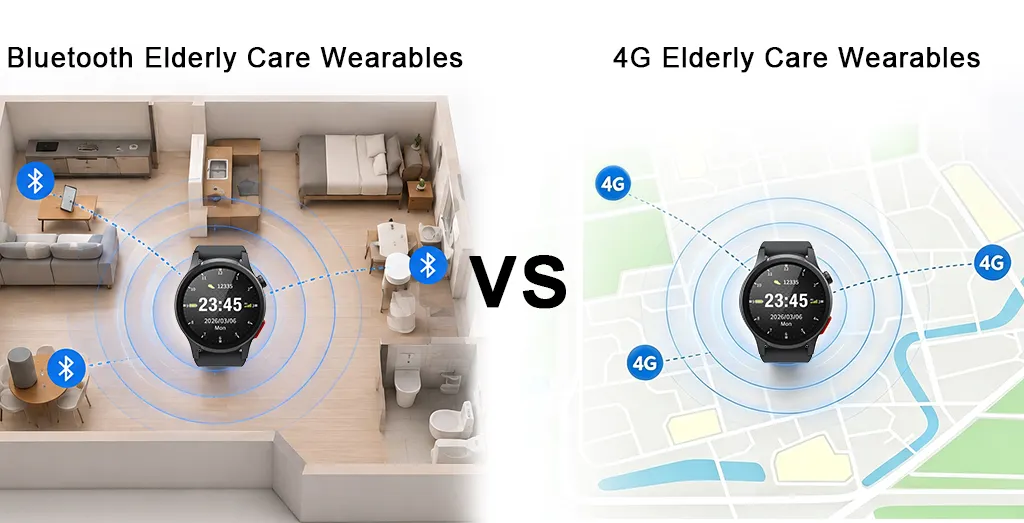
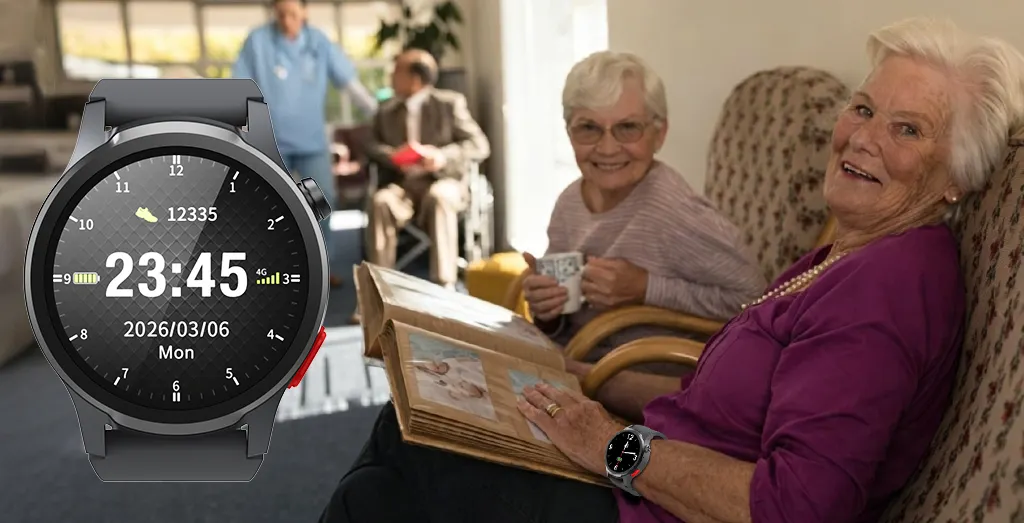
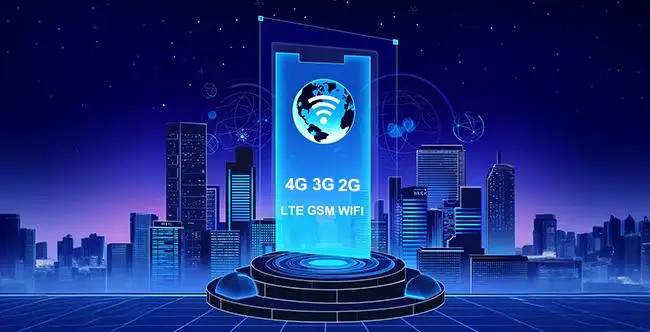
4G GPS trackers for elderly with dementia require a constant data signal to send location and alert information. If data signal is poor, the tracker may go into an endless loop of searching for signal, data connection, and increasing battery use to transmit information.
This issue is especially relevant in:
•Rural communities
•Basements and underground areas
•Reinforced-concrete buildings
•Large nursing-home facilities
•Areas with inconsistent operator coverage
•Cross-border or multi-country deployments
Before approving samples, buyers should test the intended SIM card, mobile operator, APN settings, LTE bands, and deployment region.
A battery-life GPS smartwatch that performs well on a laboratory network may operate very differently in a care facility with poor indoor reception or frequent network handovers.
GPS, Wi-Fi, LBS, and BLE Power Trade-Offs
Many elderly tracking devices combine several positioning technologies.
| Positioning Method | Main Advantage | Limitation | Power Consideration |
| GPS/GNSS | Strong outdoor positioning | Limited indoors | Higher consumption during frequent acquisition |
| Wi-Fi positioning | Useful near buildings and urban networks | Database-dependent accuracy | Moderate consumption |
| LBS | Wide cellular availability | Lower positioning accuracy | Generally lower than continuous GPS |
| BLE | Efficient indoor zone detection | Requires beacons or gateways | Supports low-power indoor positioning |
The objective is not to keep every positioning method active continuously. A well-designed positioning strategy should match the deployment environment.
For example:
•Outdoor wandering projects may prioritize GPS and 4G.
•Nursing homes may combine BLE beacons with event-based GPS.
•Home-care projects may use Wi-Fi, LBS, and scheduled outdoor GPS.
•Mixed-use projects may switch positioning modes according to movement and signal availability.
This adaptive approach is central to low power design in wearables.
SOS Calls, Geofencing, and Alert Events
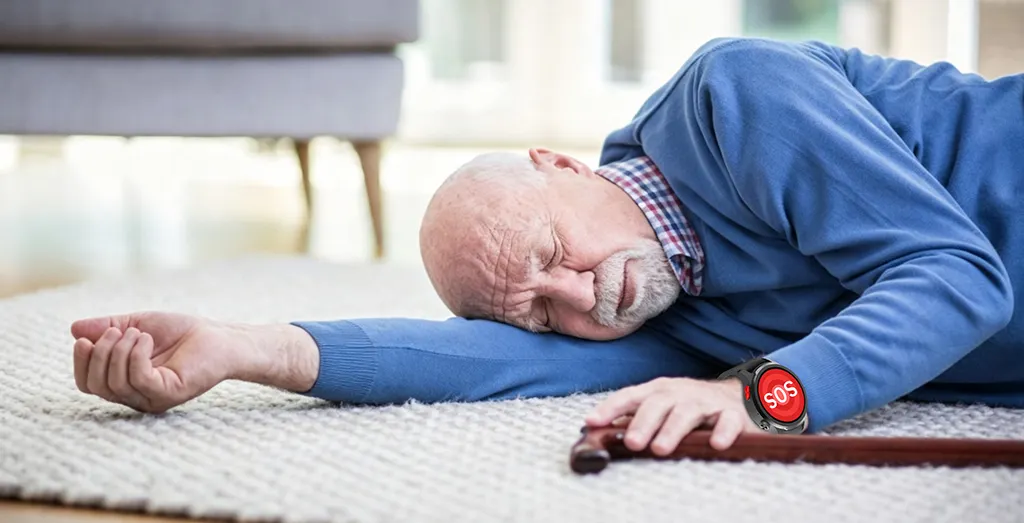
SOS events can significantly increase power consumption because they may activate:
•High-frequency positioning
•Mobile-data transmission
•Voice calling
•Speaker and microphone functions
•Vibration or audible alarms
•Repeated alert attempts
Elderly GPS Tracker Battery Life is also impacted by geofencing. Smaller geofences can create numerous alerts as a result of GPS drift. In addition, checking the boundary frequently will require many location updates.
Customers looking to buy a GPS tracker for seniors with dementia should pay attention to the radius for geofencing, iterative alerts, accuracy of GPS, frequency of tracking, and escalation procedures. The safety consideration of the shortest reporting interval includes an understanding of what gives the best alerts, and minimizes false alerts, and offers the best configuration for the device.
Battery Capacity Is Not the Whole Story
A larger battery does not automatically guarantee longer operating time. Effective low-power design in wearables also depends on:
•Chipset efficiency
•Antenna performance
•Firmware optimization
•Sensor sampling frequency
•Screen wake-up duration
•Sleep and wake strategies
•Network reconnection logic
•Data-packet size and upload frequency
Battery size also affects product weight, thickness, comfort, waterproof construction, charging design, and appearance. An oversized battery may improve standby time but make a GPS watch for seniors uncomfortable for continuous wear.
The most practical design balances battery capacity, device dimensions, required functions, and charging frequency.
What Buyers Should Test Before Bulk Orders
Desk-based standby testing is not sufficient. A structured B2B validation should include:
•Normal standby at the selected GPS reporting interval
•Outdoor tracking while the wearer is moving
•Indoor operation with limited GPS reception
•4G transmission using the intended SIM card
•SOS calling and emergency-mode reporting
•Geofence entry and exit alerts
•Low-battery alert timing
•Charging time and charging stability
•Repeated notification and reconnection events
•Battery performance after multiple charge cycles
Buyers should record the starting battery level, test duration, number of GPS uploads, signal conditions, call duration, and remaining battery percentage. This creates a repeatable benchmark for comparing firmware versions and device models.
Charging Management in Care Projects
Battery performance is also an operational issue. Care providers should define:
•Who checks the battery status
•When devices are charged
•How low-battery alerts are escalated
•Whether backup devices are available
•How users are reminded to wear the device again
•How offline or powered-off devices are identified
A fleet-management platform should display battery level, online status, recent communication time, and alert history. Without this visibility, even a well-designed GPS tracker for elderly users may fail because the device was not charged or returned to the wearer.
JiAi's Support for GPS Wearable Projects
JiAi Intelligent Technology develops elderly smartwatches, GPS trackers, SOS pendants, wristbands, and telecare wearables for B2B OEM and ODM projects.
Project support can include:
•Hardware and enclosure customization
•Firmware and power-management configuration
•Adjustable GPS reporting interval settings
•API and platform communication
•Private-server deployment discussions
•Positioning and alert workflow development
Buyers can also review JiAi's elderly smartwatch manufacturing capabilities and elderly smartwatch API integration services. A dedicated elderly GPS tracker manufacturer page can be connected when available.
Final Takeaway
Elderly GPS Tracker Battery Life depends on much more than battery capacity. GPS reporting frequency, 4G coverage, positioning strategy, geofencing, SOS calls, firmware design, and charging procedures all affect real operating time.
Testing each GPS tracker for dementia as well as other senior caregiving devices individually should be done prior to any bulk purchase. Aspects like visibility of location, emergency response, comfort for the wearer, management of the platform, and practical charging should be thoughtfully balanced for the best solution.
GPS tracking devices should maintain safety and respond to relief and safety burdens during the devices' care and movement of seniors with dementia. GPS tracking watches should be designed to respond and remain safe and relieve burdens during care of seniors by reducing charging and maintenance.
FAQs
Q1. What positioning technologies are supported for JiAi elderly tracker?
JiAi devices can integrate GPS or GNSS, Wi-Fi positioning, cellular LBS, and BLE positioning depending on the strategy and design requirements. GPS is predominantly for outdoor use, whereas Wi-Fi, LBS, and BLE can be used for indoor or zone-based location workflows.
Q2. Does JiAi Intelligent Technology offer OEM and ODM?
JiAi Intelligent Technology offers OEM and ODM services. They support customization of product appearance, enclosure, firmware, branding and packaging, as well as positioning and charging technologies, and platform communication. Other services may be available based on specific project requirements.
Q3. Is it possible to customize the GPS reporting interval?
Customization of the GPS reporting interval is indeed possible. Different reporting intervals can be utilized for varying levels of detection to facilitate standby, movement detection, geofence setting, emergency tracking, and low battery operations of the Elderly GPS Tracker.
Q4. What initiatives taken by JiAi can help extend elderly GPS tracker battery life?
JiAi can enhance battery performance for JiAi devices by optimizing chipset selection, incorporating firmware sleep mode, and by designing for variable GPS reporting and sensor sampling, as well as logic for network reconnect, screen management, and positioning based on triggered events. The actual battery performance will depend on usage and SOS functionality.
Q5. Are JiAi devices safe for elderly dementia users?
JiAi can design a dementia-friendly GPS Tracker for the Elderly with multiple features. These include location tracking, geofence triggers, SOS call, movement track, low battery alert, and a caregiver support platform. The level of features should be based on the expected wandering behavior and care placement.