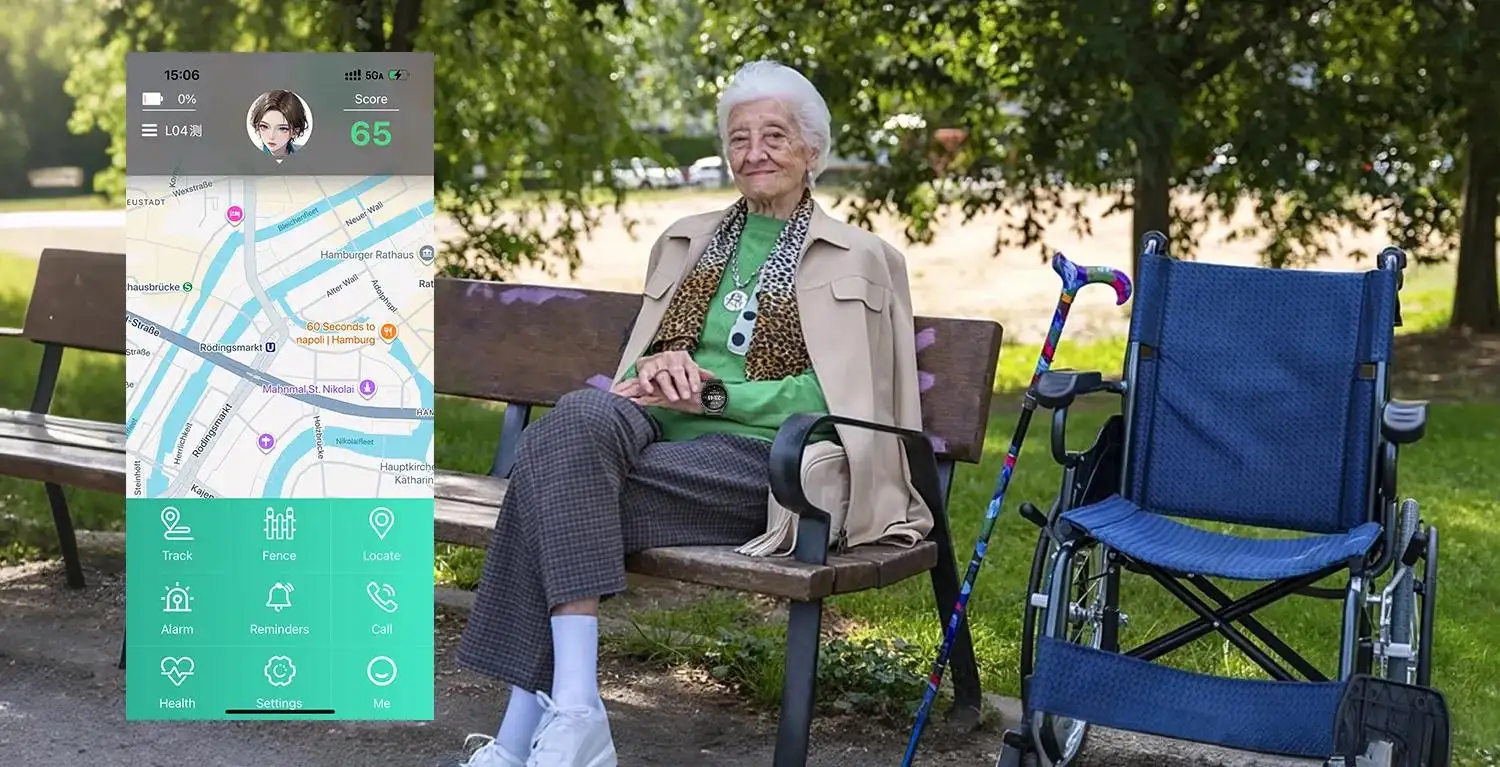

Elderly Care Wearable Deployment: A B2B Guide from Pilot Testing to Large-Scale Rollout

2026-09-22
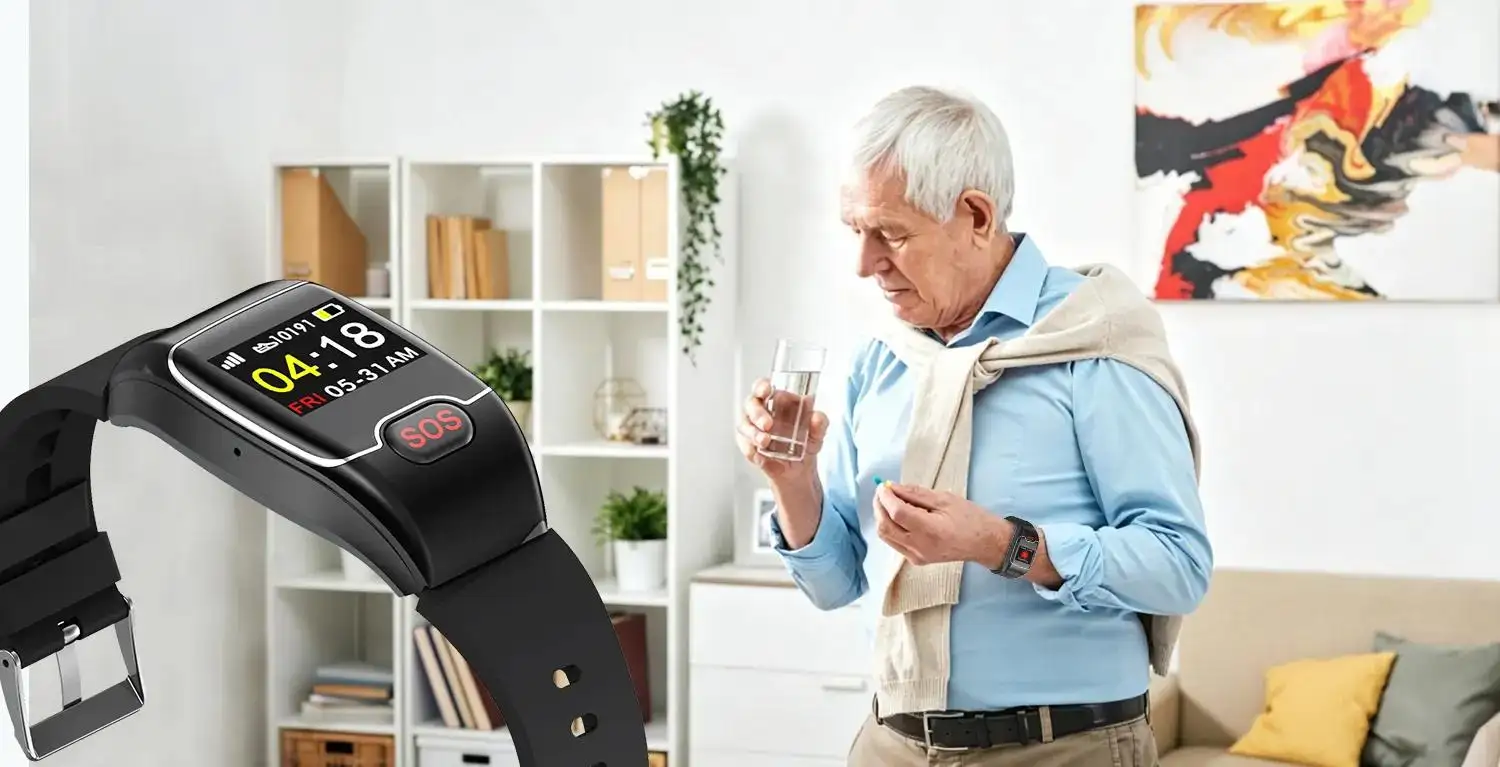
Selecting a wearable is only the first step in a connected elderly care project. For telecare providers, healthcare technology companies, elderly care organizations, system integrators, and monitoring-service providers, the larger challenge is deploying hundreds or thousands of devices reliably.
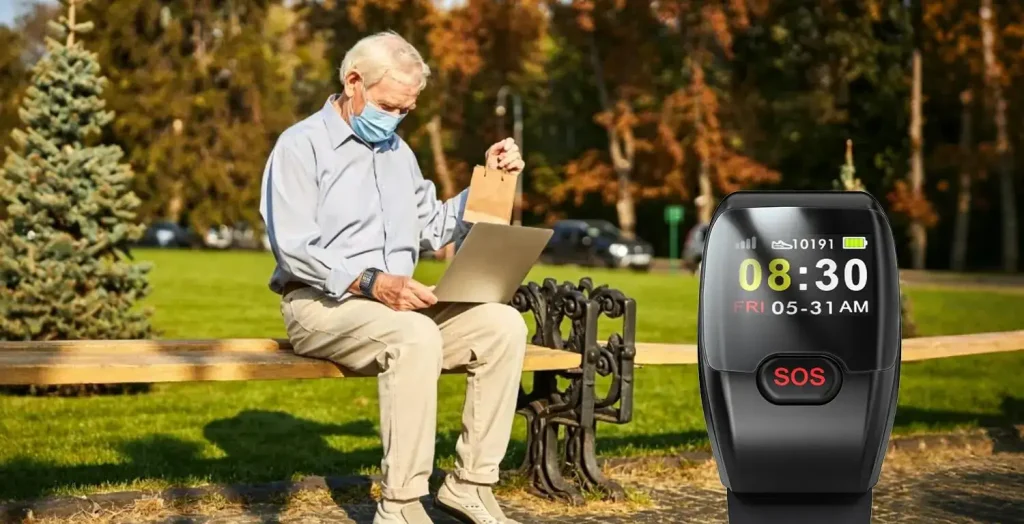
Successful Elderly Care Wearable Deployment requires coordinated planning across hardware, firmware, connectivity, servers, APIs, applications, provisioning, manufacturing, and remote device management.
For this reason, B2B buyers should define wearable device implementation requirements before mass production rather than treating deployment as the final stage of procurement.
What Elderly Care Wearable Deployment Includes
Elderly Care Wearable Deployment is the process of preparing, configuring, integrating, distributing, monitoring, and maintaining connected wearables in real care environments.
A typical wearable device deployment may include:
•Hardware and firmware configuration
•SIM, APN, and network preparation
•Device ID and user binding
•Server and cloud configuration
•API or protocol integration
•Application setup
•Pilot testing
•Batch provisioning
•OTA firmware preparation
•Device distribution
•Wearable device management
•Remote troubleshooting and technical support
A device may pass factory testing but still experience field problems if connectivity, provisioning, integration, and fleet-management requirements are not coordinated.
Define the Elderly Care Deployment Environment First
Before hardware selection, buyers should establish how and where the wearable will operate.
Wearables intended for older people who wish to live independently likely have different design and functional requirements compared to those used for residents in care facilities, or for individuals in home-based care programs.
Some considerations are:
•Where will the devices operate?
•What type of communication will the devices use?
•Will the devices use cellular? Wi-Fi? Bluetooth?
•Will the devices have GPS?
•How large will the devices' memory be?
•Who will replace the batteries for the devices?
•Is there a monitoring center?
•Does the customer provide a program or application?
•Is the customer expecting to purchase a large number of units?
These answers directly influence battery capacity, modem selection, firmware logic, server architecture, and the overall telecare device deployment strategy.
Pilot Testing Before Large-Scale Rollout
Pilot validation is one of the most important stages of wearable device implementation. Moving directly from sample approval to several thousand units may expose problems that were not visible in laboratory testing.
| Pilot Area | What to Validate | Deployment Risk |
| Connectivity | Registration, APN, reconnection, data transmission | Devices repeatedly go offline |
| GPS | Fix time, positioning, indoor/outdoor behavior | Inaccurate location reporting |
| Battery | Real configuration and reporting intervals | Shorter-than-expected operating time |
| Server | Data transmission and protocol stability | Lost or delayed data |
| UX | Charging, buttons, alarms, wearing comfort | High support demand |
| Firmware | Stability and OTA readiness | Expensive field maintenance |
Connectivity Validation
Network performance varies across countries, operators, buildings, and coverage conditions. Pilot devices should test network registration, indoor and outdoor cellular performance, APN configuration, GPS behavior, server communication, reconnection after temporary signal loss, and data recovery after interruptions.
This is especially important for international Elderly Care Wearable Deployment projects, where the same device may behave differently across operators and regions.
Battery Validation
Battery life should be tested using the customer's actual operating configuration. Power consumption can change significantly depending on GPS reporting frequency, signal strength, health-monitoring intervals, screen activity, heartbeat intervals, and data upload frequency.
For elderly monitoring devices, battery performance is not only a usability issue. It can also affect service continuity, monitoring reliability, and support workload. Advertised standby time should therefore not be the only basis for deployment planning.
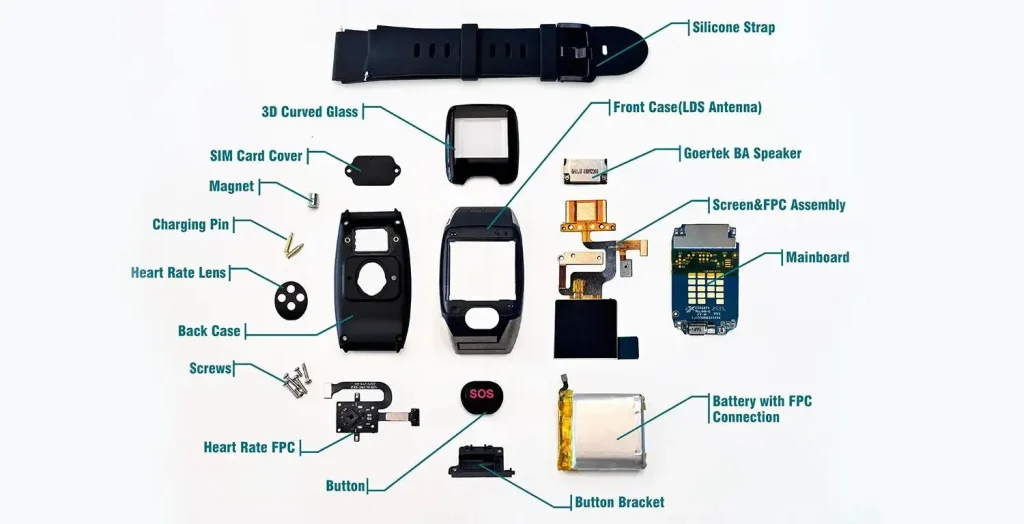
Integrating Elderly Care Wearables with Customer Platforms
Many B2B customers already operate their own telecare platforms, caregiver dashboards, alarm management systems, mobile applications, cloud infrastructure, monitoring centers, or service platforms.
In these cases, integration becomes a core part of Elderly Care Wearable Deployment.
A common architecture is:
Wearable → Cellular/Wi-Fi Network → Device Server → API/Protocol → Customer Platform
Integration may use REST API, HTTP, TCP/IP, MQTT, or proprietary communication protocols depending on the product architecture.
Validating the API mapping, alarm event and device status formats, timestamps, and location data during the pilot stage helps reduce integration changes during mass production of telecare devices. In addition, the telecare devices can be deployed in a more predictable manner.
Batch Provisioning and Device Configuration
Large-scale wearable device deployment requires repeatable provisioning.
Typical configuration items include:
•Server domain or IP
•APN settings
•SOS numbers and escalation logic
•GPS reporting intervals
•Heartbeat intervals
•Health-measurement intervals
•Device identifiers
•Firmware version
•User-account binding
Manually configuring thousands of units increases labor requirements and the risk of errors. A capable manufacturer should therefore support structured provisioning, production-side parameter loading, or batch configuration where the project architecture allows.
For elderly care wearables, provisioning should also consider how devices are assigned to users, caregivers, facilities, or monitoring accounts.
Wearable Device Management After Distribution
Once devices are distributed, physical access becomes difficult. This makes wearable device management essential for scalable operations.
A practical management system may provide:
•Online/offline status
•Battery monitoring
•Firmware-version tracking
•Device grouping
•Remote configuration
•OTA firmware updates
•Batch operations
•Fault diagnostics
•Communication history
For example, a problem affecting 5,000 deployed devices cannot efficiently be resolved by recalling every unit. Remote device management should therefore be designed into the project from an early stage.
For elderly monitoring devices, remote visibility is particularly useful because devices may be spread across homes, care facilities, cities, or countries.
OTA and Firmware Lifecycle Management
Firmware development does not end when mass production begins.
Real-world Elderly Care Wearable Deployment may reveal new operator requirements, network behavior, battery-optimization opportunities, or platform needs.
B2B buyers should define:
•Who approves firmware releases
•How customized firmware is maintained
•Whether OTA supports staged deployment
•Whether test groups can update first
•How firmware versions are recorded
•What happens when an update fails
•Whether rollback is supported
Controlled OTA procedures reduce operational risk and support long-term remote device management.
Scaling from 100 Devices to 10,000+
A system designed for 100 wearables may behave differently when 10,000 elderly care wearables are connected.
Large-scale deployment should consider grouping devices by customer, region, facility, product model, firmware version, or deployment batch.
Backend infrastructure should also be evaluated for simultaneous connections, message frequency, database growth, alarms, API traffic, and monitoring requirements.
At this scale, wearable device implementation becomes more than device distribution. It becomes an ongoing device, data, support, and service-management operation.
Manufacturing Readiness Supports Deployment
Software alone cannot guarantee reliable deployment. Manufacturing consistency is equally important.
B2B buyers should consider:
•Component availability
•Production capacity
•Firmware-version control
•Serial-number management
•Production testing
•Quality-control procedures
•Packaging requirements
•Required certifications
•Hardware-revision control
Uncontrolled changes between hardware or firmware batches may affect API interfaces, network behavior, battery performance, or field compatibility. Manufacturing planning should therefore be connected directly to the Elderly Care Wearable Deployment strategy.
JiAi Intelligent Technology's OEM/ODM Support
JiAi Intelligent Technology develops and manufactures connected wearables for elderly care, telecare, GPS tracking, personal safety, and other smart wearable applications.
Its OEM/ODM support can cover elderly care wearables such as elderly smart watches, screenless smart bands, GPS trackers, SOS wearables, telecare devices, and other elderly monitoring devices.
Depending on the project, support can include:
•Branding and packaging
•Watch-face and UI customization
•Firmware development
•PCB and mechanical development
•Application integration
•API and communication protocols
•Private-server integration
•OTA and remote device management planning
By considering wearable device deployment during product development, technical and operational requirements can be addressed before devices enter large-scale production.
Build Deployment Readiness Before Mass Production
A successful elderly care wearable project is not defined only by whether the first sample works. The real test is whether hundreds or thousands of devices can operate reliably across networks, users, software platforms, and deployment regions.
A scalable Elderly Care Wearable Deployment strategy connects hardware, firmware, connectivity, integration, provisioning, manufacturing, OTA, wearable device management, and technical support into one coordinated lifecycle.
For B2B buyers, addressing these requirements before mass production can reduce field failures, simplify support, and create a stronger foundation for long-term connected elderly care services.
FAQs
Q1. What elderly care wearables does JiAi Intelligent Technology provide?
JiAi Intelligent Technology manufactures connected devices for elderly care, telecare, GPS tracking, and personal safety. Products may include smart watches, screenless wristbands, GPS trackers, SOS wearables, and other elderly monitoring devices.
Q2. Does JiAi support OEM wearable device projects?
Yes. JiAi supports OEM projects for B2B customers, including branding, packaging, watch-face customization, user interfaces, firmware settings, mobile application development, and other project-specific requirements. OEM requirements can be defined around the planned Elderly Care Wearable Deployment.
Q3. Does JiAi support ODM projects for customized wearable devices?
Yes. JiAi can support more extensive ODM projects involving PCB development, mechanical structures, firmware, communications, mobile and server applications, and cloud development.
Q4. Does JiAi provide API integration support?
JiAi can support API and communication-protocol integration depending on the customer's system architecture. Elderly care wearables may be connected with telecare systems, monitoring centers, caregiver platforms, alarm systems, or private servers.
Q5. Do JiAi wearables support customer private servers?
Private-server integration may be considered depending on the product and project architecture. JiAi can work with B2B customers to define private server addresses, protocols, and related integration requirements before large-scale telecare device deployment.