Wearable Fall Detection Accuracy: How to Evaluate Algorithms and False Alarms

2026-11-04
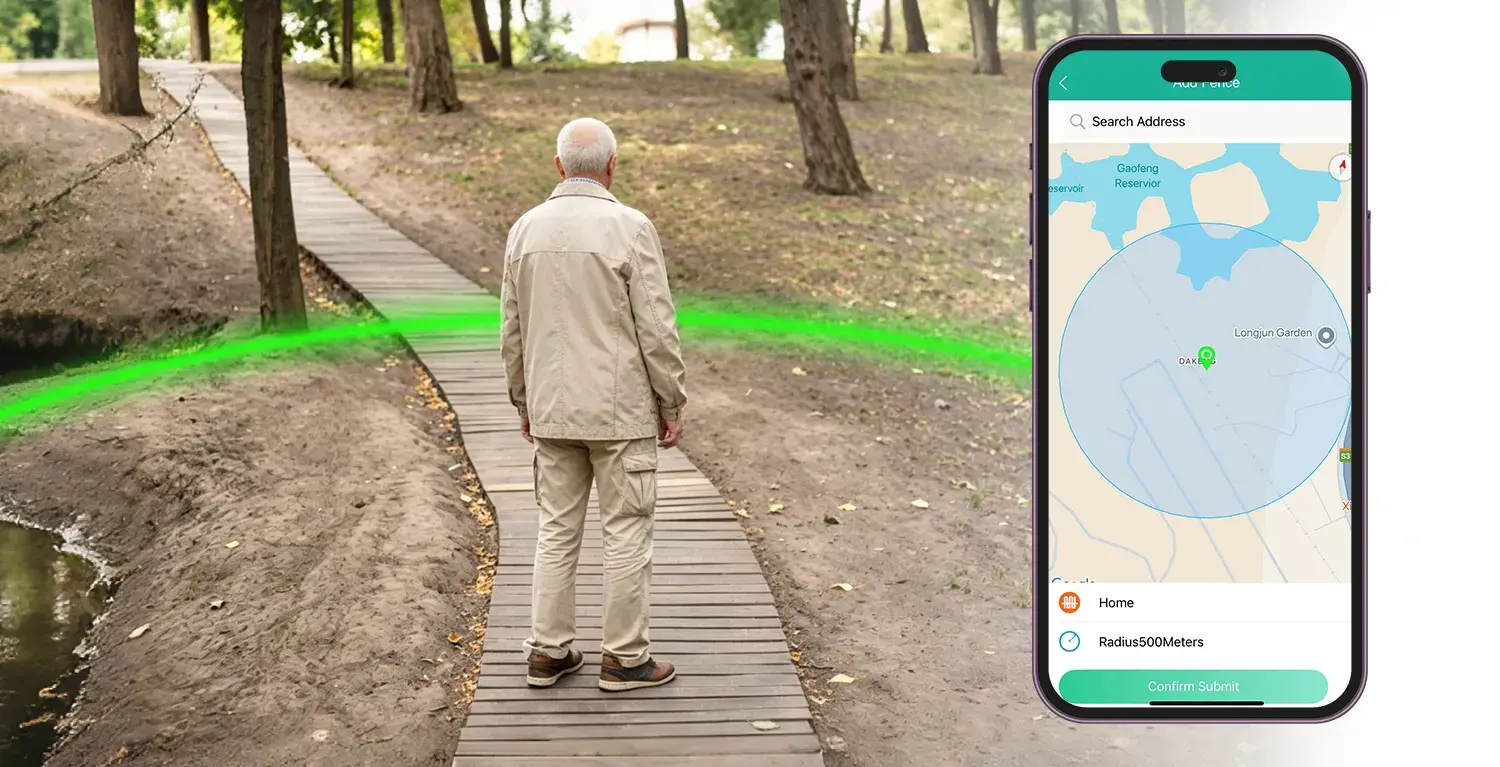
For telecare operators, PERS providers and OEM/ODM buyers, wearable fall detection accuracy matters; an advertised accuracy percentage rarely tells the full story. Everyday movement can cause a device to go off unnecessarily, and the product must be able to differentiate between these and legitimate falls.
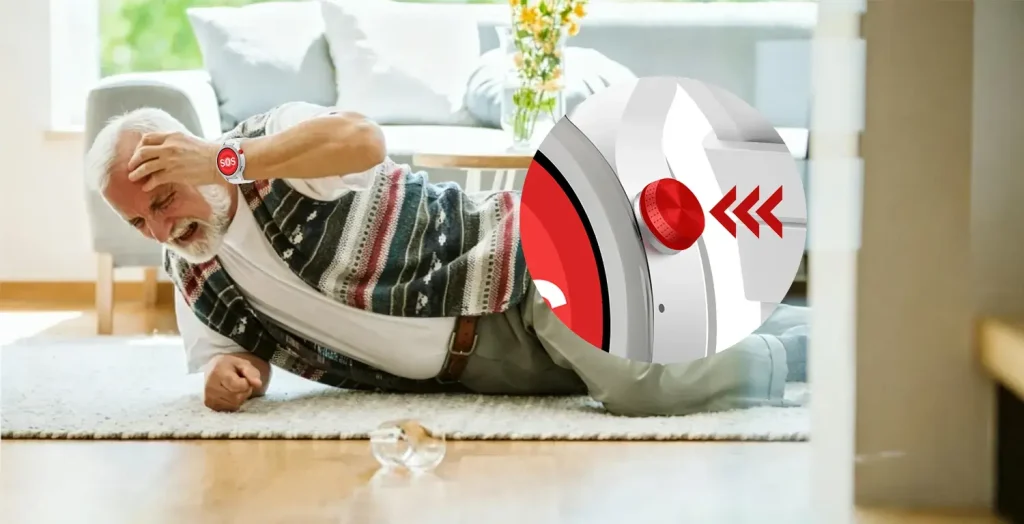
This paper describes real-world testing for wearable fall detection devices, the types of sensors used, and discussion on fall detection sensitivity and fall detection specificity, to allow the end-user to evaluate the product more fully.
What is Wearable Fall Detection Accuracy?
Wearable fall detection accuracy is a measure of how effectively a device identifies a fall. Fall detection primarily uses sensors to measure acceleration; in some devices, sensors can also measure rotational movement. An algorithm is then used to analyze the data and identify a potential fall.
Reliability is dependent on:
• Type of fall: Forward, back, side, slow collapse, etc.
• Position of wear: Wrist, neck, waist
• Daily activities: Quickly moving to a seated position, exercising, using the device
• System features: Sensors, firmware, thresholds, alert and workflow logic
Only simulating a fall does not establish a case for senior fall detection reliability.
Key Metrics: Sensitivity, Specificity, and False Alarms
| Metric | Calculation or meaning | Why it matters |
| Fall detection sensitivity | TP ÷ (TP + FN) | Percentage of actual falls detected |
| Fall detection specificity | TN ÷ (TN + FP) | Percentage of non-fall observations correctly rejected |
| Precision | TP ÷ (TP + FP) | Share of fall alerts that represent actual falls |
| False alarm rate | False alerts per device-day | Monitoring workload and user disruption |
| Detection delay | Time from fall to detection | Speed of potential assistance |
TP = true positive; TN = true negative; FP = false positive; FN = false negative.
An algorithm detects 90 of 100 falls. Its sensitivity is 90% on that dataset. It might not work that way for all seniors in all environments.
Accuracy can be misleading, because in the course of a day, normal activities occur much more often than falls. When evaluating devices, ask about the event counts and test conditions, not just the final statements with a percentage sign.
False Positives vs False Negatives Fall Detection
Both types of errors affect the quality of the service, but in different ways:
• False positive fall detection: Movement generates a false fall alarm and increases the workload of the operator, thus reducing the confidence of the wearer.
• False negative fall detection: A fall is not detected and an alert is not generated automatically.
Some typical false alarm situations include:
• Sitting or lying down too quickly.
• Bending, climbing stairs, exercising.
• Sudden arm movements.
• Removing or adjusting the wearable.
For a high level of reliability of fall detection by seniors, both false alarms and missed fall alarms should be taken into account. Increasing sensitivity can potentially increase the number of false alarms.
3-Axis vs 6-Axis Fall Detection: Which is Better?
| Setup | Motion data | Things to consider when evaluating |
| 3-axis accelerometer | Acceleration in 3-axes | Simple to implement. Depends heavily on the algorithm. |
| 6-axis IMU | 3-axis acceleration + 3-axis gyroscope | Can provide rotational data and may help to classify certain movements, but can increase the power consumption of the system. |
When comparing 3-Axis and 6-Axis systems, many other factors should be taken into account, such as sampling frequency, firmware, placement of the sensors, power management, and validation datasets.
Wearable Fall Detection Testing: Lab and Field Validation
Validation of fall detection algorithms should extend beyond controlled testing. Evaluation of algorithm performance must be made during normal, everyday use.
- Describe the use case, specifying the user group, wearing position, firmware version and acceptable alert thresholds.
- Discuss different types of falls. Test front, back and side falls as well as low impact falls, if safe and appropriate to do so.
- Describe a non-fall detection challenge. Use activities that mimic falls, and do so with the final commercial enclosure.
- Validate in the field. Assess the limits of the device while wearing it in various ways. If a true fall does not occur, the limitations may not be fully understood.
- Be open about results. Report event counts, as well as detection sensitivity, specificity, and false alarm rates, as well as alarm delay.
Real world collection of data must align with appropriate procedures.
Supplier Checklist for Wearable Fall Detection Accuracy
Prior to procuring a device, ask the vendor:
• Which sensors and fall detection algorithms do you use?
• How many and which falls and non-falls were tested?
• What are sensitivity, specificity, and false alarms?
• Were final commercial hardware and firmware used for testing?
• Were detection threshold settings changed and retested?
• Are your personnel able to perform customer-specific tests for wearable fall detection?
• What happens after a suspected fall, including a cancelled alert or fall detection escalation?
Suppliers should provide verified test results and separate performance target and estimates.
Test the Complete Alert Workflow
Algorithm detection is only one stage. A wearable may detect a fall correctly but fail to deliver an alert because of network or server problems.
Assess the full chain: detection → user confirmation or cancellation → cellular transmission → platform processing → operator response.
Report algorithm performance and end-to-end alert delivery separately. Both affect the overall reliability of senior fall detection.
Customizations for OEM/ODM Fall Detection with JiAi
JiAi provides customized 4G elderly smartwatches, screenless SOS wristbands, GPS trackers and other telecare wearables for B2B orders.
Depending on the product, JiAi can customize the configuration of sensors, the firmware, and the fall detection algorithm. Buyers should assess the performance of the hardware and firmware against the required performance targets for the intended wearing position and operating conditions. Customizations, and the associated documentation, are subject to project evaluation.
Conclusion
Wearable fall detection accuracy is more than a marketing percentage. Compare fall detection sensitivity, fall detection specificity, false alerts, missed falls, wearing conditions, and independent validation evidence. Transparent wearable fall detection testing and end-to-end alert checks offer a stronger basis for procurement decisions.
FAQs
Q1. How accurate is JiAi's wearable fall detection?
JiAi's wearable fall detection accuracy depends on the device model, sensor configuration, firmware, and wearing conditions. OEM/ODM buyers can discuss specific performance requirements with JiAi and request project-specific validation before deployment.
Q2. What are fall detection sensitivity and specificity?
Fall detection sensitivity measures how many actual falls are correctly detected. Fall detection specificity measures how accurately normal activities are recognized as non-falls. JiAi recommends evaluating both metrics rather than relying on a single accuracy percentage.
Q3. Can JiAi wearables reduce false positive fall detection?
JiAi can evaluate fall detection algorithm parameters based on the selected product and project requirements. Reducing false positive fall detection requires balancing detection sensitivity, specificity, and real-world movement patterns. Available adjustments depend on the device and firmware.
Q4. Can JiAi devices detect every type of fall?
No wearable can guarantee detection of every fall. Slow collapses, low-impact falls, and unusual movements may cause false negative fall detection. JiAi recommends validating the selected device against representative fall scenarios and intended wearing conditions.
Q5. Does JiAi support 3-axis vs 6-axis fall detection solutions?
JiAi can discuss available motion sensor configurations for specific OEM/ODM projects. When comparing 3-axis vs 6-axis fall detection, buyers should consider algorithm performance, power consumption, and testing results. Sensor availability requires product-level confirmation.