GPS Tracking for Assisted Living: Indoor, Outdoor & Geofencing Solutions

2026-10-28
Locating residents quickly is crucial during an emergency for assisted living facilities. GPS Tracking for Assisted Living, however, encompasses more than providing residents with GPS-enabled smartwatches.

Satellite signals are good for positioning outdoors. Indoors, particularly in multi-story buildings, the signals quickly become unreliable. Different positioning methods are needed to cover the variations in assisted living facilities, i.e. corridors, private and shared rooms.
For senior living operators, telecare providers and OEM/ODM buyers, the right assisted living GPS tracking combines outdoor GPS, indoor positioning, and cellular connectivity, while maintaining residents' independence and privacy.
1. Why Assisted Living GPS Tracking Requires a Hybrid Approach
Traditional GPS tracking for the elderly is mainly used for determining the whereabouts of the individual being monitored, and therefore does not require location awareness in multiple environments. For these reasons, a traditional GPS tracking system may not be sufficient for assisted living.
An advanced system should be able to:
•Indoor Monitoring: Assist in determining the approximate location or zone of a resident.
•Outdoor Tracking: Assist facility staff in locating residents for off-site activities.
•Alerts: Create alerts for zones, and notify the user if a resident moves out of the defined area.
•Emergencies: Help determine the location of a resident in the case of an emergency.
•Integration with Care Platform: Send the resident's location to the caregiver's dashboard.
Meeting these requirements makes senior living GPS tracking more of a system-level decision than the purchase of a few tracking devices.
2. GPS vs. Indoor Positioning for Elderly Care
Different positioning technologies have their own advantages and disadvantages, based on the environment in which they will be used. So, understanding these limits will help make an informed decision about elderly GPS tracking devices.
| Technology | Best Application | Key Limitations |
| GPS/GNSS | Outdoor activities, walking | Weak signals indoors, wireless, etc. |
| Wi-Fi positioning | Within building limits | May require placement of access points and rely on positioning services |
| BLE beacons | Zones defined by infrastructure | Requires BLE beacons and compatible firmware |
GPS/GNSS for Outdoor Tracking
A GPS tracking device may be worn to track the care receiver's location, and the data may be sent via the cellular network.
GPS is appropriate to track:
•Walking paths from the care receiver's living facility
•Off-site medical appointments
•Other off-site outings
GPS works well, but may not be accurate in some conditions, for example in the presence of tall buildings or within reinforced structures.
Positioning with Wi-Fi and BLE
Different methods of indoor positioning for elderly care can make use of Wi-Fi scanning or Bluetooth Low Energy (BLE) beacons.
BLE beacons can be strategically placed around different zones in a facility, such as around entrances or corridors.
Detecting a beacon does not guarantee room-level positioning. Building layouts, placement of beacons, signal reflections, and device firmware can impact positioning.
Combining Indoor and Outdoor Tracking
A telecare system comprising of GPS tracking could be designed as follows:
Wearable Device → GPS/Wi-Fi/BLE → 4G Network → Server → Caregiver Platform
Outdoors, GPS can be used to derive a location. Indoors, Wi-Fi or BLE can be used to estimate a location.
Actual methods used for positioning and how the system behaves depends on the configuration of the hardware and firmware of the device.
3. Helping Keep Seniors Safe in Assisted Living with GPS Geofencing
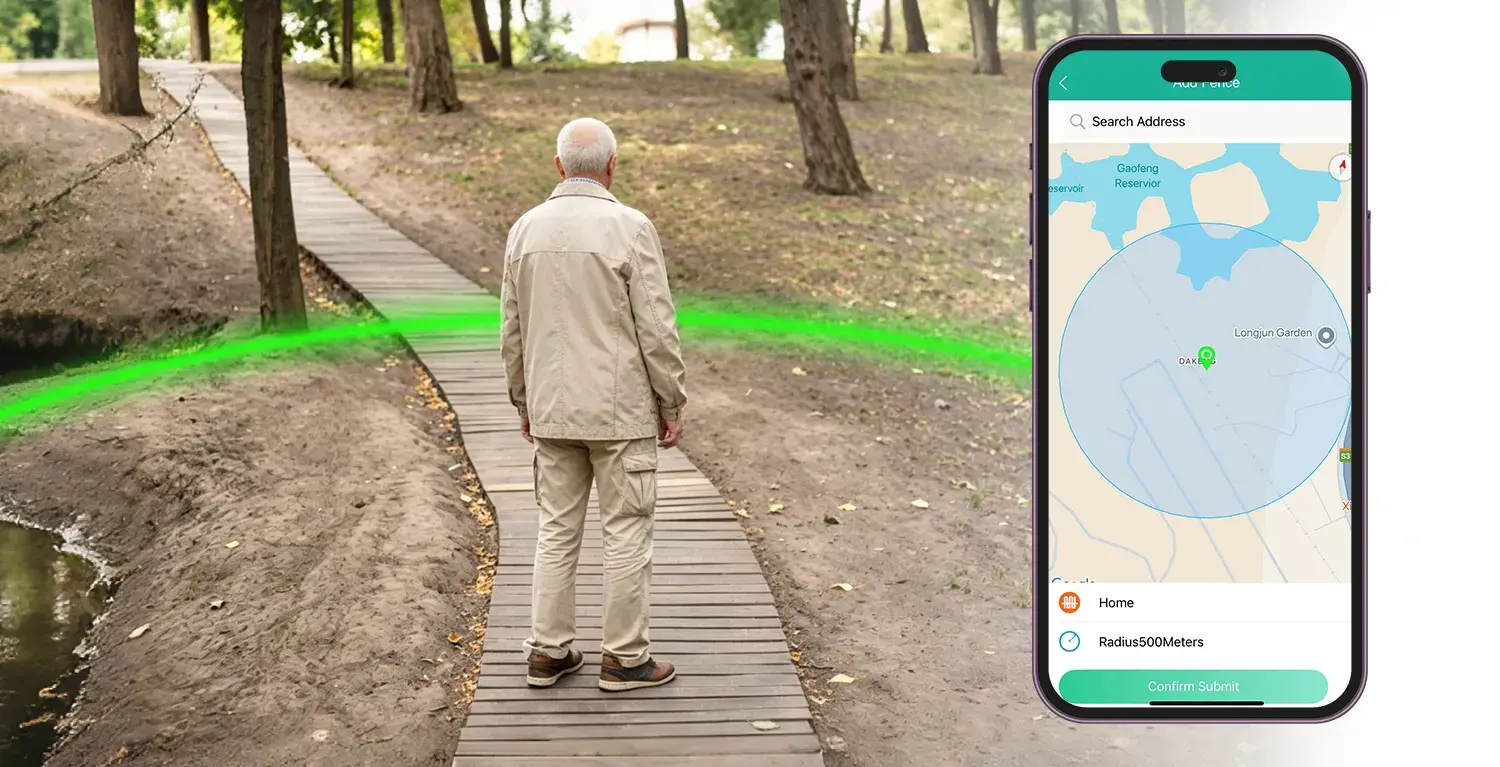
Boundaries in the real world can be virtual using GPS technology. This is known as GPS geofencing. For example, the grounds of a care facility and surrounding outdoor areas can be mapped out as virtual boundaries.
As an elderly person crosses over a virtual boundary using GPS technology, a monitoring platform can send an alert to caregivers.
How to Minimize False Alerts
Placing virtual boundaries too close to a care facility can result in location uncertainties, leading to numerous false alerts.
There are a number of design considerations for GPS geofencing including:
•The size of a virtual boundary. Too small of a virtual boundary can lead to location uncertainties and false alerts.
•Reporting interval. The shorter the reporting interval, the more alert notifications the monitoring device will send and the more power it will use.
•Repeated confirmation. A monitoring platform can require a secondary confirmation for a crossing before sending an alert.
•Interruptions in the location reporting network. A monitoring platform should be programmed to handle a temporarily unavailable location reporting network.
•Escalation of alerts: How and to whom an alert is sent should be defined in order to reduce false alerts.
4. Choosing The Right Wearable GPS Tracker
For Assisted Living, successful GPS tracking is all about wearability. If you take the device off a lot or charge it a lot, it won't work as well.
Common Wearable Options
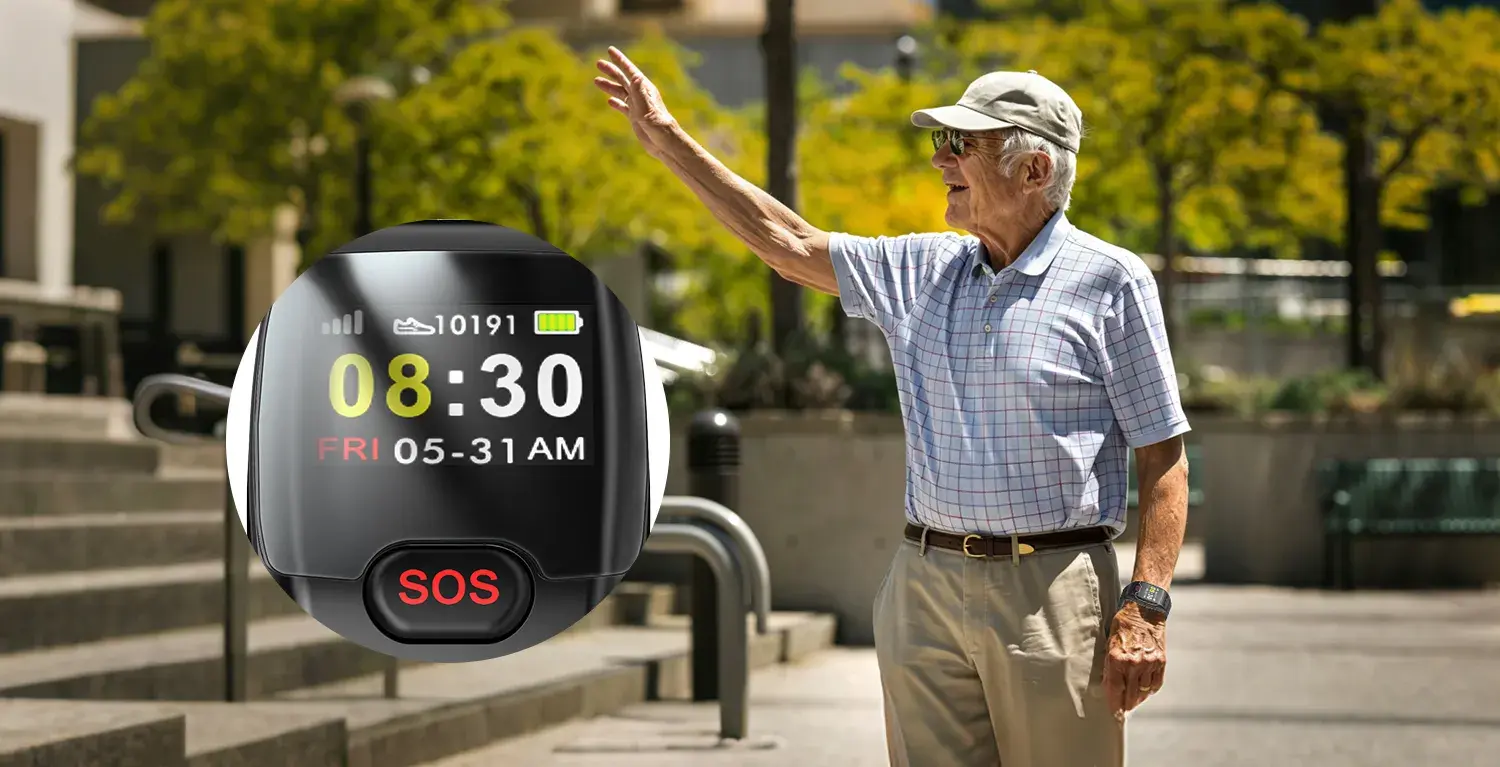
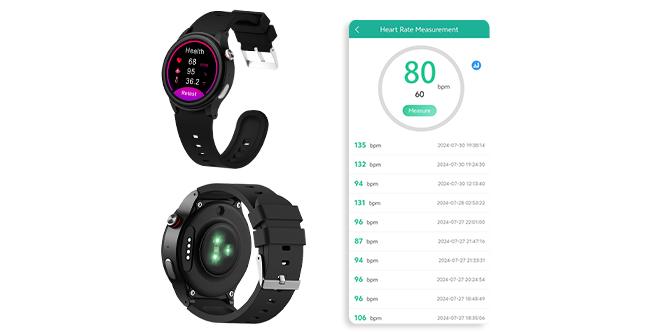
•GPS Smart Watches: If a display or SOS button is required for your project, then this is your best option.
•GPS Wristbands: If the user does not require a display, then this is a better option.
•GPS Pendants: Neck-worn devices are an alternative to wrist-worn devices.
If you are looking at wearable GPS trackers, consider the comfort level of the device and how it will attach. Also check out the SOS button, positioning technologies and how easy it is to charge.
Not all wearables contain Wi-Fi or BLE positioning, or similar emergency communications.
5. Cellular Connectivity and Battery Performance
For most stand-alone tracking solutions for older adults, reliable cellular connectivity is key. When assessing 4G-enabled devices, look at:
•SIM card compliance in the country of interest
•LTE band coverage in the country of interest
•Location reporting frequency and coverage
•GPS and BLE scanning power consumption
•SOS button battery performance
•Charging mechanism and battery status indication
Battery life under actual usage (tracking) should be assessed, and standby times should not be relied on.
6. Integrating GPS Tracking with Care Management Platforms
The best professional assisted living safety technology should convert location data to actionable information for caregivers.
Depending on the design of the device, various integration methods are possible such as REST APIs, HTTP, TCP/IP or other communication protocols.
| Data Field | Operational Purpose |
| Device ID and timestamp | Device identification and age of location report |
| GPS coordinates or indoor zone | Location data |
| SOS and Geofence events | Caregiver alert initiated |
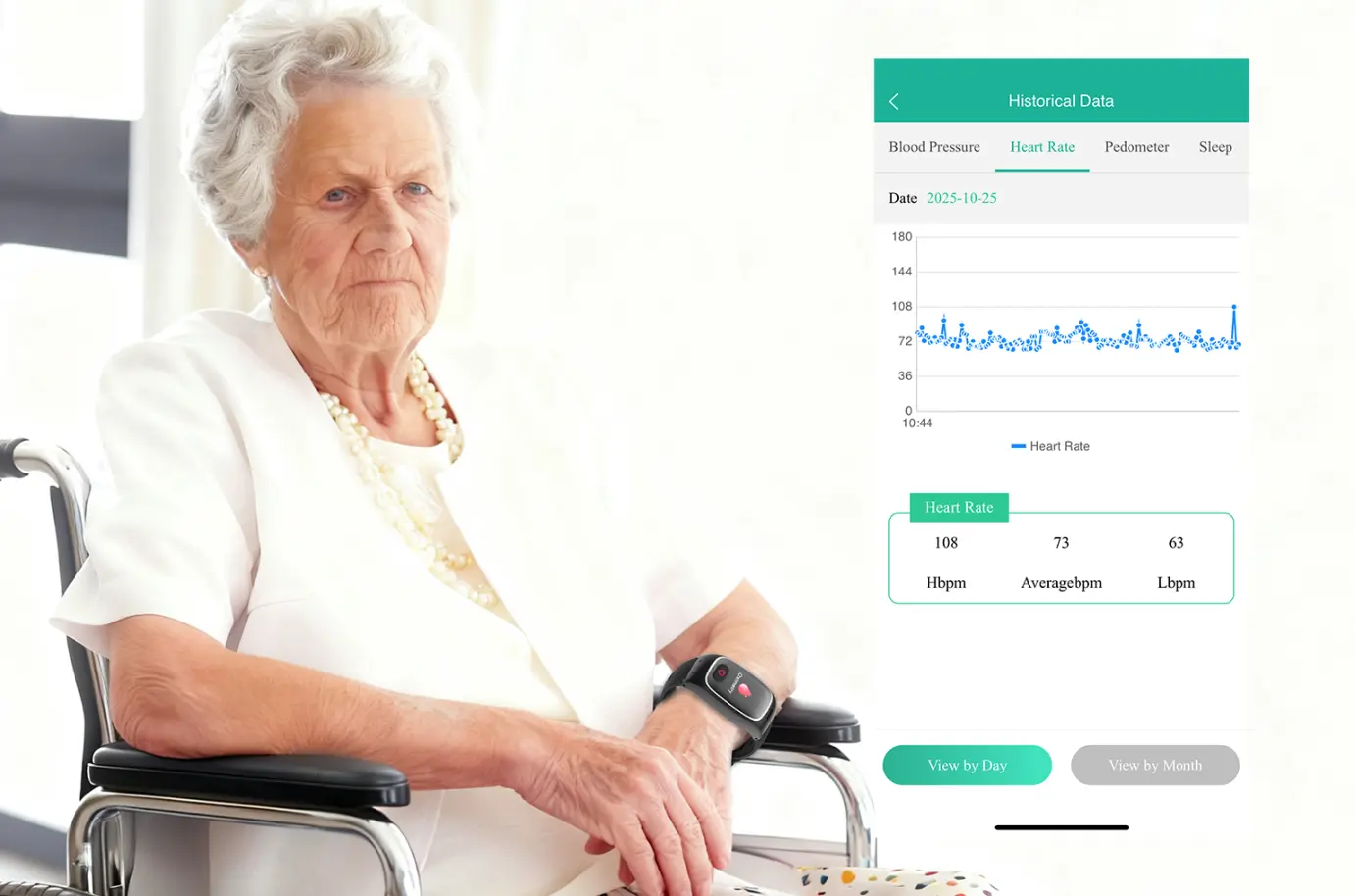
| Battery and connectivity | Device requires service/check |
When evaluating senior living GPS tracking, it is important to assess policies and procedures related to the retention and access of resident data as well as review safeguards related to resident privacy, including mechanisms for data update.
Tracking location must adhere to the access control policies and procedures and the informed consent process.
7. Pilot Testing of GPS Tracking for Assisted Living
A pilot test must be performed to assess the tracking system's influence on the workflows and positioning of caregivers.
The following must be tested:
- Accuracy: Have a designated person verify your actual location and compare to your reported location.
- Coverage: Verify all public location including shared rooms, and all floors of the facility.
- Alerts/Notifications: Was a geofence boundary crossed?
- Connectivity: Verify data was sent to the server.
- Battery: Does the battery last to meet the reporting frequency?
- Integration: Timestamps and locations with notifications to caregivers.
Determine inability to know the reliable location of resident.
8. JiAi OEM/ODM GPS Tracking Solutions
JiAi is an elderly smartwatch, screenless wristband GPS tracker and B2B connected telecare device OEM/ODM.
Our engineering team can assess requirements around:
•Wearable hardware and positioning capabilities
•Firmware modification and reporting intervals
•Communication and data transmission via cellular networks
•Server and application integration
•SOS alerts and custom project monitoring
Working functions depend on the selected product model and the specific requirements.
Conclusion
Efficient GPS Tracking for Assisted Living integrates outdoor GNSS with indoor Wi-Fi and/or BLE positioning, GPS geofencing, and cellular connectivity, as well as caregiver platform integration.
For assisted living operators and telecare solution providers, success usually begins with determining clear location requirements, and performing facility tests using realistic wearable hardware.
JiAi is in the position to evaluate ODM/OEM wearable devices for assisted living/telecare together with its customers.
FAQs
Q1. What GPS tracking solutions does JiAi offer for assisted living facilities?
JiAi provides elderly GPS smartwatches, screenless wristbands, and wearable GPS trackers for assisted living providers. Available positioning and SOS functions depend on the selected device model.
Q2. Do JiAi GPS tracking devices support both indoor and outdoor positioning?
JiAi can evaluate GPS/GNSS, Wi-Fi positioning, and BLE beacon positioning requirements for OEM/ODM projects. Indoor positioning capabilities must be confirmed for each device model.
Q3. Can JiAi GPS trackers support geofencing alerts?
JiAi can evaluate GPS geofencing requirements, including virtual boundaries, location reporting intervals, and alert integration. Function availability depends on device firmware and the monitoring platform.
Q4. Do JiAi wearable GPS trackers support 4G connectivity?
JiAi offers connected telecare wearables, including 4G GPS tracking solutions. Buyers should confirm LTE band compatibility, SIM requirements, and regional network support before deployment.
Q5. Can JiAi GPS tracking devices integrate with existing assisted living platforms?
Yes. JiAi can evaluate integration through REST APIs, HTTP, TCP/IP, or customized communication protocols, depending on the device architecture and project requirements.