
ODM Cost Breakdown: What Really Drives the Cost of Custom Elderly Smartwatches

2026-02-24
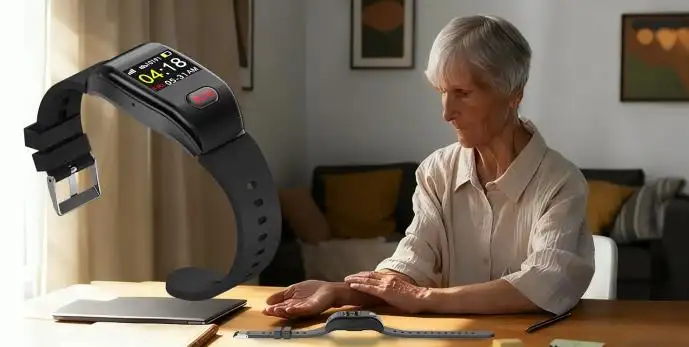
For B2B buyers, Elderly Smartwatch ODM costs often feel inconsistent. Similar products get different quotes, sparking: Why is ODM more expensive than OEM? Which charges are one-off and which recur? Where can costs be optimized without sacrificing quality? This article explains the real cost structure behind ODM elderly smartwatches, GPS trackers, and telecare wearables — from a manufacturer's perspective at JiAi Intelligent Technology.
Introduction: Why ODM Pricing Feels "Unclear" to Many Buyers
For many teams, the biggest frustration is not the final number, but the missing logic behind it. In reality, ODM smartwatch pricing is not a single price tag. It is a moving model shaped by customization depth, target markets, expected volume, and how fast you want to launch.
Pricing also feels "unclear" because suppliers build quotes using different assumptions. One factory may quote mainly hardware and assembly. Another includes firmware logic changes, certification support, and long-term maintenance. If those quotes are compared side by side without the same scope, the gap looks unreasonable—even if both quotes are technically correct.
At JiAi Intelligent Technology, we prefer to explain custom smartwatch development cost in layers. Once you can see each layer clearly, you can predict the budget more accurately. Even better, you can make practical trade-offs early, before the project is locked into expensive changes.
The Biggest Misunderstanding: ODM Cost Is Not Just BOM
Many buyers start with the BOM (Bill of Materials). That makes sense, because BOM is visible and easy to compare. But in an elderly wearable ODM project, BOM is only the "parts list." It does not represent the engineering work, the verification work, and the responsibility that comes after delivery.
From a manufacturer view, Elderly Smartwatch ODM Cost is driven by four major layers:
• Non-Recurring Engineering (NRE)
• Hardware & BOM Cost
• Firmware & Software Development
• Certification, Testing, & Lifecycle Support
If even one layer is missing from a plan, the budget becomes unrealistic. That is when "surprise costs" appear late—usually when your launch date is close and your options are limited.
Layer 1: Non-Recurring Engineering (NRE) Costs
NRE is often the biggest psychological barrier for ODM buyers because it shows up early and feels large. Some teams try to avoid it by asking for "small changes only." But in real projects, NRE is where product differentiation is created and validated.
Typical NRE items include:
• Firmware architecture customization (event logic, alarms, data rules)
• Hardware schematic & PCB modification (power design, layout changes, RF impact)
• Industrial design and mold development (housing, waterproof structure, button layout)
• System integration testing (watch + app + platform + cloud workflow)
Key Reality: NRE is one-time, but it must be amortized. The smaller the volume, the higher the NRE impact per unit. This is why ODM projects without a volume plan often get stuck at the quoting stage.
Example:
A USD 50,000 NRE cost:
• 5,000 units → about USD 10 per unit
• 50,000 units → about USD 1 per unit
This is also why we often recommend a phased roadmap. Launch with a validated base platform first, then expand customization after your demand is proven. This approach reduces risk while still protecting your long-term differentiation.

Layer 2: Hardware & BOM — What Actually Changes the Cost
Not all hardware changes influence cost equally. Some changes raise BOM a little but create large engineering and certification impacts. Others look major in appearance but are low-impact in actual cost.
High-Impact Cost Drivers
• Battery capacity upgrades (cell cost + space + safety validation + cycle testing)
• Cellular module choice (2G vs 4G LTE, GNSS performance, antenna design demands)
• Sensor upgrades (SpO₂, temperature, higher-accuracy motion sensors, improved HR)
• Waterproofing level (IP67 vs IP68 affects structure, sealing, yield, and testing)
These drivers influence more than parts cost. They can change tooling, assembly steps, yield rate, and testing time. In a GPS smartwatch OEM ODM program, LTE + GNSS performance is a common cost driver because it requires careful RF tuning and real-world field verification—not just lab tests.
Low-Impact Changes
• Button layout adjustments
• Strap material options
• Minor housing thickness changes
• Cosmetic finishing changes within validated processes
A reliable ODM partner helps you avoid "cost traps," where a request sounds simple but forces a chain of redesign. At JiAi Intelligent Technology, we aim to explain which changes improve market value—and which changes mostly increase complexity.
Firmware Customization: The Hidden Cost Engine
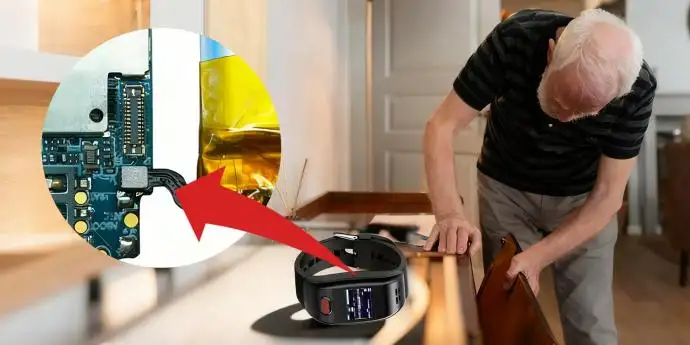
If hardware is what you can list on a spec sheet, firmware is what users actually experience.In elderly wearables, firmware defines reliability, usability, and whether alerts work when they matter. That is why custom smartwatch development cost is often dominated by firmware, not plastics.Common firmware-related cost drivers include:
• Fall detection tuning and false-alarm reduction
• SOS workflow customization (call order, retries, escalation logic, confirmations)
• Power management strategy (sleep states, reporting schedules, battery protection)
• Data reporting rules and API protocols for telecare platforms
• Multi-language UI behavior and accessibility settings
Firmware cost depends more on logic complexity than feature count.Two projects can ask for "fall detection + SOS," but one expects basic behavior and the other expects a full telecare workflow with verification, escalation, and audit logs.Those are different products.A single "simple" request like:
• "Send alert only after confirmation"
often becomes complex in real life. Confirmation can mean a button press, voice response, motion pattern, caregiver acknowledgment, or platform verification. Each path requires edge-case handling, timeouts, and repeated testing with real elderly usage patterns.This is why telecare device manufacturing cost discussions often go off-track when firmware scope is not locked early.
ODM Vs OEM: Why Unit Price Always Looks Higher
Many buyers compare an ODM quote against a standard OEM quote and feel shocked.But ODM and OEM are different business models.OEM is built around standard platforms and repeat orders.ODM is built around new logic, new validation, and long-term maintenance. The unit price difference usually comes from:
• Custom firmware maintenance and regression testing
• Lower initial volumes and less purchasing leverage
• Extra QA processes (project-specific test flows and traceability)
• Project-specific sourcing for modules, memory, and certifications
In short, ODM smartwatch pricing is higher because it includes responsibility. ODM is not designed for short-term price competition. It is designed for long-term differentiation, stable quality, and margin protection.
Certification & Compliance: The Cost That Can't Be Avoided
For connected elderly wearables, certification is not optional.It is the price of entering serious markets, especially for LTE and GNSS devices.Common requirements include:
• CE / FCC / UKCA
• Carrier approvals for LTE models
• Battery and product safety testing (market dependent)
• Data compliance expectations (privacy and user consent handling)
Certification costs vary widely depending on:
• Hardware changes and RF redesign scope
• Target markets (single region vs multi-region)
• Radio bands and configuration
• Whether you reuse a validated platform or redesign from scratch
Skipping certification often creates bigger costs later.Failed imports, blocked channel sales, product recalls, and damaged distributor trust are much more expensive than doing compliance properly the first time.
Long-Term Cost: Firmware Updates & Support
ODM cost does not end at mass production.This is one of the most overlooked parts of Elderly Smartwatch ODM Cost planning.Long-term cost considerations include:
• Firmware updates and feature improvements
• Bug fixes and regression testing
• Platform compatibility updates (mobile OS changes, cloud API changes)
• Component lifecycle management (EOL risk and alternative validation)
A stable device is not only built well—it is also maintained well. If your elderly wearable ODM product is connected to telecare workflows, lifecycle support should be treated as a planned operating cost, not an emergency cost.
Where ODM Costs Can Be Optimized Safely
Cost optimization is about smart choices, not shortcuts.The safest savings usually come from reducing unnecessary scope.• Reuse validated hardware platforms where possible
• Use modular firmware architecture to reduce rework
• Phase customization: launch first, upgrade later
• Plan certification scope early to avoid repeated testing
• Optimize BOM using proven alternatives, not unknown suppliers
How We Help Clients Control ODM Costs
At JiAi Intelligent Technology, we help clients control ODM smartwatch pricing by making the cost structure clear early in the project.Our typical approach includes:
• Define a realistic scope (must-have vs optional)
• Estimate NRE and unit cost with clear assumptions
• Recommend platform reuse to reduce engineering risk
• Build a volume-based cost roadmap so prices improve as scale grows
Our goal is not the lowest quote.It is the most sustainable project—where quality, compliance, and profitability can all coexist.
Conclusion: Smart ODM Budgeting Is a Competitive Advantage
ODM success depends on understanding where money is spent, why the costs exist, and how they scale with volume.Buyers who plan custom smartwatch development cost realistically gain faster decision-making, better supplier relationships, and stronger long-term margins.ODM is an investment. When done right, it pays back through real differentiation, repeatable quality, and a roadmap that can grow with your market. At JiAi Intelligent Technology, we believe a transparent Elderly Smartwatch ODM Cost breakdown is the first step toward a profitable telecare wearable business—and a smarter way to compete in a crowded global market.