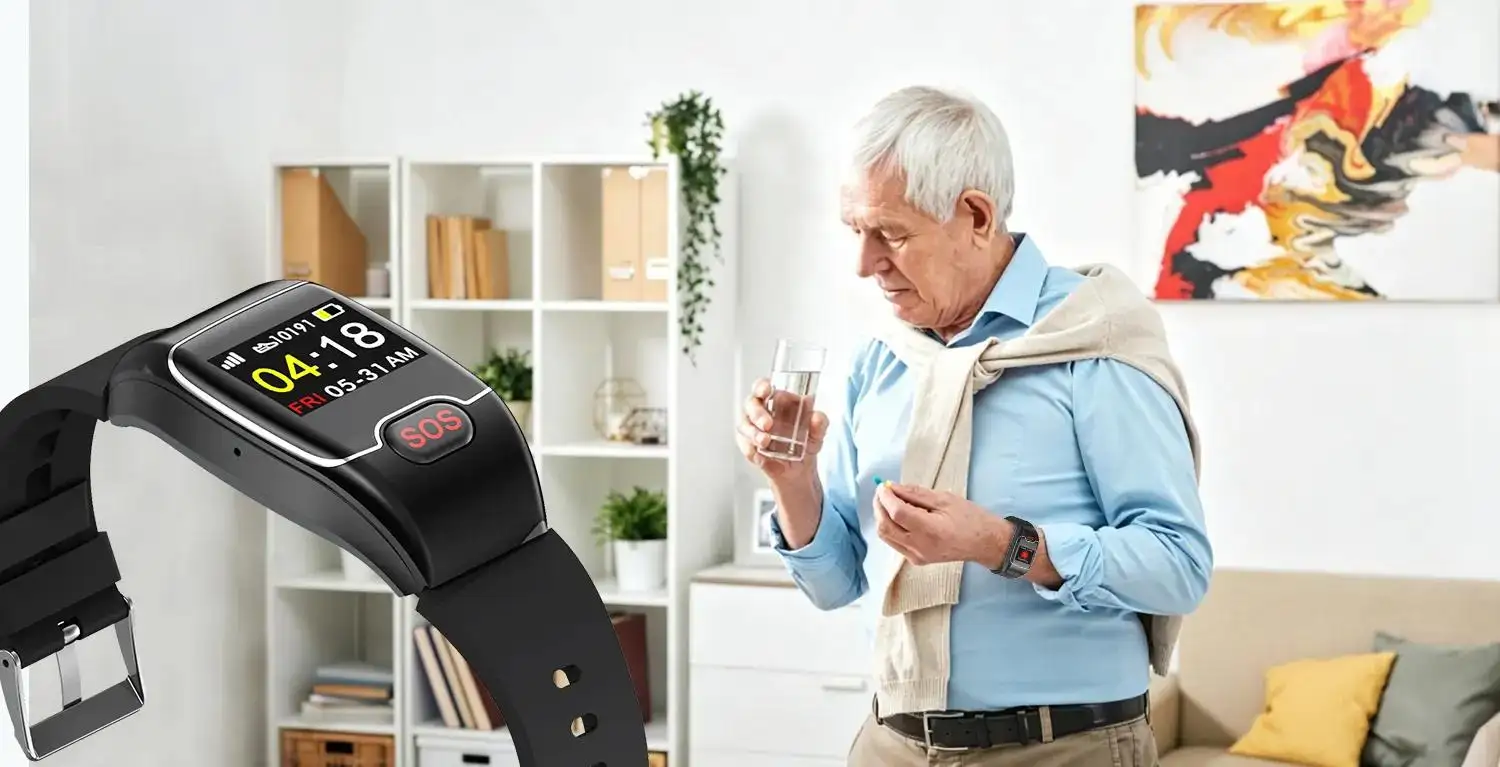

Telecare Device Manufacturer: What Healthcare Providers Should Look for Before Choosing an OEM Partner

2026-05-26

As healthcare systems integrate more remote monitoring and independent elder care solutions, selecting a Telecare Device Manufacturer becomes more critical. Today's telecare solutions comprise everything from GPS wearables and SOS devices to AI monitoring systems and cloud technology. JiAi Intelligent Technology provides OEM customization, APP integration, certification support, and reliable manufacturing for long-term elderly care projects.

The Demand for Telecare Devices and Solutions is Increasing
Global healthcare systems are increasingly being challenged by the impact of aging populations and rising healthcare costs. These challenges increase the demand for advanced Telecare Monitoring Hardware.
Aging popuAging Populations Wide Reach
The United States, Germany, Japan, Australia, and the United Kingdom, have become the center of a changing world demography.
• Growing numbers of Seniors: As the world population ages, there will be an increasing number of individuals who require ongoing treatment and supportive services.
• Increased desire for self-determination: Seniors have the option to decide their place of residence, many will choose to remain in their community.
• Increasing prevalence of chronic illness: Remote monitoring can prevent the need for emergency care.
Vanishinmg Caregivers
• Limited labor force: As the number of healthcare workers decreases, the workforce becomes increasingly responsible for the care of the older population.
• Increasing numbers of elderly care recipients elevate the burden for the healthcare system.
• Increasing need for remote monitoring: Telecare systems enable healthcare professionals and family members to provide remote care monitoring.
• Telecare devices are more advanced and support quicker response in an emergency.
Costly Healthcare System Drives Telecare Adoption
Governments and healthcare providers turn to solutions that reduce and optimize expense requirements.
• Reduced risks for hospitalizations: immediate intervention is possible with fall detection and emergency notifications.
• Lower costs for long-term care: home health telemonitoring alleviates the burden on health care facilities.
• Support for preventive health care: monitoring occurs in real-time.
These aspects of business are creating the need for more partnerships with international telecare equipment manufacturers.
What Is a Telecare Device Manufacturer?
A Telecare Device Manufacturer designs and builds telecare devices for the monitoring, safety, and health of the elderly as well as telecare and telecommunication devices.
Wearable Telecare Products
Telecare systems are increasingly designing with a focus on wearable technology.
• Smartwatches with GPS for location and telecommunication with emergency services.
• SOS pendants for the elderly to instantly summon help.
• Medical alert watches for monitoring services and emergency response.
• Tracking devices to enhance safety for the elderly and for patients with dementia.
A Medical Alert Device Manufacturer has the knowledge to balance usability, comfort, and monitoring with battery life.
Home-Based Telecare Devices
A telecare project typically involves installing devices in the client's home.
• Telecare consoles provide the central communication link to care service providers.
• Emergency communication hubs provide rapid response service in the event of an emergency.
• Assisted living systems improve the safety of the elderly users in residential settings.
• Advanced telecare systems continue to enhance the monitoring capability through the new sensing and AI technology.
• Fall detection devices are capable of sensed incidents that would be categorized as falls.
• Activity monitoring systems are capable of sensed and determined behavioral and activity patterns.
• Location monitoring devices are capable of remote management of the elderly.
A professional Elderly Care Device Manufacturer typically provides the hardware with a fully integrated software system.
OEM Telecare Manufacturer vs Standard Suppliers
Manufacturers differ significantly when it comes to the extent of customization they can offer. While some are content offering only off-the-shelf products, authentic Telecare OEM partners pride themselves in offering extensive support in product development.
Standard Product Suppliers
Basic suppliers are most often inflexible.
• Fixed hardware platforms: Unmodifiable internal components.
• Generic products: Poor brand differentiation.
• Limitations of the firmware: Absence of workflow automation.
Telecare OEM Manufacturer
Leading OEM Telecare Manufacturer achieves total production flexibility.
• Tailored Product Solution
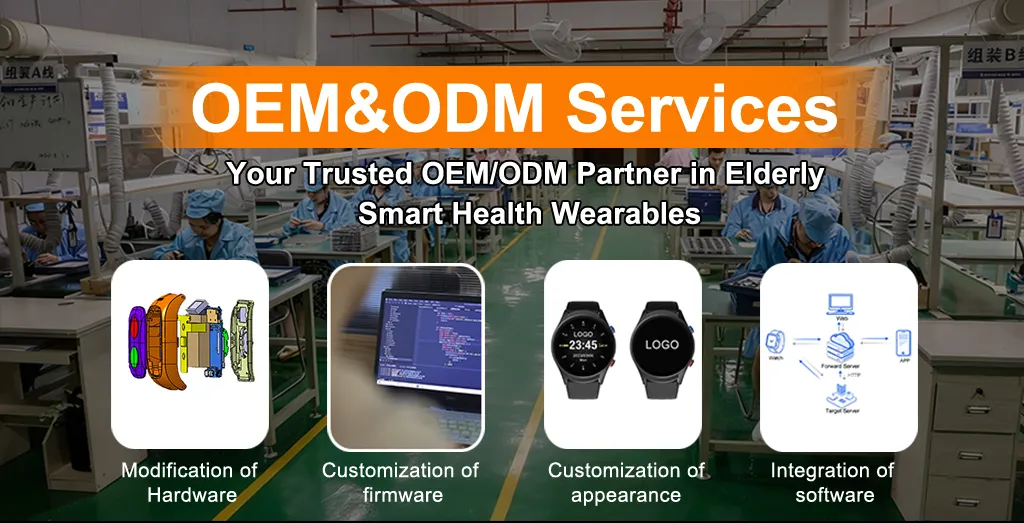
• Modification of Hardware
- Modification of Sensors: Specialized health care initiatives need customized sensors.
- Integrating GPS modules: provides accurate location when managing safety needs.
- Improvement in battery technology: improved use for the older population.
• Customization of firmware
- Configuration for SOS workflows. Emergency methods of different health care facilities differ.
- Detection of falls behavior: different algorithms are required because of the diverse behaviors of the elderly.
- Timing of alerts: Logic on when to notify is different among the markets.
• Customization of appearance
- Redesign of housing: courtesy redesigns impact comfort.
- Customization of straps: high quality straps improve the usability of the device.
- Customization of private labels: Colors are custom to foster brand identity.
• Integration of software
- APP support for improved communication with caregivers through Mobile Apps.
- Central Dashboard, improved operation through centralized management.
At JiAi Intelligent Technology our engineers commit to total Custom Telecare Device design from the first design to the last of the custom-made units.
Questions Healthcare Providers Should Ask Before Choosing a Telecare Device Supplier
1. Can the Manufacturer Support Full Custom Development?
Customization of products drives market differentiation and sustainability.
• Flexibility in hardware design: Manufacturers should incorporate the design of custom sensors and antennas and communication modules.
• Flexibility in firmware: Custom logic in monitoring is a common request of healthcare providers.
• APP integration capacity: Monitoring systems in the cloud rely on API capability.
• Industrial design support: Product design should be aligned with the company's brand.
A Telecare Device Manufacturer's offer should ideally include a complete engineering provision, not just assembly.
2. Does the Manufacturer Have Experience in Elderly Care?
Experience reduces the risk in product development.
• Smartwatches designed for the elderly: This experience aids learning.
• Medical alert systems: This experience boosts growth.
• Data projects for location tracking: This experience contributes to GDP.
• Telecare consoles development: This experience contributes to GDP.
An experienced Elderly Care Device Manufacturer is expected to better understand the needs of the elderly user and the requirements of the healthcare application.

3. Can They Support Prototyping and Small Volume Production?
Most telecare start-ups embark on their projects with pilot programs rather than bulk orders.
• Support for prototyping: Functional samples provide the product concept verification.
• Ability to produce pilot runs: Small production runs allow the reduction of the risk associated with entering the market.
• Low MOQ flexibility: A flexible approach to telecare start-up manufacturing allows early stage growth.
An ideal Telecare Device Supplier must be able to facilitate both original small scale endeavors and large scale production.
Regulatory Compliance Certifications
Healthcare related devices are often subjected to Net Regulatory Framework .
• CE Certification
• For European Markets .
• FCC Certification
• For the U.S.A. Market.
• RoHS Compliance: Related to environmental safety.
• ISO systems: Indicate controlled and stable quality of manufacturing.
Prior to proceeding with cooperation, buyers should verify that the Telecare Equipment Manufacturer can accept responsibility for certifying the product and for the associated technical documentation.
Assess Manufacturing and Quality Management
Healthcare applications require a high level of performance and low defect rates.
Key Validation Procedures
• PCB Assembly: Ensures quality and reliability of foundational products.
• IP67/IP68 Water Resistance Rating. Peace of mind hiking.
• Tested for battery safety. Batteries don't swell and last longer.
• GPS Accuracy. Gives a very accurate location.
• Artificial Aging: Tests the longevity of product functionality.
• Final Quality Assessment: Pays attention to quality and helps to eliminate post-manufacture product defects.
A reliable Telecare OEM partner is someone who maintains the utmost quality throughout all manufacturing processes.
The Importance of Providing Firmware Support in Telecare Product Offerings
While most customers check the hardware quality, they often fail to check if there is good firmware. Worth noting is that telecare products hardware quality is not enough for good performance. Good firmware is also required for good performance.
Long-Term Firmware Maintenance Will Include
• Over-The-Air (OTA) updates: remotely perform feature and system enhancements and upgrades.
• Installation of security updates: Protect end-user data and the cloud.
• Bug Fixes: Expand capabilities and streamline operations.
• Improvements: Develop and improve the health and monitoring features.
A Trusted Medical Alert Device Manufacturer provides full firmware support of the Telecare product throughout its lifecycle.

Emerging Technologies and Future Growth of Telecare Devices
Incorporation of healthcare technologies, IoT, and AI has positioned telecare as one of the most rapidly developing fields.
The Following Are the Most Rapidly Evolving Segments in Telecare:
• Assisted Living Technologies: Help the elderly maintain their independence by enabling them to live safely.
• Remote Patient Management: Enhancements in capabilities for the remote monitoring of patients.
• AI systems in elder care: Improves the ability to monitor patient health in a predictive manner.
• Healthcare Traceability Systems: Interconnect cloud-based caregiver dashboards and wearable devices.
Companies that can bring together integrated manufacturing systems that combine hardware, firmware, cloud systems, and monitoring will have a significant competitive advantage.
The standard OEM process for the development of custom telecare devices is as follows:
Step 1 – Defining the criteria and constraints that relate to the hardware and software.
Step 2 – Development of the first iteration of the product that contains the core functionality.
Step 3 – Engineering the hardware to meet the requirements of the project.
Step 4 - Firmware Development: Building of monitoring and emergency systems
Step 5 - Product Testing: Assessment of stability and operational reliability
Step 6 - Certification Support: Providing assistance in the process of regulatory approval
Step 7 - Production: The commencement of large-scale manufacturing
Step 8 - Long-term Support: The provision of firmware and technical support
We at JiAi Intelligent Technology, due to our structured development process, enable our customers to minimize engineering risks and accelerate their time to market.
Final Thoughts
Choosing a Telecare Device Manufacturer involves more than production capacity. Our Business partners on the other side, depend on a seasoned OEM Telecare Manufacturer to find durable hardware, firmware customizations, App Build & Integrate, Certification Help, and after-sales service for the long term. JiAi Intelligent Technology offers elderly care smartwatch OEM, GPS and SOS integrated solutions, telecare monitoring tools with the telecare cloud and supporting firmware for contemporary telecare systems.
FAQs
1. What is the role of a Telecare Device Manufacturer?
They create elder care solutions such as GPS smart watches, SOS pendant systems, gadgets that detect falls, and telecare monitoring technologies.
2. How is an OEM Telecare Manufacturer differentiated from a regular Telecare Manufacturer?
A standard Telecare Manufacturer sells a product as is, whereas an OEM Telecare Manufacturer modifies a product's hardware, firmware, and APP and resells it under their brand.
3. Do Telecare Device Suppliers create a product with a custom brand?
Yes, they do. Almost all Telecare Device Suppliers are willing to modify housings, do logo printing, change APP features, modify packaging, and create APPs.
4. What credentials should a Telecare Equipment Manufacturer have?
They should hold CE, FCC, RoHS, ISO and similar certifications.
5. Is it an option to begin with a smaller quantity of goods?
It is. Many established Telecare OEM companies welcome initial low volume orders, prototype and pilot production to support start-up initiatives.