
How to Build an IoT Platform for Elderly Smartwatch Fleet Management

2025-12-08

Managing thousands of elderly smartwatches, GPS trackers, pendants, and telecare devices requires more than hardware - it calls for a scalable, secure, and easy-to-operate IoT management platform. For B2B buyers, software companies, eldercare providers, and telecare operators, a stable platform is often the true center of the business. As an OEM/ODM manufacturer specializing in elderly smartwatches, GPS locators, SOS pendants, and telecare hubs, JiAi Intelligent Technology regularly helps customers connect our devices to their own ecosystems. This guide outlines what a professional elderly smartwatch fleet management solution looks like and how to choose an architecture that fits your market.

Why Elderly Smartwatch Fleet Management Requires a Dedicated IoT Platform
Unlike consumer wearables, elder safety devices are mission-critical. The devices need always-on connectivity, scalable remote maintenance, and strict adherence to regional privacy laws. With a dedicated IoT device management platform, you sustain fleet health automatically, deliver alerts to the right team, and document compliance when auditors call.
At JiAi Intelligent Technology, we design for operations teams that manage tens of thousands of endpoints across multiple providers. The day-to-day reality is continuous device health checks, rapid response to SOS and fall events, and accurate location services via a GPS tracker cloud platform. The platform also needs deep diagnostics - battery, signal, and network - so technicians can fix issues before they become outages. When paired with a clean remote monitoring dashboard, you reduce tickets, speed up interventions, and turn pilots into profitable nationwide deployments.
Core Components of an IoT Fleet Management Platform
A dependable backend for wearable device management is event-driven, API-first, and secure by default. Below are the pieces that matter most, based on our deployments with telecare operators and software partners.

Secure onboarding and identity. Each watch, tracker, or pendant must present a unique identity before the cloud will talk back. We support IMEI/SN registration, device-key or certificate authentication, API token governance, and network profile assignment. Ship devices with pre-provisioned firmware, and activation becomes a plug-and-play moment instead of a support ticket.
Real-time data pipeline. MQTT is the workhorse for large fleets: low overhead, reliable delivery, and ideal for telemetry. HTTP(S) remains useful for configuration, file transfers, and admin actions. A hybrid approach - MQTT for live events, HTTP for control - balances performance and simplicity for a telecare IoT system.
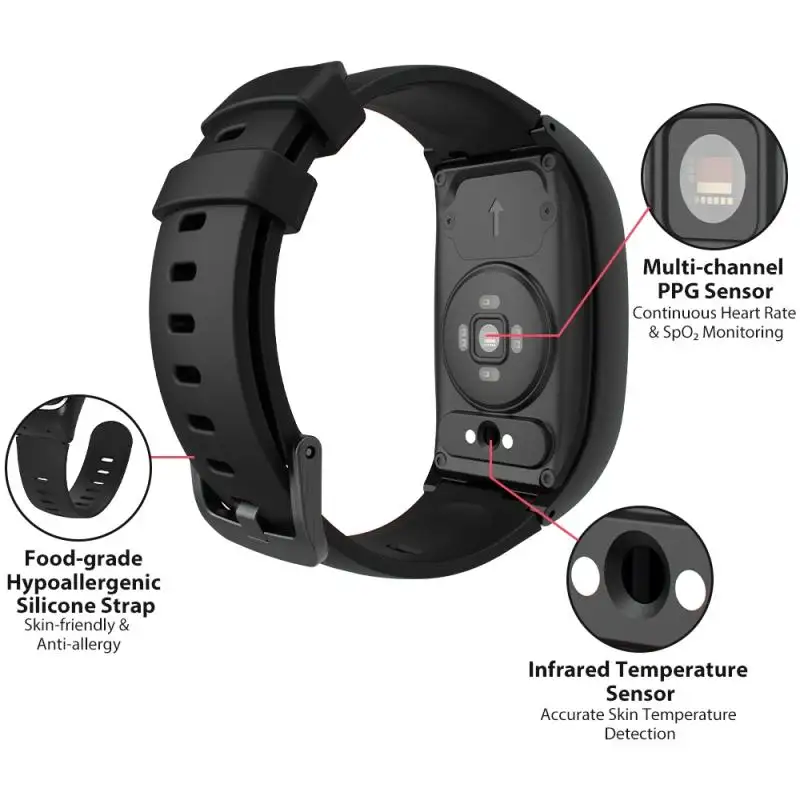
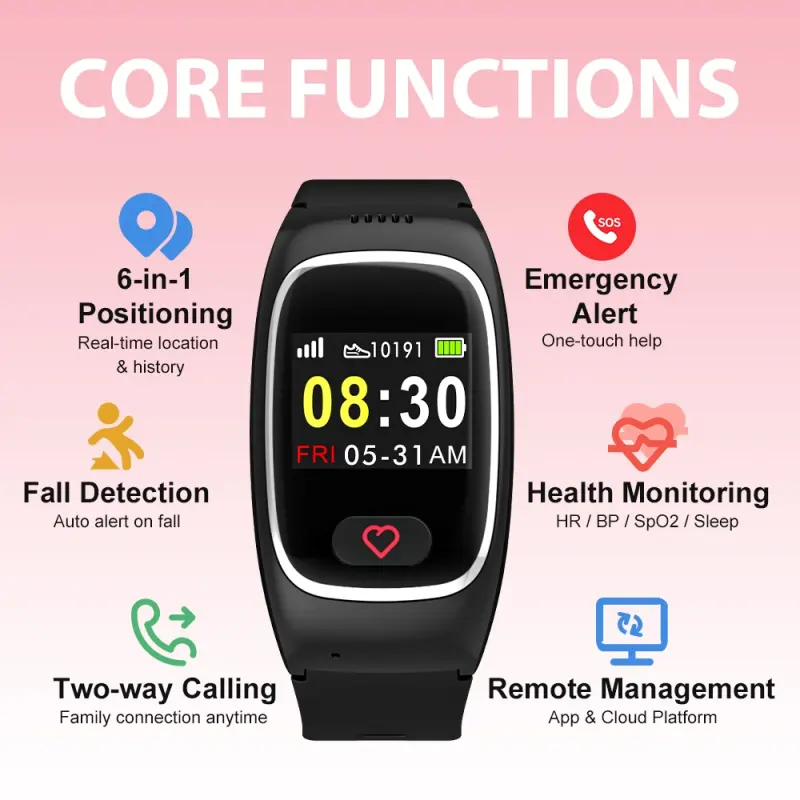
Device twin and remote control. A cloud "twin" tracks firmware version, battery status, heart-rate capability, GPS/Wi-Fi/LBS position, signal strength, SIM status, and policy settings (SOS numbers, geofence rules, fall sensitivity). Operators adjust these centrally and push them over the air. The result is fewer site visits, consistent policies, and predictable behavior across regions.
Operational dashboards. Teams need one glass, not ten tools. We typically integrate a remote monitoring dashboard that shows fleet online/offline ratios, live maps with geofences, an alert center for SOS/fall/low battery, optional health metrics, SIM/data usage, and FOTA/OTA controls with staged rollouts and rollback safety nets. Role-based access keeps duties separated, while audit logs preserve accountability.
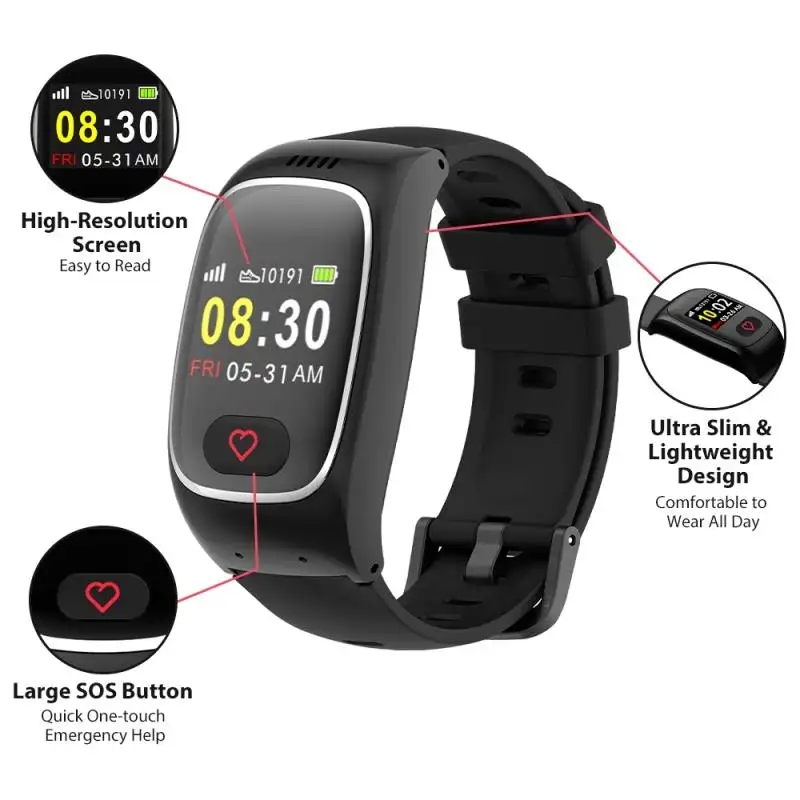
Alerts and automation. Speed saves lives. Events should fan out to mobile push, SMS, email, webhooks, and a central console - often tied to 24/7 call centers. Escalation rules trigger if acknowledgments lag. Inactivity and geofence breaches help teams intervene before risk becomes harm.
APIs and ecosystem fit. Enterprise buyers expect RESTful APIs, webhook subscriptions, MQTT topics, and export tools. With OEM smartwatch integration, data flows smoothly into hospital systems, EHRs, care platforms, and SaaS dashboards. SDKs shorten mobile timelines and reduce integration risk.
Security and GDPR. Elder monitoring involves sensitive location and wellness data. We insist on TLS/SSL everywhere, encrypted device-to-cloud channels, least-privilege RBAC, immutable audit trails, and GDPR-aligned minimization and deletion. Procurement teams increasingly rank security posture alongside battery life and sensor fidelity - your IoT device management platform must stand up to formal review.
✅ Quick recap of must-haves
- Unique device identity and zero-touch onboarding
- MQTT telemetry plus HTTP(S) control path
- Cloud device twin with OTA policy updates
- Single-pane operations, mapping, and FOTA
- Event routing with automated escalation
- Open APIs; documented, versioned contracts
- End-to-end encryption and auditable access
Choosing the Right Architecture (Cloud, Hybrid, or On-Premise)
Architecture is a business decision with technical consequences. We see three patterns dominate elderly smartwatch fleet management at scale.
Public cloud for speed. If you lack a backend, cloud-native is the fastest path: rapid launch, elastic scaling, global reach, and managed reliability. You sacrifice some low-level customization, but strong APIs still enable deep links to your GPS tracker cloud platform, billing, or CRM.
Hybrid for balance. Our most common recommendation: you retain user data and analytics while we host the hardened device-management core. You gain data residency control and product freedom, plus our proven telemetry pipelines, OTA tooling, and wearable device management reliability. Upgrades roll out safely without halting your roadmap.
Private/on-prem for sovereignty. Governments, hospitals, and large operators may require full control and customer-owned keys. A private stack delivers maximum customization and isolation, at the cost of higher engineering and maintenance. For regulated markets, this tradeoff can be decisive.

How OEM/ODM Manufacturers Support IoT Platform Projects
As both developer and manufacturer, JiAi Intelligent Technology compresses timelines and reduces integration risk from proof of concept to mass production.
- Customized firmware aligned to your telecare IoT system policies
- Private server builds or co-managed environments
- Protocol adaptation (MQTT/HTTP), SIM strategy, and APN tuning
- Open APIs, webhook playbooks, and schema governance
- Custom dashboards, branded mobile apps, and operator UX
- Hardware customization for 500+ unit fleets, with antenna and power optimization
- Dedicated onboarding engineers, test plans, and runbooks
This partnership model ensures OEM smartwatch integration behaves consistently in the field - no hidden gaps between factory, firmware, and cloud.
Final Words
A professional platform for elderly smartwatch fleet management is the engine of modern telecare. With the right architecture, a dependable remote monitoring dashboard, and a secure device-twin approach, you can manage thousands of wearables efficiently while honoring privacy and regional regulations. JiAi Intelligent Technology combines manufacturing depth with cloud integration expertise so you can launch quickly and scale confidently - public cloud, hybrid, or on-premise.
If you are building a GPS tracker cloud platform, integrating a telecare IoT system, or need a robust IoT device management platform for large deployments, we're ready to help. Let's turn your concept into an operational blueprint for long-term wearable device management success.