
Elderly Smartwatch API Integration: Linking Wearables with Healthcare Platforms

2025-08-26

At JiAi Intelligent Technology, we build connected wearables that fit into daily care, not just into spec sheets. For us, elderly smartwatch API integration is a practical discipline: moving trustworthy health and safety signals from the wrist to the systems caregivers already rely on. When an IoT healthcare smartwatch streams events into a modern platform, nurses don't sift through raw data - they act on clear prompts. This article shares how we approach integration, what it solves in real care settings, and how providers can evaluate solutions that scale without adding complexity.
Why API Integration Matters in Elder Care
Great devices detect events; great integrations turn those events into outcomes. A smartwatch can flag a fall, elevate a pulse alert, or mark a geofence exit. Without a dependable bridge to clinical tools, that intelligence never leaves the device. With elderly smartwatch API integration, alerts, vitals, and location updates land inside dashboards, EHRs, and telecare consoles with proper context and timestamps. Care teams gain faster response times, cleaner documentation, and less manual copy-and-paste.
Continuity across settings is just as important. Home-care agencies, assisted living, and hospital partners often share responsibility for a single older adult. Smartwatch healthcare platform integration creates a unified view of device status and resident safety. Administrators can filter by site or caseload; families, when permitted, receive concise updates through apps or text. A fall in one facility and an SOS on home leave both follow the same, auditable workflow.
How Integration Works (Without the Jargon)
We design for clarity and resilience, so technical teams can integrate once and run at scale.
1) Data on the wrist.
The watch continuously collects PPG heart rate, SpO₂, temperature, motion signals for fall detection, and precise GPS. A balanced, power-efficient architecture keeps sampling steady while maintaining comfortable battery life.
2) Secure transport.
Using 4G LTE, Wi-Fi, or BLE, the device sends encrypted data to our cloud. Global roaming and eSIM options simplify enterprise rollouts across regions, while IP-rated hardware stands up to real-world use.
3) Open interfaces.
Our Smartwatch cloud connection exposes REST APIs and webhooks. Partners can pull historical metrics, subscribe to real-time events, and push device configurations in bulk. This also enables straightforward PERS device integration - your platform receives SOS, fall, geofence, and low-battery events with device identifiers and metadata.
4) Into your software.
Hospitals, telecare providers, and community programs authenticate, map our JSON payloads, and display the right signal to the right team. From there, automations do the busy work: create a case, notify assigned staff, update status, and log outcomes.
Benefits You Feel on Day One
We keep benefits grounded in everyday operations:
• Faster interventions. Webhooks cut reaction times from minutes to seconds when a resident presses SOS or a fall is detected.
• Cleaner decisions. Aggregated vitals and event trends clarify who needs more frequent check-ins or clinician review.
• Operational scale. One tenant can manage hundreds or thousands of devices without adding headcount.
• Freedom of choice. Open endpoints support mixed-vendor fleets and gradual migrations.
• Less admin work. Automatic tickets, notes, and family notifications reduce follow-up calls and duplicate entries.
• Better compliance posture. Centralized logs, roles, and audit trails support GDPR/HIPAA programs.
SMS Gateway Integration: Quietly Critical
Apps are powerful, but SMS is universal. When coverage drops or caregivers carry basic phones, the Smartwatch SMS gateway keeps signals moving. Our platform can fail over from data events to text, sending SOS alerts, last-known location links, and low-battery messages to predefined contacts.
Imagine a rural clinic with spotty connectivity. An older adult presses SOS. The system attempts a webhook first; if unconfirmed, it automatically dispatches an SMS with coordinates to three approved recipients. That layered approach - data first, text as backup - adds the reliability field teams expect and families appreciate.
✅ What Providers Should Examine Before Buying
- Selecting a connected solution is a procurement decision and a clinical safety decision. During evaluation, we recommend focusing on:
- Security and privacy. End-to-end encryption, data residency options, and proven support for GDPR/HIPAA workflows.
- Documentation and tooling. Clear API references, SDKs, Postman collections, and a sandbox that mirrors production.
- Interoperability. Real integrations with EHRs, telecare dashboards, and case-management tools - plus naming conventions that won't collide with your current data model.
- Reliability and redundancy. Multi-carrier options, health checks, and SMS fallback for alerts that must never be missed.
- Fleet operations. Bulk provisioning, remote updates, device health metrics, and eSIM activation that works at scale.
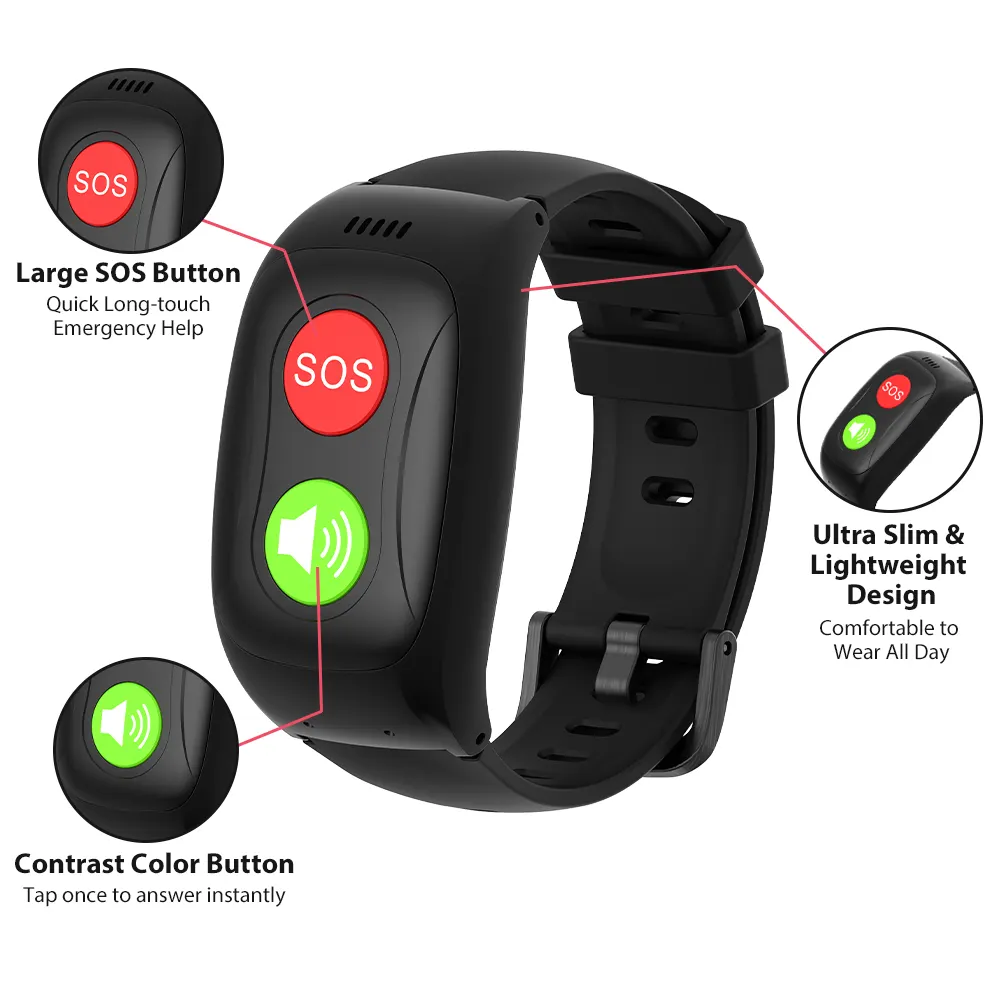
- Human-centered design. Large fonts, straightforward SOS, comfortable wear, and durable protection that invites daily use.
-1756798623356.webp)
Choosing an Integration Partner, Not Just a Vendor
Integration only works when your manufacturer behaves like a technical ally. At JiAi Intelligent Technology, our firmware and cloud are built in-house, which means we can adapt to your workflows instead of forcing you into ours. We provide stable APIs, versioning guarantees, and long-term security updates so your build doesn't break when new features ship.
What does that look like in practice? Your engineers receive a tested schema with examples, webhook payloads for common events (fall detected, SOS, geofence exit/entry, low battery), and mapping guides for typical elder-care workflows. If your elderly care software platform needs custom fields, we add namespaced attributes without disrupting existing consumers. Need smarter routing - say, triage by a virtual agent before paging a nurse? We collaborate on orchestration rules and escalation paths so your policies translate directly into system logic.
This is elderly smartwatch API integration treated as a product, not a side feature: reliable, documented, and ready for enterprise change management.
Final Thoughts
Elder care depends on timely, clear information. The watch on the wrist is the starting point; integration is the multiplier. With elderly smartwatch API integration, signals become actions, audits become automatic, and teams spend more time with people than with screens. Add dependable transport, open interfaces, and smartwatch healthcare platform integration, and you have a foundation that scales from a single facility to a national program.
At JiAi Intelligent Technology, we build the device, the cloud, and the connective tissue between them - so providers can focus on care. If you are planning a rollout or modernizing an existing service, we can help map data flows, align alerts with your workflows, and stand up a solution your staff and families will trust from day one. That's the quiet power of doing integration right - and the real promise of connected elder care.